
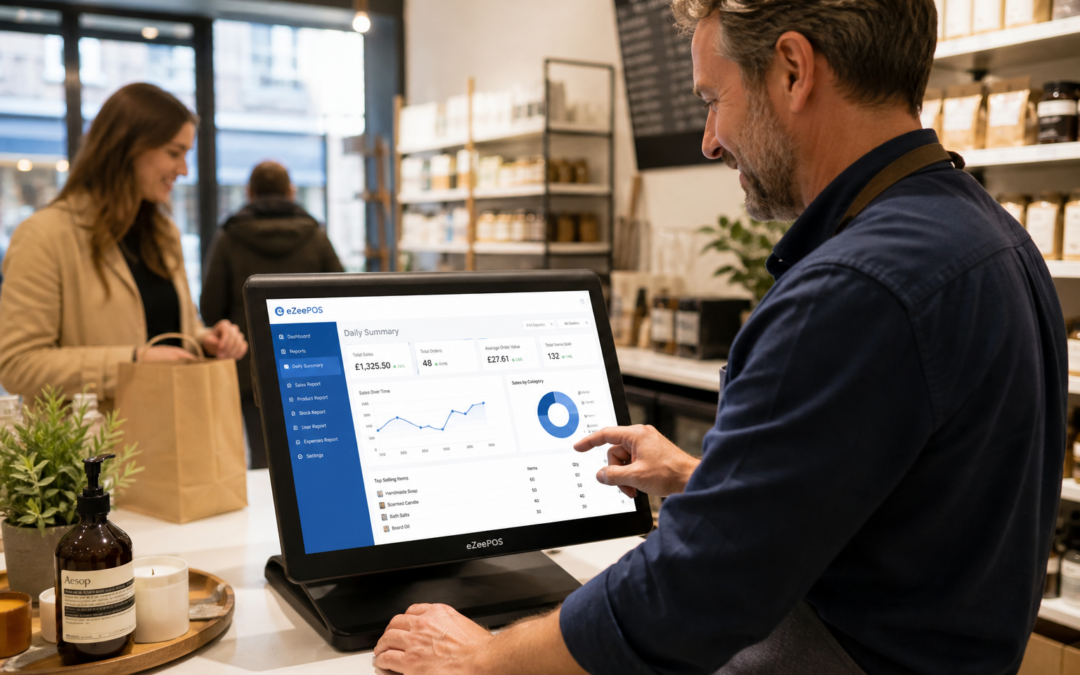
Why reporting matters in an independent retail shop
For many shop owners, daily decisions are made on the shop floor, not in a boardroom. You need to know what is selling, when customers are busiest and which products are worth restocking or promoting. That is where clear reporting from your EPOS system can make a real difference.
Instead of relying on instinct alone, reporting gives you a straightforward view of trading patterns. With the right setup, a retail business can respond faster to changing demand, reduce wasted time and make more confident decisions. If you are looking at a modern retail system, eZeePOS is designed to help UK businesses keep day-to-day control without making reporting complicated.
What useful retail reports can show you
The best reports are the ones you can use quickly. You do not need endless spreadsheets or complicated charts if you simply want to manage the shop better. A practical EPOS setup can help you review the information that matters most.
Sales by day and time
Knowing when your busiest periods happen helps you plan staffing, opening hours and customer service. If Friday afternoons are always busy or Saturday mornings dominate trade, you can prepare more effectively. This can help reduce pressure on staff and improve the customer experience at the till.
Best-selling products
Some items will naturally outperform others, but reporting makes those patterns easier to spot. That helps you decide what deserves more shelf space, what needs attention in displays and where to focus promotions. It also gives you a clearer picture of what your customers actually want, rather than what you think might sell.
Slower-moving lines
It is just as useful to know what is not moving. Slower lines can tie up shelf space and create unnecessary clutter. When you can see those products more clearly, you can plan markdowns, bundles or product changes with more confidence.
How reporting supports smarter staffing
Staffing is one of the biggest day-to-day costs in retail, so good decisions matter. Reporting can help you match labour to demand by showing exactly when trade rises and falls across the week. That makes it easier to schedule breaks, cover busier times and avoid overstaffing quiet periods.
This is especially useful in convenience stores, gift shops, farm shops and other independent retailers where one or two team members may be covering several jobs at once. Good information can help you reduce pressure without adding more admin.
Training new team members
Reports can also support better staff training. When owners and supervisors can see how the business performs each day, they can explain why certain tasks matter and where service needs to improve. That creates a more organised approach for new starters and part-time staff alike.
Turning sales data into practical action
Reporting only becomes valuable when it leads to action. For that reason, the most helpful EPOS systems present data in a way that is easy to understand. You should be able to review trends, compare periods and make adjustments without spending hours exporting figures.
For example, if a particular brand sells well on weekends but slowly during the week, you may decide to change display placement or adjust ordering. If some products consistently perform better after payday, that can influence how you plan offers and stock presentation. The benefit is not just visibility; it is having the confidence to act on what you see.
Reporting now matters more for smaller shops
Independent retailers often have to do more with less. That means decisions about staffing, product range and customer service need to be both quick and sensible. Reporting helps remove some of the guesswork, which can be especially valuable when the owner is also serving customers, managing suppliers and handling admin.
A good retail EPOS system can bring those moving parts together in one place. Rather than chasing different records or guessing from till rolls, you can use one system to understand the day’s trade and plan the next step.
Useful reports to review regularly
- Daily and weekly sales totals
- Best-selling product lists
- Busiest trading periods
- Category or department performance
- Staff activity summaries
- Comparison reports for different dates or periods
Making reports easy to use, not hard to find
Reporting should save time, not create another job. If you have to dig through several systems or wait until the end of the week to understand what is happening, you may miss important patterns. The most useful EPOS tools make reports easy to access and clear enough to act on quickly.
That is one reason many UK businesses are moving away from basic tills and manual paperwork. A modern system can help you run the shop more smoothly while giving you a better day-to-day view of trading. Whether you run a small convenience store, a newsagent or a specialist independent shop, the right reporting tools can make a useful difference.
Choosing a retail EPOS approach that supports better decisions
If you are reviewing your current setup, it is worth thinking about the information you actually use. Do you need to know what sells best by time of day? Do you want a clearer view of weekly patterns? Would you benefit from easier comparisons between trading periods? Those questions can help you choose a system that supports the way you work.
eZeePOS offers a practical UK EPOS option for retail businesses that want clearer reporting without unnecessary complexity. It is built to help businesses stay organised, view trading information more clearly and make better day-to-day decisions.
For more information about reporting, retail EPOS software and how it may fit your business, visit www.ezeepos.co.uk.
Contact YCR Distribution at sales@ezeepos.co.uk or call 01924 438238.
Recent Comments