
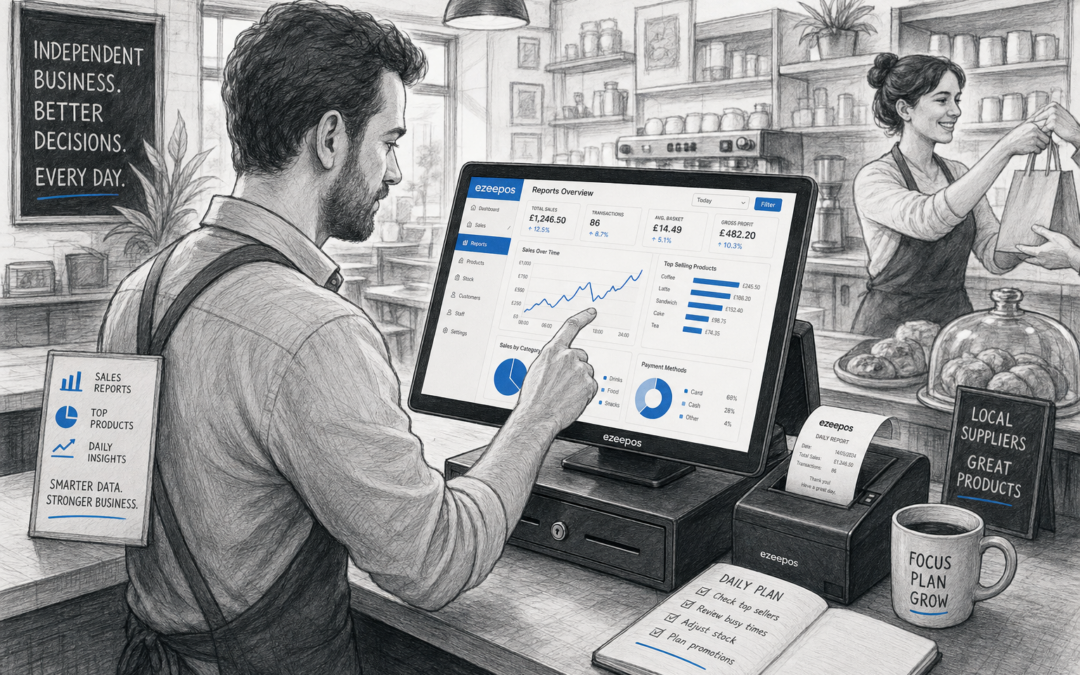
For many small businesses, the real challenge is not collecting data but making sense of it quickly enough to act on. That is where EPOS reporting can make a real difference. A well-organised reporting setup turns sales figures, product trends and trading times into information that is easier to use in day-to-day decisions.
On www.ezeepos.co.uk, eZeePOS is positioned as a practical UK EPOS option for retail and hospitality businesses that want clearer visibility without adding unnecessary complexity. Whether you run a shop, cafe, takeaway or bar, the right reports can help you understand what is happening in your business rather than relying on guesswork.
Why reporting matters in a busy small business
Today’s trading can move quickly. A brisk morning, a quiet afternoon or a surprise burst of footfall at closing time all affect how staffing, stock and service should be managed. EPOS reporting gives owners a way to look back at what actually happened instead of making decisions from memory alone.
That can be useful in several practical ways:
- Spotting the busiest times of day and week
- Seeing which products or menu items sell best
- Comparing trading periods more accurately
- Checking whether sales are improving or slowing
- Supporting staff planning and daily oversight
For independent businesses, these insights can be especially valuable because there is often less room for waste, overstaffing or missed opportunities.
What useful reports can show you
Most business owners do not need complicated dashboards full of jargon. They need reports that are clear, readable and relevant to the way they trade. With EPOS reporting, that often means a few core views that can be checked quickly at the start or end of the day.
Sales by day and time
Knowing when your busiest periods happen helps with practical planning. A cafe may see a strong lunchtime rush, while a convenience store may be busier early in the morning and after work. A takeaway might need more cover on Friday and Saturday nights. Simple reporting helps identify these patterns so staffing and service can match demand more closely.
Best-selling products
In retail, this might mean seeing which items sell reliably and which are slow to move. In hospitality, it may highlight popular meals, drinks or extras that customers order again and again. That information can support buying decisions, menu reviews and better product placement without needing a separate manual count every time.
Daily takings and totals
At the end of the day, a clear sales summary helps business owners check that trading has been recorded correctly and that the till has closed down in an orderly way. This can make cashing up less stressful and provide a quick overall view of the day’s performance.
Staff and transaction insight
Some businesses also find value in reviewing how activity changes by user or by service period. This can help identify training needs, highlight busy shifts and make it easier to understand where delays or errors might be happening.
Reporting for retail businesses
Retailers often need to understand more than just total sales. A useful report can show which products are consistently popular, which categories perform best and when trade picks up during the week. For example, a shop may notice that certain seasonal lines perform better on specific days, or that particular items sell fastest after school, at lunchtime or at weekends.
This is especially helpful for independent shops that need to make good use of limited shelf space and stock budgets. Better reporting can support buying decisions and help owners stay focused on the products customers actually want.
Reporting for cafes, takeaways and other hospitality businesses
In hospitality, EPOS reporting can help owners understand sales patterns across food, drinks and add-ons. A cafe may use reports to see which breakfast items are most reliable. A takeaway may want to know which evenings are strongest or which dishes get ordered most often. A bar might use sales information to guide staffing and stock planning for busier service periods.
When trade changes from one day to the next, having a clean report to review can make it easier to stay organised. It also helps when planning repeat promotions, adjusting opening hours or preparing for seasonal demand.
Making reports easy to act on
The best reports are not just interesting to read – they are easy to use. A small business does not need more data for the sake of it. It needs the right information in a format that supports decisions.
That is why clarity matters. Reports should be easy to check quickly, with totals and patterns presented in a way that busy owners can understand without spending too much time at a computer.
- Keep reports simple and relevant
- Review them regularly, not just at month end
- Use them alongside your own knowledge of trade
- Look for repeated patterns rather than one-off spikes
- Use the results to guide staffing, opening hours and stock decisions
How EPOS reporting fits into everyday routines
For many businesses, the most useful reporting setup is one that simply becomes part of the daily routine. A quick check before opening, a look at midday trade or a short review after closing can all help owners stay on top of performance without spending hours on admin.
That is one reason a modern touchscreen till system can be more useful than a basic till or manual spreadsheet. It brings sales information into one place and makes it easier to review the facts while the details are still fresh.
On the eZeePOS website, the service is presented as a practical option for UK businesses that want everyday control over retail and hospitality trading. For owners who value straightforward management, that can be far more useful than trying to piece together figures from different systems.
Choosing the reports that matter most
Different businesses need different information. A fashion shop may care most about sales by category and day. A cafe may want to compare breakfast and lunch trade. A takeaway may look closely at peak service times. The key is choosing reports that relate directly to your business, rather than relying on broad, unused dashboards.
If you are reviewing your current setup, think about the questions you actually ask each week. Which items are selling? When are we busiest? Are we improving? Are we prepared for the next rush? Good EPOS reporting should help answer those questions quickly.
Final thoughts
EPOS reporting is one of those features that quietly makes a big difference. It does not change the way customers see the counter, but it can change how confidently you run the business behind the scenes. For independent retailers, cafes, restaurants and takeaways, that clarity can be invaluable.
If you are looking for a practical UK EPOS solution that supports clearer daily decision-making, eZeePOS is worth exploring.
Contact YCR Distribution at sales@ezeepos.co.uk or call 01924 438238.
To learn more, visit www.ezeepos.co.uk.
Recent Comments