
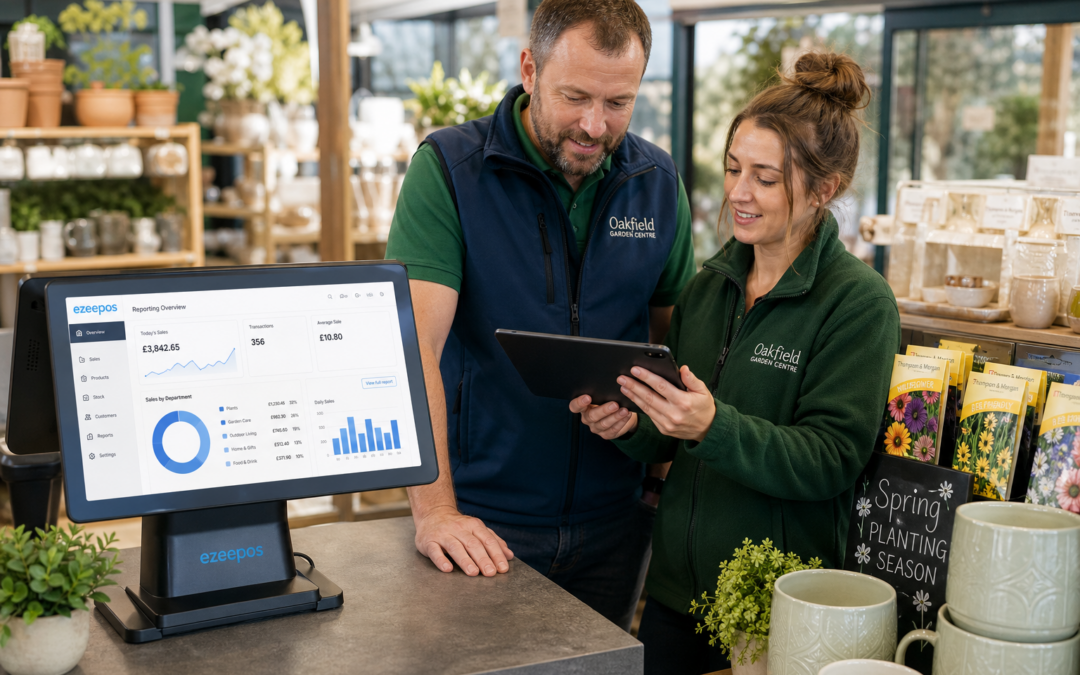
Garden centres rarely have an average trading day. One week may be quiet and steady, the next may be driven by the weather, an offer on seasonal plants or a busy weekend in the cafe. That is why eZeePOS and other modern EPOS systems can be so useful: not just for taking sales, but for helping owners understand what is happening across the business.
For any garden centre trying to balance plants, gifts, homeware, compost, outdoor living products and seasonal lines, good reporting can turn daily sales data into practical decisions. It can help answer simple but important questions: Which departments are performing best? When are the busiest times? Which products are moving quickly, and which are sitting on the shelf?
Why reporting matters in a garden centre
Garden centres tend to have a wide mix of stock and customers. Some people come in for a particular item. Others browse for longer, often buying across different departments. That means a single sales total at the end of the day does not tell the whole story.
EPOS reporting gives owners a clearer view of trading patterns. Instead of relying on instinct alone, you can look at actual sales data and use it to shape staffing, merchandising and promotions. Over time, that can make day-to-day management much easier.
Seeing the busiest trading patterns
One of the most useful reporting features is the ability to see when the business is busiest. For garden centres, this is especially helpful because footfall can rise sharply at weekends, during school holidays or when the weather improves.
If your till reports show a regular rush between late morning and early afternoon, you can plan rota cover more effectively. That may mean putting extra staff on the tills, making sure the plants department has enough support or arranging better coverage in the cafe during peak times.
Understanding what customers actually buy
Garden centres often sell a broad mix of items, from bedding plants and tools to candles, gifts and seasonal decorations. EPOS reports can help show which categories are doing well and which products are less popular.
This is useful for both buying and merchandising. If a certain range sells well together, you can place it more prominently. If another line is consistently slow, you may decide to reduce future ordering or move it to a better location. The aim is not to overcomplicate things, but to make informed decisions based on real sales activity.
Using sales reports to improve day-to-day decisions
Good reporting should be practical, not overwhelming. Garden centre owners do not need endless charts if those charts do not lead to action. The best EPOS reports are the ones that make daily decisions simpler.
- Staff planning: Match rota cover to real trading patterns rather than guesswork.
- Department performance: Compare plants, gifts, cafe sales and seasonal ranges more clearly.
- Promotions: See whether discounts and offers are actually helping sales.
- Peak periods: Prepare for weekends, holidays and weather-led trading surges.
- Product mix: Spot bestsellers and weaker lines before they become a problem.
With the right information in front of you, you can make small improvements that add up over time. That might mean adjusting opening covers, moving popular items closer to the till or changing how you plan seasonal displays.
Helpful reports for garden centres
Not every report needs to be read every day, but a few key views are especially useful in a garden centre environment. Daily sales summaries give a quick sense of how trading is going. Department reports show where money is being made across the business. Product-level reports can help identify the items that matter most to margin and turnover.
If you run both retail and hospitality areas, the ability to review each side separately can also be valuable. A cafe may have different trading patterns to the plant area, and clear reporting helps keep those parts of the business properly understood.
Preparing for seasonal trading with better data
Garden centres often face strong seasonal swings. Spring brings one set of buying habits, while summer, autumn and Christmas each bring their own patterns. EPOS reporting makes it easier to prepare for those changes rather than reacting to them after the event.
By reviewing previous trading periods, you can see which categories performed well last year, when demand started to rise and how quickly customer interest changed. That kind of insight is especially useful when planning seasonal staffing, ordering and in-store displays.
Making promotions more useful
Promotions can be helpful in a garden centre, but only if they are measured properly. Reporting lets you see whether a discount or special offer genuinely moved stock or simply reduced margin. That can help you decide which promotions are worth repeating and which are not pulling their weight.
If you want to dig deeper into how till data can support better decision-making, the eZeePOS website is a good place to start. A well-set-up EPOS system should give you the sort of clear, everyday information that helps the business run smoothly without adding unnecessary admin.
Keeping reporting simple for busy teams
Reporting is only useful if people can understand it. In a busy garden centre, staff do not need complicated systems or long manual processes. They need clear figures that can be checked quickly and used confidently.
That is where a modern EPOS setup can help. It brings sales, department data and trading trends into one place, making it easier for managers to review performance and act on it. For independent businesses, that can mean less guesswork and a more organised approach to trading.
Garden centres that use reporting well are often better placed to respond to real customer demand. They can see what is working, where time is being spent and how the business changes across the week and through the seasons.
Contact YCR Distribution at sales@ezeepos.co.uk or call 01924 438238.
To find out more about practical EPOS software for garden centres and other UK businesses, visit www.ezeepos.co.uk.
Recent Comments