
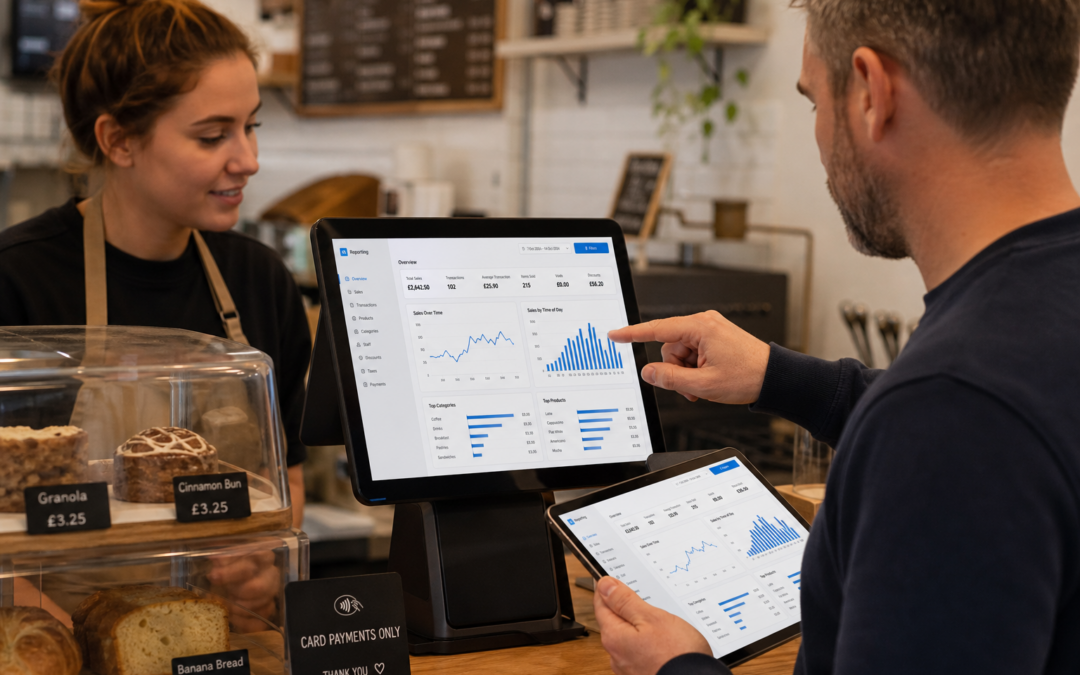
For many independent businesses, the challenge is not a lack of data. It is knowing which figures actually help with day-to-day decisions. A modern EPOS system can turn daily sales into useful information, giving owners a clearer view of what is happening across the business without adding extra admin. That is one of the reasons many retailers and hospitality venues exploring eZeePOS want reporting that is practical, quick to find and easy to understand.
Whether you run a shop, cafe, takeaway or small hospitality venue, better reporting can help you answer simple but important questions: What is selling well? When are your busiest periods? Which staff shifts need more support? Where are small changes likely to make the biggest difference? Those answers are often already in the till system. The key is using them well.
Why reporting matters beyond the daily takings
Sales totals are useful, but they rarely tell the full story. A business might have a strong weekend but slow midweek trade. One product range may be performing well while another is underused. A cafe may be busy at lunch but quieter than expected in the afternoon. Good reporting helps bring those patterns into view.
For owners and managers, that means less guesswork. Instead of relying on memory or instinct alone, you can look at accurate till data and use it to guide decisions on staffing, opening hours, promotions and customer service. In a busy environment, even small improvements can make the day run more smoothly.
The kinds of reports that are most useful
Different businesses need different information, but a few report types tend to be especially helpful for independent retailers and hospitality venues.
Sales by day and hour
Knowing when trade peaks can help with staffing and queue management. If your busiest periods are predictable, you can schedule the right number of team members at the right time, rather than overstaffing quiet periods or leaving the till short during a rush.
Product and category performance
For shops, this can show which departments or product groups are driving trade. For cafes and takeaways, it can highlight best-selling food and drink items. That makes menu adjustments, product displays and seasonal planning much easier to manage.
Staff and shift reporting
Useful reporting is not only about sales. It can also help owners understand how service is running across different shifts. That can be helpful when training new staff, reviewing busy periods or spotting where extra support may be needed.
Daily and end-of-day summaries
Clear summaries make it easier to close up properly and spot any unusual activity. Instead of spending time pulling information from different places, managers can review the day in one place and move on with confidence.
How better reporting helps different business types
Retail businesses
Independent shops often need a quick overview of what is selling and when. A better EPOS reporting setup can help retailers track busy times, monitor sales trends and decide which lines deserve more attention on the shop floor. For businesses with changing seasonal stock or varied product ranges, that can be especially valuable.
Cafes and restaurants
Hospitality businesses often work with narrow margins and busy service windows. Reporting can help identify popular menu items, quiet trading times and patterns across different service periods. That makes it easier to plan staff rotas, refine menus and support smoother service throughout the week.
Takeaways and quick-service businesses
Fast-moving food businesses benefit from quick, reliable reporting just as much as from quick ordering. If you can see when peak times happen and which items are most popular, it becomes easier to manage prep, service flow and daily planning without overcomplicating the process.
Turning data into practical decisions
The value of reporting is not in having more numbers. It is in using the right numbers to make useful changes. Here are a few examples of how that can work in practice:
- Adjust staffing levels to match actual trading patterns.
- Review slow-moving product categories or menu items.
- Plan promotions around quieter periods.
- Understand which locations, departments or shifts perform best.
- Spot changes in customer demand before they become bigger problems.
These decisions do not need to be complicated. In many cases, the most useful reports are the simplest ones, provided they are accurate and easy to read.
What to look for in an EPOS reporting setup
If reporting is going to support day-to-day decisions, it needs to be accessible. A good system should make it easy to find the figures you need without lots of extra steps. Business owners often benefit from reporting that is clear, organised and available when they need it, whether they are in the shop, on the floor or reviewing the day after closing.
It also helps if reports are presented in a way that is understandable at a glance. Busy owners do not always have time to interpret complex spreadsheets, so practical dashboards and straightforward summaries can be a real advantage. That is where a well-set-up EPOS system can make a difference.
Keeping reporting useful as your business grows
As businesses grow, reporting needs often become more important, not less. A single site can track everyday sales fairly easily, but once a business becomes busier or expands into more than one location, it helps to have clearer information in one place. Better EPOS reporting can support that growth by making performance easier to compare and manage.
Even if you are not planning to expand, improved reporting can still save time and reduce uncertainty. It gives owners a better sense of what is happening without needing to piece everything together manually at the end of a long day.
Choosing a reporting setup that suits your business
The best reporting tools are the ones people actually use. For many UK businesses, that means choosing a system that keeps things simple, practical and relevant to the way they trade. If you want a modern EPOS setup that helps turn everyday sales into clearer decisions, eZeePOS is designed with those practical needs in mind.
To find out more about how a straightforward EPOS system can support better reporting and more confident day-to-day management, visit www.ezeepos.co.uk.
Contact YCR Distribution at sales@ezeepos.co.uk or call 01924 438238.
Recent Comments