
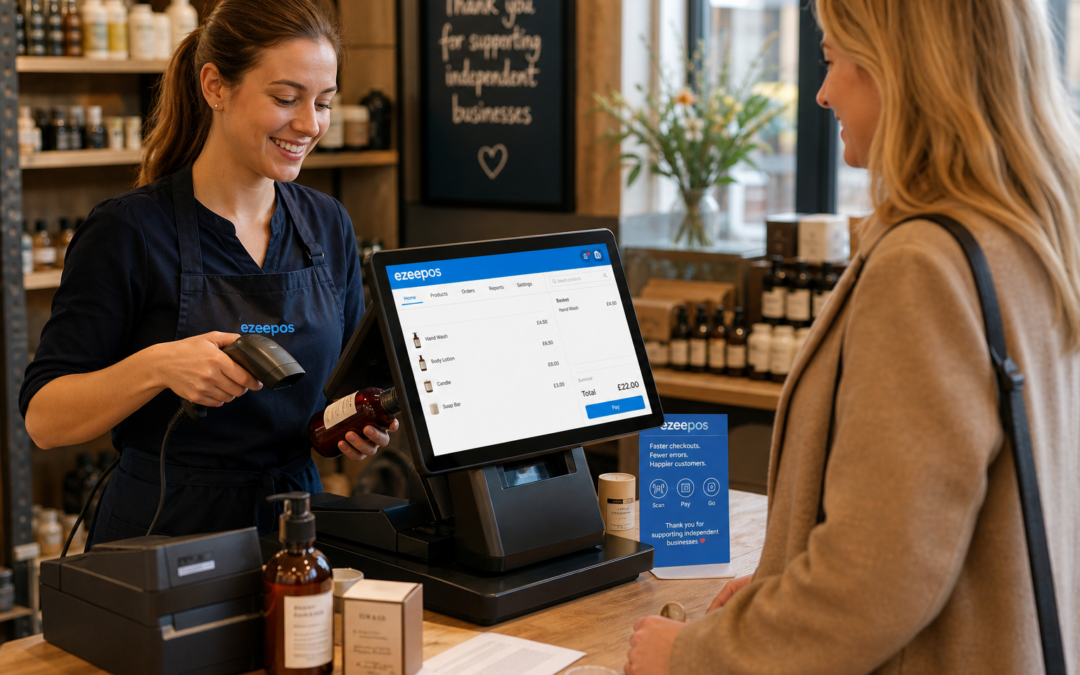
For many UK retailers, the checkout is where service either feels smooth or starts to slow down. When staff are typing product names manually or looking through long lists, even small delays can add up during busy periods. That is why barcode scanning remains such a practical part of modern retail EPOS.
At eZeePOS, we work with independent businesses that want a cleaner, quicker till process without making things harder for staff. A well-set-up barcode scanning workflow can help shops serve customers faster, reduce simple mistakes and keep queues under control. It is a straightforward feature, but it can make a noticeable difference in day-to-day trading.
Why barcode scanning still matters in retail
Barcode scanning removes unnecessary steps at the point of sale. Instead of searching for products manually, staff can scan items and move through transactions with greater confidence. That is especially useful in shops with a broad range of products, such as convenience stores, gift shops, hardware stores, pet shops and farm shops.
It is not just about speed, either. Scanning products helps reduce pricing errors and makes the till feel more consistent for customers. When the checkout process is clear and predictable, staff can focus more on service and less on correcting avoidable mistakes.
Benefits for independent retailers
- Faster item entry at the till
- Fewer manual keying mistakes
- Shorter queues during busy periods
- Better consistency across different staff members
- Less training needed for everyday checkout work
Where barcode scanning makes the biggest difference
Barcode scanning is useful in almost any retail setting, but it becomes especially valuable in stores where customers buy multiple items in one visit. If you run a shop where baskets are often full, scanning each product quickly can help keep the queue moving and avoid bottlenecks.
It also helps in fast-paced environments where customers expect a quick turnaround. A smooth checkout experience can influence whether a shopper returns, particularly in local independent stores where service is a big part of the value you offer.
Good fits for barcode scanning
- Convenience stores with frequent small baskets
- Gift shops with mixed product ranges
- Fashion and clothing shops managing multiple sizes and variations
- Pet shops with food, toys and accessories
- Farm shops selling packaged retail items alongside fresh produce
How barcode scanning supports a better customer experience
Customers notice when a checkout feels organised. They also notice when staff are spending time searching for items or asking colleagues for product details. Barcode scanning helps create a more professional impression because the transaction feels faster and more confident.
In a busy shop, that can reduce frustration at the till and make the whole visit feel more efficient. This is particularly important during weekends, seasonal trading periods or lunchtime rushes, when even a small delay can build up quickly.
For many retailers, the real value is not only time saved but also the sense of control it gives staff. A quicker checkout can lower pressure on the team and help them manage customers more calmly.
Barcode scanning and your EPOS setup
Barcode scanning works best when it is part of a wider EPOS setup that supports the way your shop actually trades. For some businesses, that means using a touchscreen till with a scanner nearby. For others, it may involve a compact counter setup where space is limited and speed matters.
If you are reviewing your current system, it is worth thinking about how product lookup, pricing and scanning all fit together. A strong retail EPOS should make common tasks easier, not more complicated. If staff still have to jump between different screens or work around awkward processes, the system may not be helping as much as it could.
Questions to ask before you improve scanning at the till
- Can staff find and scan products quickly?
- Do items ring through correctly first time?
- Is the checkout layout practical for busy periods?
- Can new team members learn the process easily?
- Does the till setup suit the size and shape of the counter?
Useful for shops with varied stock and seasonal lines
Barcode scanning is especially helpful when the product mix changes throughout the year. Seasonal retail can create extra pressure at the till, as new items are added and staff need to learn them quickly. Having a reliable scanning process helps businesses stay organised without relying on memory or manual searching.
That is one reason barcode scanning works so well in shops with changing stock ranges. It supports a more consistent checkout flow, even when the shop floor is busy and new products are being added regularly.
Choosing a retail EPOS that suits your checkout flow
If barcode scanning is important to your business, it is worth looking for retail EPOS software that fits your team’s working style. The goal is not to add complexity, but to simplify daily tasks at the counter. The best systems help staff process sales quickly, keep service moving and reduce common errors without making training harder.
eZeePOS is designed as a practical UK EPOS and POS software option for retailers who want a better checkout experience. You can learn more about the system and how it may suit your shop by visiting www.ezeepos.co.uk.
A simple upgrade that can make a clear difference
Barcode scanning may seem like a basic feature, but for many independent retailers it is one of the most useful parts of a modern till system. It helps staff work faster, supports better accuracy and makes the checkout feel more professional for customers.
If your shop is growing, handling more products or dealing with busier trading times, now may be a good moment to review how well your current checkout process works. Small changes at the till can have a big impact on the customer experience.
Contact YCR Distribution at sales@ezeepos.co.uk or call 01924 438238.
To find out more about practical EPOS options for your store, visit www.ezeepos.co.uk.
Recent Comments