
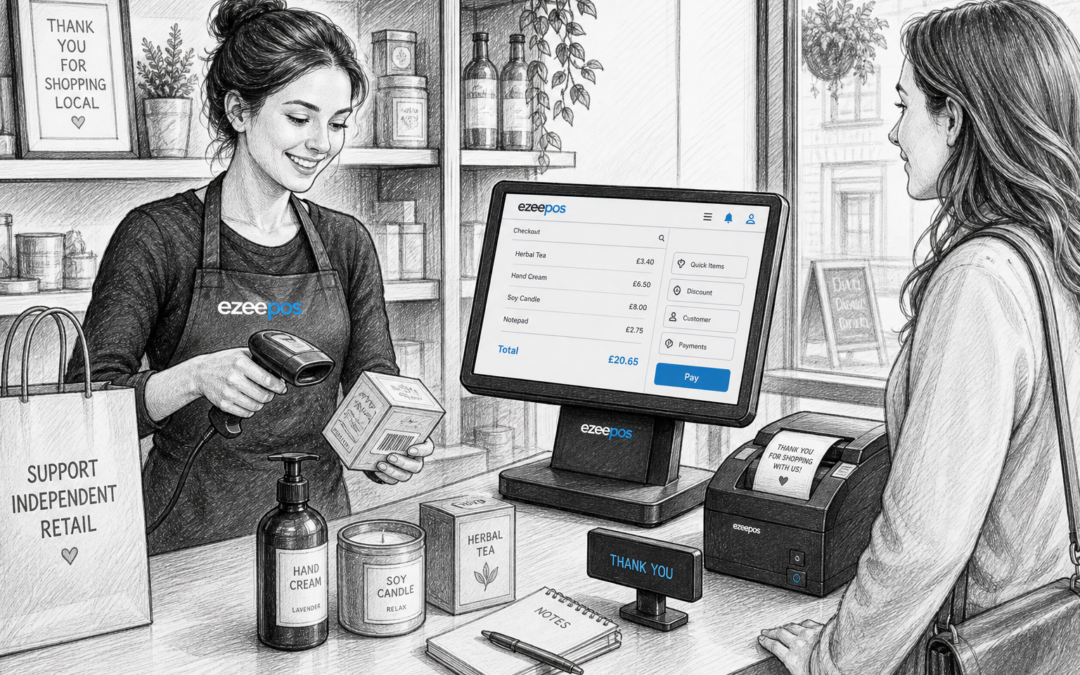
Why barcode scanners still matter at the retail counter
For many independent retailers, the checkout is where speed, accuracy and customer service all come together. A barcode scanner may seem like a small part of the setup, but it can make a noticeable difference to how smoothly the till runs from opening to closing.
For shops selling a mix of packaged goods, seasonal items or stocked lines with clear barcodes, scanning products is often faster than searching through menus or typing item names manually. That can help reduce queues, improve accuracy and make life easier for staff who are learning the system.
On the eZeePOS website, UK retailers can see how a practical EPOS setup can support faster day-to-day trading without adding unnecessary complexity.
How barcode scanning helps the checkout work better
Barcode scanning does more than save a few seconds per item. In a busy shop, those seconds add up. When staff can scan products quickly, they spend less time entering information manually and more time serving the next customer.
That can be especially useful in:
- convenience stores with fast-moving everyday goods
- gift shops with small, varied product ranges
- farm shops selling packaged food and mixed retail stock
- pet shops with lots of repeat items and branded products
- fashion and clothing shops with tagged stock at the till
Scanning also helps reduce mistakes. Manual entry can lead to the wrong item being chosen, especially when staff are busy or products have similar names. A barcode-based checkout process gives the till a clearer way to identify the item every time.
Reducing pressure during busy periods
Retail trade is rarely evenly spread across the day. Some shops have lunchtime peaks, weekend rushes or seasonal spikes that make the counter feel anything but calm. During those periods, barcode scanning can help keep the flow moving.
Instead of pausing to search for products one by one, staff can scan each item and move on. That creates a smoother rhythm at the till and can make the checkout feel more organised for both the team and the customer.
For businesses that often face short bursts of heavy footfall, this can be one of the simplest ways to improve service without changing the whole way the shop operates.
Why scanned checkout data is easier to trust
When products are scanned properly, the till records the sale in a more consistent way. That can make daily trading records easier to understand and help owners review what is selling without having to correct avoidable errors later.
It also supports a tidier counter process. Staff are less likely to rely on memory or guesswork, and customers are less likely to question whether an item has been priced correctly. In a small business, that kind of clarity matters because it helps the day feel more controlled.
eZeePOS is designed to help retail businesses keep those everyday tasks straightforward, whether they are running on a touchscreen till or a more compact counter setup.
What to consider when choosing barcode scanning hardware
The scanner itself should suit the kind of shop you run. A busy counter may benefit from a quick presentation scanner, while a smaller shop might prefer a handheld device that can be picked up and used whenever needed.
Practical points to think about
- Speed: can staff scan items quickly during busy periods?
- Ease of use: is it simple enough for new team members to learn?
- Counter space: will it fit neatly within the till area?
- Durability: is it suitable for everyday retail use?
- Product mix: does it work well for the types of goods you sell?
Barcode scanners are often most effective when they are part of a sensible overall till layout. A clean counter with a touchscreen POS terminal, scanner and receipt printer can make service feel much more organised than a cluttered, manual setup.
How barcode scanning fits into a modern EPOS setup
Barcode scanning works best when it connects naturally with the rest of the till system. In a modern retail EPOS setup, that can mean faster product entry, simpler checkout and cleaner sales records. For staff, it reduces the mental effort involved in every transaction. For owners, it supports a more reliable daily process.
That is one reason many independent shops move away from basic tills and toward a more flexible EPOS solution. A modern system is not just about taking payments. It is about making the whole counter experience easier to manage, especially when trade gets busy.
For retailers looking to build a practical setup around their counter space, the barcode scanner is often one of the first hardware choices worth getting right.
Keeping service simple for customers and staff
Customers usually want a checkout that feels quick, accurate and calm. Staff want a till that does not slow them down or create extra steps. Barcode scanning supports both goals by making routine transactions more straightforward.
That can be particularly valuable in independent retail, where teams are often small and every member of staff needs to be confident using the system. A clear scanning process makes training easier and can help new starters settle in quickly.
It also makes the till experience feel more professional. When items are scanned neatly, prices appear correctly and the receipt is produced without delay, the whole process feels better organised.
Choosing the right setup for your shop
If your business is thinking about improving checkout speed, barcode scanning is a practical place to start. It is a straightforward feature that can support faster service, fewer errors and a smoother daily routine without complicating the counter.
Whether you run a convenience store, gift shop, farm shop or another busy retail business, eZeePOS offers a practical UK EPOS option built for real trading conditions. If you want to see more about how the system fits retail and hospitality environments, visit www.ezeepos.co.uk.
Contact YCR Distribution at sales@ezeepos.co.uk or call 01924 438238.
Recent Comments