
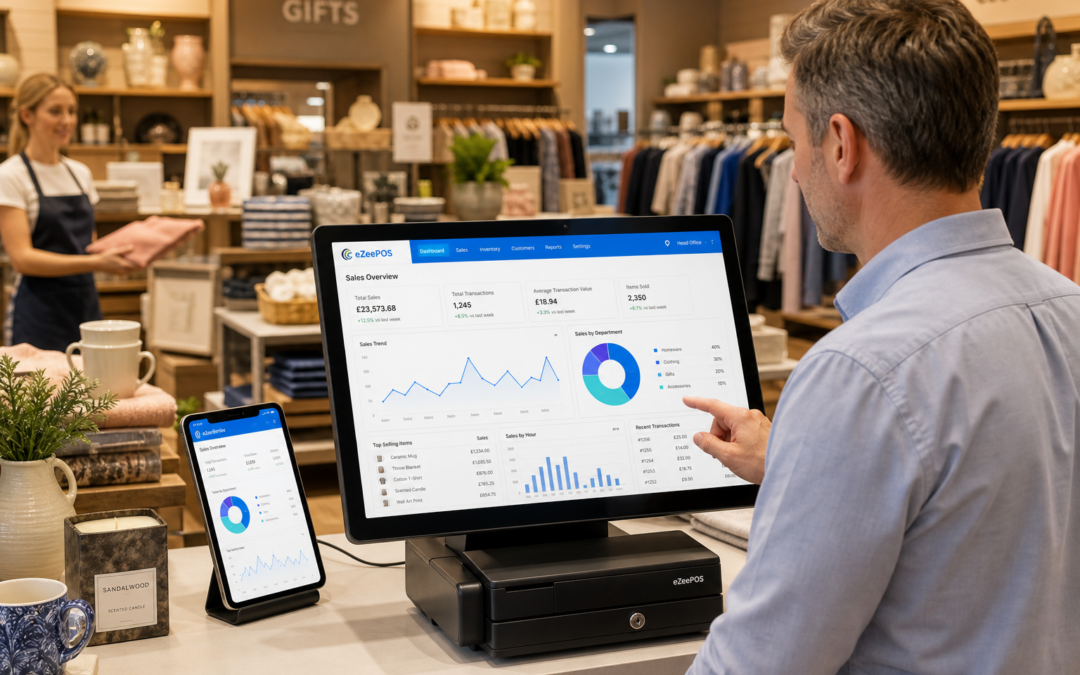
If you run a multi-department retail business, the challenge is rarely finding more data. The real challenge is turning that data into something useful. A single sales total might tell you how the day went overall, but it will not show which department performed best, which category slowed down, or where your team needs more support.
That is where better EPOS reporting becomes valuable. With the right setup, a multi-department retailer can move beyond guesswork and use day-to-day sales information to make clearer decisions. Whether you manage a large independent store, a farm shop with several departments, or a mixed retail business with clothing, gifts and homeware, reporting can help you see the bigger picture without making admin more complicated.
At eZeePOS, reporting is designed to support practical retail decision-making, not just produce numbers on a screen. For UK businesses comparing different areas of trade, that can make a real difference.
Why multi-department retailers need more than basic sales totals
When a business sells across several departments, each area can behave differently. One section may see strong weekend trade, while another performs better during the week. Some lines may bring people in but not generate much margin, while others may sell steadily with fewer peaks. A basic till total can hide all of that.
Useful reporting helps retailers answer questions such as:
- Which department is driving the most sales?
- Which product groups are performing well together?
- Are some areas underperforming at certain times of the week?
- Do staffing levels match the busiest trading periods?
- Are promotions having the effect you expected?
When you can see those patterns clearly, it becomes easier to plan promotions, manage rotas and improve the customer experience.
What better EPOS reporting can show you
A strong retail EPOS reporting setup gives you a more detailed view of trading without forcing you to build spreadsheets manually. Instead of relying on intuition alone, you can review the data that already exists in the system and use it to guide decisions.
Department performance
For multi-department stores, department-level reporting is one of the most useful tools. It helps you compare sections side by side, so you can see where sales are strong and where attention may be needed. That might be fashion versus gifts, household versus seasonal, or produce versus deli in a larger mixed retail setting.
Sales trends by day and time
Reporting can also show when trade is strongest. This is especially useful if your business has different busy periods across departments. For example, one area may see a rush in the morning, while another becomes busier later in the day. Knowing this helps with staffing, queue management and planning stock movement around the shop floor.
Product and category insight
Looking at sales by product group or category can help you understand which ranges deserve more space and which may need a rethink. For a business with several retail departments, this can highlight useful cross-selling opportunities too. A garden centre, for example, may discover that certain seasonal items sell better when displayed near associated accessories or gift lines.
Performance comparisons across locations or sections
If your business has more than one site, or if you want to compare departments within one larger store, reporting can help you identify variation quickly. That makes it much easier to spot what is working well in one area and apply those lessons elsewhere.
How reporting supports better day-to-day decisions
The value of reporting is not just in end-of-month reviews. For many businesses, the most useful insights are the ones that help with everyday trading decisions.
For example, if one department consistently performs better on certain days, you can adjust staffing accordingly. If a category is selling well but only when promoted, you can plan your future offers more carefully. If one area is slower than expected, you can review the layout, pricing or product mix.
This is especially important in independent retail, where each square metre of space matters. Good reporting helps you use that space more effectively.
Reducing manual admin
Many retailers still spend too much time pulling figures together from different places. A modern EPOS system can reduce that effort by keeping sales information in one place. That means less time trying to reconcile numbers and more time actually managing the business.
For owners who are already balancing staff, customers and supplier orders, that practical saving matters. Better reporting should make life simpler, not add another layer of work.
Supporting better stock and merchandising decisions
While stock control is not the only benefit, reporting can still help you understand what deserves more space on the shop floor and what may need to be reduced or repositioned. If a department is regularly underperforming, it may point to pricing, visibility or product mix issues rather than a wider trading problem.
That sort of insight helps retailers make calmer, more informed changes instead of reacting too quickly to one busy or quiet week.
Why multi-department retailers benefit from clear reporting formats
Not every business needs a highly complex reporting system. In fact, many independent retailers get more value from reports that are clear, accessible and easy to act on. The best EPOS reporting usually gives you the detail you need without overwhelming you with unnecessary figures.
For multi-department businesses, the ideal setup should make it easy to:
- compare departments quickly
- check sales over different time periods
- spot rising or falling trends
- identify your best-performing categories
- check the effect of promotions or layout changes
That kind of clarity is helpful whether you are reviewing daily trade on the till, planning a weekly management meeting or preparing a seasonally busy period.
Reporting should suit how your business actually works
The best reporting tools are the ones that fit your business, not the other way around. A mixed retail operation does not think in the same way as a single-category shop, so its reporting should reflect that. You may want to look at departments separately, compare different trading periods or review store-wide figures alongside section-level performance.
If your business is growing, the value of that flexible reporting becomes even clearer. What works for a smaller store may not be enough once you add new departments, more staff or extra trading hours. Choosing an EPOS system with solid reporting support can help you stay organised as the business expands.
A practical EPOS choice for UK retailers
For UK businesses that want clearer commercial insight, eZeePOS offers a practical way to bring sales information together and use it with confidence. It is built to support day-to-day retail operations in a way that feels useful rather than complicated.
If you are reviewing your current setup or planning an improved reporting process for a multi-department store, it is worth looking at what your EPOS can already tell you. The more clearly you can see your trade, the easier it becomes to make sensible decisions about staffing, merchandising and future planning.
To learn more about eZeePOS and how it can support your retail business, visit www.ezeepos.co.uk.
Contact YCR Distribution at sales@ezeepos.co.uk or call 01924 438238.
Whether you manage a single shop with different departments or a larger retail environment, better reporting can help you understand what is really happening on the shop floor. That makes it easier to plan ahead, respond to changes and keep the business moving in the right direction.
Recent Comments