
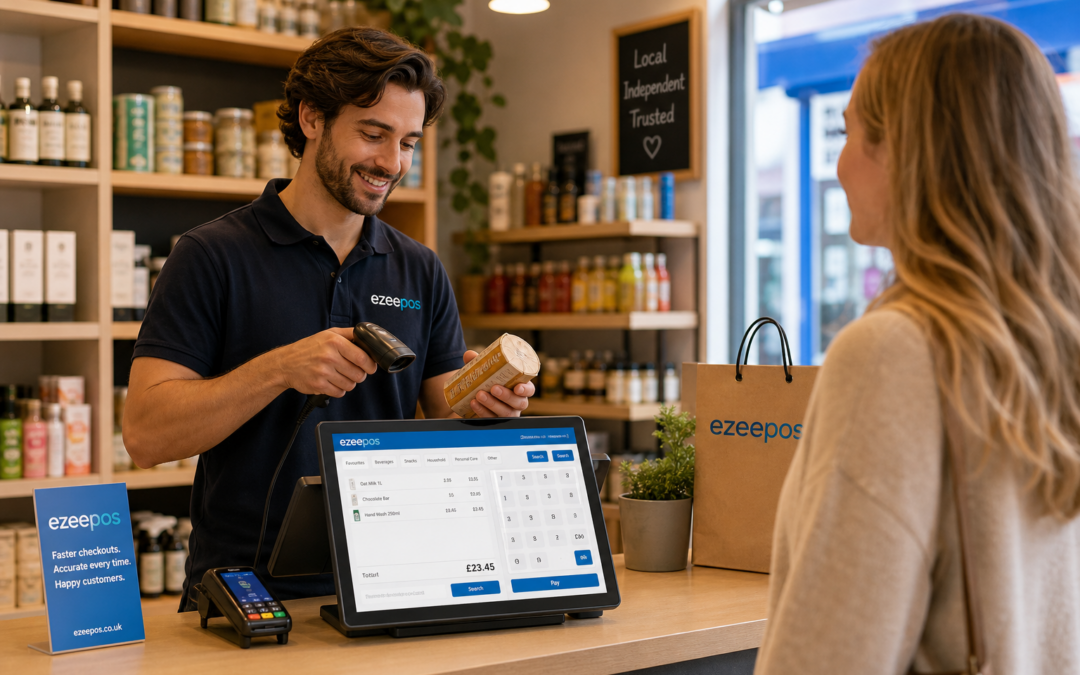
Why barcode scanning still matters at the checkout
For many independent retailers, barcode scanning is one of the most practical ways to improve everyday service. It helps staff find products quickly, keeps queues moving and reduces the chance of mistakes when items are entered manually. In a busy shop, those small gains can make a noticeable difference to the customer experience.
If you are looking at ways to improve checkout speed, it is worth seeing how barcode scanning fits into your wider EPOS setup. Modern systems such as eZeePOS are designed to support a more efficient till process for retail businesses that want clearer workflow and less friction at the counter. You can also learn more about the platform at www.ezeepos.co.uk.
What barcode scanning helps with in a retail environment
Barcode scanning is not just about entering the right price. It supports smoother service in several everyday situations, especially when staff are dealing with a mixed product range or serving customers quickly during busy periods.
Faster item recognition
Instead of searching through menus or manually typing product names, staff can scan an item and move on. That saves time at the till and makes it easier for new staff to get comfortable with the checkout process.
Fewer checkout mistakes
Manual entry can sometimes lead to the wrong product being selected, especially in shops with similar-looking items or size and flavour variations. Barcode scanning helps reduce that risk by linking the barcode directly to the right product record.
Better service during peak moments
When queues start to build, every second matters. A faster checkout helps staff keep the line moving without feeling rushed, which is especially useful in convenience stores, gift shops, farm shops and fashion retailers with limited counter space.
Where barcode scanning helps most
Barcode scanning is useful across many retail settings, but it can be particularly valuable for businesses that handle a wide mix of products or frequent customer turnover.
- Convenience stores: quick scanning helps reduce delays during high footfall moments.
- Gift shops: useful when staff are serving small items, seasonal lines and varied product ranges.
- Fashion and clothing shops: helps with size, colour and style variations at the till.
- Farm shops: supports mixed product ranges, from packaged goods to add-on lines.
- Hardware stores: helps staff process different product types without slowing down service.
For these businesses, checkout speed is not only about convenience. It can also help create a better impression when customers are in a hurry or shopping on a lunch break, before school pickup or during a weekend rush.
Scanning works best when the product setup is tidy
Barcode scanning is most effective when product records are well organised. That means descriptions are clear, item variants are set up properly and the till screen is easy for staff to use. If a barcode points to the wrong item, it slows things down rather than speeding them up.
A sensible EPOS setup can help retailers keep product information consistent and easy to access. That is where a system like eZeePOS can be useful: not as a gimmick, but as a practical retail tool that supports faster service and easier day-to-day trading.
Training is still important
Even simple technology works better when staff know how to use it properly. A short training session on scanning, voiding mistakes and handling unscannable items can save time later. It also helps ensure that the checkout stays calm when the shop gets busy.
Barcode scanning and the wider checkout experience
Barcode scanning should be seen as part of the whole till process, not a standalone feature. A good retail checkout combines quick item entry, clear on-screen prompts and a layout that makes sense to staff on shift. If a till is cluttered or hard to navigate, even a scanner will not fully solve the problem.
That is why many retailers look for EPOS software that feels straightforward to use. In practice, the best setup is one that helps staff serve customers quickly without needing to think too hard about the technology in front of them. A scanner, touchscreen till and neat product database can work together to keep service efficient and consistent.
What to look for in a retail EPOS setup
If barcode scanning matters to your business, it is worth asking a few practical questions before choosing a system:
- Can the till be set up so common products are easy to access?
- Does the system keep checkout steps simple for new staff?
- Can it support a sensible way of handling items that are not barcoded?
- Will the screen layout work well in a compact retail space?
- Does the software help reduce avoidable checkout delays?
These points are often more important than chasing extra features you may never use. For many independent shops, speed and clarity at the counter are the features that matter most.
A simple upgrade that can make a real difference
Barcode scanning may seem basic, but it remains one of the most useful parts of a modern retail EPOS system. It helps reduce errors, improves checkout speed and makes day-to-day service easier for staff and customers alike. For independent businesses that want a practical improvement rather than a major operational change, it is a strong place to start.
If you are reviewing your till setup, eZeePOS is worth considering as a straightforward UK EPOS option for retail businesses that want better control at the counter. See how it could fit your shop at www.ezeepos.co.uk.
Contact YCR Distribution at sales@ezeepos.co.uk or call 01924 438238.
Recent Comments