
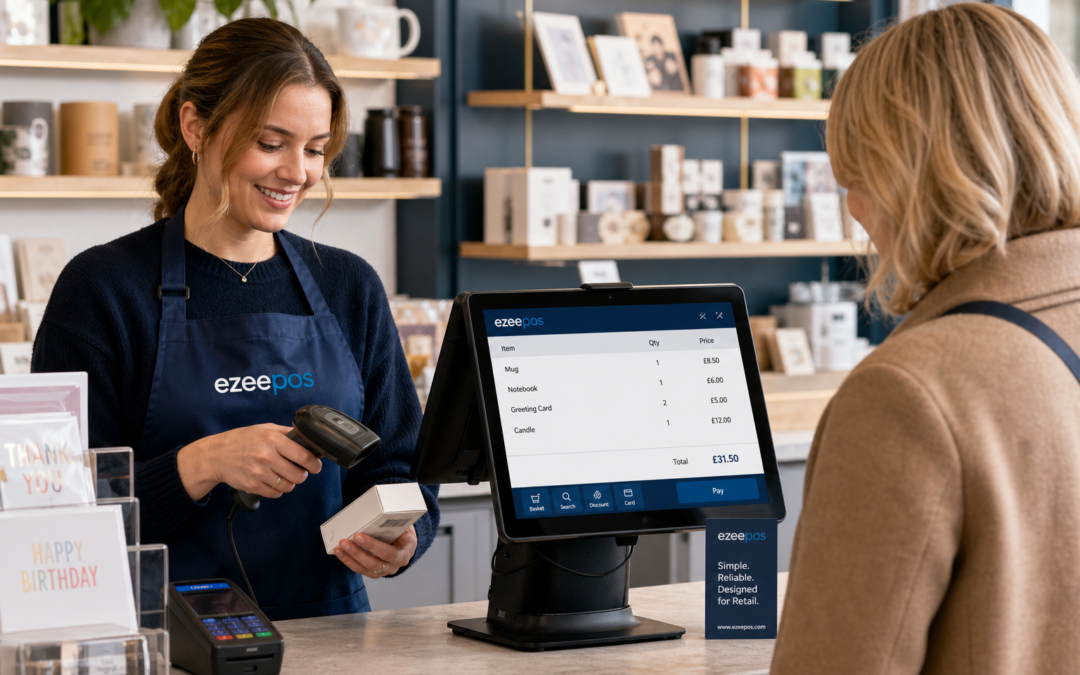
For many UK retailers, barcode scanning is one of those features that quietly keeps the whole checkout process moving. It does not always get as much attention as reporting, loyalty or payments, but it can make a real difference to speed, accuracy and staff confidence at the till.
At eZeePOS, barcode scanning is part of the practical toolkit that helps independent shops work more efficiently every day. Whether you run a convenience store, gift shop, fashion boutique or pet shop, a well-set-up POS system can help staff find products quickly and keep queues from building up.
Why barcode scanning still matters in modern retail
Barcode scanning is often seen as a simple checkout tool, but in practice it supports a much smoother customer experience. Instead of staff typing product names manually, scanning allows items to be added to the sale in seconds. That can save valuable time during busy periods and help reduce the small mistakes that can happen when staff are under pressure.
For independent retailers, those small gains matter. Faster item entry means shorter queues. Fewer keying errors mean fewer pricing issues. And a more reliable checkout process can help staff feel more confident, especially if they are new or working on a busy shift.
Helpful for shops with varied product ranges
Some retail businesses have straightforward product ranges, but many UK stores carry a mix of items that are harder to manage at the till. Think about:
- Convenience stores with hundreds of everyday products
- Gift shops with seasonal stock and mixed price points
- Fashion shops with different sizes and colours
- Pet shops with food, treats and accessories
- Hardware stores with small parts and repeat product categories
In these settings, barcode scanning helps staff identify products quickly without relying on memory or searching through long item lists. That can be especially useful when the shop is busy or when several team members are sharing the same till.
How scanning improves checkout accuracy
Speed matters, but accuracy matters just as much. A barcode scanner reduces the chance of selecting the wrong item manually, especially when products look similar or have long descriptions. For retailers, this can help avoid pricing mistakes, reduce awkward corrections at the till and make refunds or adjustments less likely.
It also helps keep the checkout experience consistent. Customers expect a quick and accurate payment flow, and barcode scanning supports that by making each transaction feel more reliable. When the till process is smooth, staff can focus more on the customer instead of worrying about typing errors.
Less stress for staff during busy periods
Retailers often notice the value of barcode scanning most clearly during peak trading times. A Saturday rush, a pre-holiday queue or a lunchtime surge can all put pressure on the checkout. Scanning helps staff process sales with less effort and makes it easier to keep service moving.
That can be particularly useful in smaller shops where one person may be managing the till, answering questions and handling customers at the same time. A faster scan-based workflow can reduce pressure and help the business feel more organised.
Barcode scanning and everyday EPOS use
When barcode scanning is part of a modern EPOS setup, it does more than speed up the sale. It supports a cleaner, more organised workflow across the whole till. Product records can be linked to items, staff can move through transactions more naturally, and managers get a system that is easier to train on and use consistently.
For businesses using retail EPOS software, scanning can sit alongside other useful functions such as product lookup, discounts, receipts and sales reporting. That means the till is not just a payment point, but a practical day-to-day sales tool.
Useful alongside product lookup
Even with barcode scanning in place, there are still times when staff need to find an item manually. That is where good product lookup comes in. Together, scanning and lookup create a more flexible checkout setup, especially for stores with mixed stock or products that do not always arrive with clear labels.
For example, if a barcode is damaged or missing, staff can still complete the sale without slowing the customer down. That kind of flexibility helps keep service moving and reduces reliance on workarounds.
What retailers should look for in a scanning setup
If you are reviewing your current till system or planning an upgrade, it is worth thinking about how barcode scanning fits into your day-to-day operation. The best setup is not just about the scanner itself, but about how well it works with the rest of the EPOS process.
- Ease of use: Staff should be able to scan items quickly without extra steps.
- Clear product records: Items should be easy to find and manage in the POS system.
- Fast checkout flow: The system should support a smooth, low-friction sale.
- Reliable operation: Scanning should feel natural during busy trading periods.
- Simple training: New staff should be able to learn the process quickly.
For many retailers, that combination is more useful than adding complicated features they may never use. Barcode scanning works best when it is part of a straightforward, practical till setup that suits the business.
A simple upgrade that supports better service
Barcode scanning is not a flashy feature, but it remains one of the most effective ways to keep retail checkouts moving. It helps reduce queue times, improves accuracy and makes the till easier for staff to use throughout the day.
If your shop is still relying on manual entry or a basic till process, it may be worth considering how a modern EPOS system could make things easier. At eZeePOS, the focus is on practical tools that help UK retailers work more efficiently without adding unnecessary complexity.
Barcode scanning may be a small part of the setup, but in a busy shop it can have a big impact on service.
Contact YCR Distribution at sales@ezeepos.co.uk or call 01924 438238.
To learn more about practical EPOS options for UK retailers, visit www.ezeepos.co.uk.
Recent Comments