
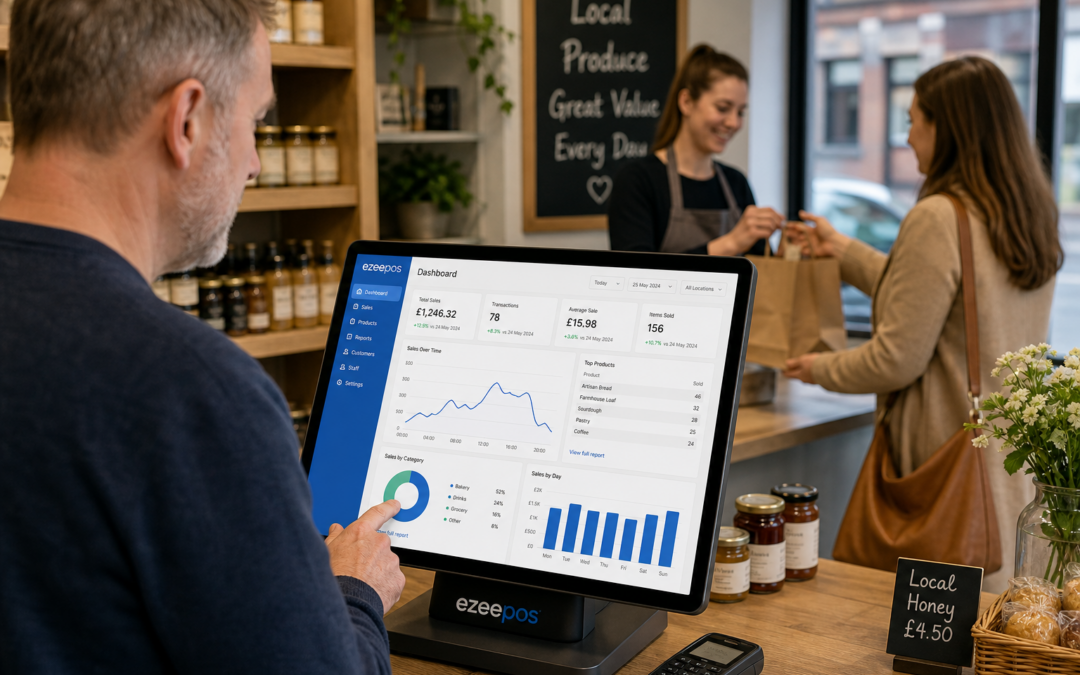
For many independent shops, the till is doing more than taking payments. It is quietly collecting useful information about sales, trading patterns and customer demand. With the right system, that information can help owners make better decisions every day. At eZeePOS, we work with UK retailers who want a more practical way to understand what is happening on the shop floor.
Instead of waiting until the end of the week or month to review figures, EPOS reporting can show what is selling, when the busiest periods happen and which products deserve more attention. That makes it easier to plan staffing, manage promotions and spot changes in demand early.
Why reporting matters for small shops
Small shops often rely on instinct and experience to guide decisions, and that still matters. But a good EPOS system adds evidence to support those decisions. Rather than guessing which lines are strongest, owners can look at actual sales data and work from there.
This is especially useful in independent retail, where space is limited and every shelf needs to earn its place. If a product range is underperforming, reporting can highlight it. If certain items are consistently popular, that knowledge can influence ordering, display layout and promotions.
Practical benefits at a glance
- See which items are selling best across different periods
- Spot quieter trading times and plan rotas more sensibly
- Review trends without manual paperwork
- Make seasonal decisions with more confidence
- Reduce the chance of relying on guesswork alone
What useful EPOS reports can show
Not every report needs to be complicated. For most small shops, the most useful information is simple and easy to read. The aim is not to drown owners in numbers, but to give them a clear picture of trading.
Sales by day and time
Understanding when your shop is busiest can help with staffing, break times and queue management. If Friday afternoons are consistently busy, for example, you can prepare for that in advance rather than reacting in the moment.
Best-selling products
Knowing which products sell most often can help with display planning and reordering. It can also show whether a promotion is working as intended. For seasonal shops, this can be particularly useful when demand changes quickly.
Product and category performance
Some shops stock a wide range of items, from everyday essentials to impulse buys and seasonal products. Category reporting helps owners understand which parts of the business are doing well and which may need more attention.
How reporting supports better day-to-day decisions
EPOS reporting is most useful when it becomes part of regular routine. A quick look at sales trends can influence decisions large and small, from stock display changes to how staff are scheduled for the week ahead.
For example, if a greeting card shop sees stronger sales around lunchtime, it may choose to make that period a priority for front-of-house cover. A convenience store might notice that certain chilled drinks perform better in warm weather and adjust displays accordingly. A gift shop could review which ranges sell faster at weekends and arrange merchandising around those patterns.
The more consistently you review the data, the more useful it becomes. Small changes can build into better trading over time.
Examples of decisions reporting can support
- Planning staff cover around busy times
- Choosing which products to promote in-store
- Reviewing whether a range should be expanded or reduced
- Spotting seasonal changes in customer buying habits
- Checking whether a promotion delivered the expected result
Keeping reporting simple for independent retailers
Many business owners do not want a complicated system with too many screens or unclear graphs. They want straightforward reporting that helps them act quickly. That is where a practical EPOS setup makes a difference.
A well-designed system should make it easy to check sales performance without extra admin. Reports should be clear enough to use during a busy day, not something that only makes sense after a lengthy review period. That is one reason many retailers value EPOS software that is built around day-to-day use rather than just back-office reporting.
If the data is easy to access, it becomes easier to turn that data into action. That can be especially valuable for small businesses with limited time and small teams.
Reporting for different types of shops
Different retail businesses use reporting in different ways. A garden centre may want to see which departments carry the most trade during peak months. A fashion shop may want to understand which sizes, colours or lines are performing well. A farm shop may wish to compare everyday grocery sales against café or deli items if they have more than one trading area.
For all of these businesses, the principle is the same: reporting should help owners understand what customers are buying and when. That knowledge can support smarter decisions without adding unnecessary complexity.
Useful reporting habits for small businesses
- Check daily figures at the same time each day
- Review weekly trends before planning rotas or orders
- Compare similar periods rather than isolated days
- Watch for unusual changes in demand
- Use reports alongside your own shop floor experience
Why this matters for growing shops
When a shop starts to grow, it becomes harder to manage everything from memory alone. More products, more staff and more trading variation all create a need for clearer information. EPOS reporting helps owners stay organised as the business develops.
For growing retailers, that can mean better planning and fewer surprises. It can also make it easier to talk to staff about performance, busy times and customer patterns in a simple, practical way.
Choosing an EPOS system that makes reporting easy
If reporting is going to be useful, it needs to be accessible, reliable and easy to understand. That is why many UK businesses look for a modern touchscreen till or retail EPOS system that keeps reporting close to the day-to-day operation of the shop.
With eZeePOS, the aim is to give independent businesses a practical setup that supports clear reporting without making the till more complicated. If you are reviewing your current system or replacing a basic till, it is worth thinking about how much insight you actually need from your sales data and how quickly you want to use it.
For shops that want a better view of trading without unnecessary jargon, the right EPOS setup can make a real difference.
To learn more about how eZeePOS can support your business, visit www.ezeepos.co.uk.
Contact YCR Distribution at sales@ezeepos.co.uk or call 01924 438238.
Recent Comments