
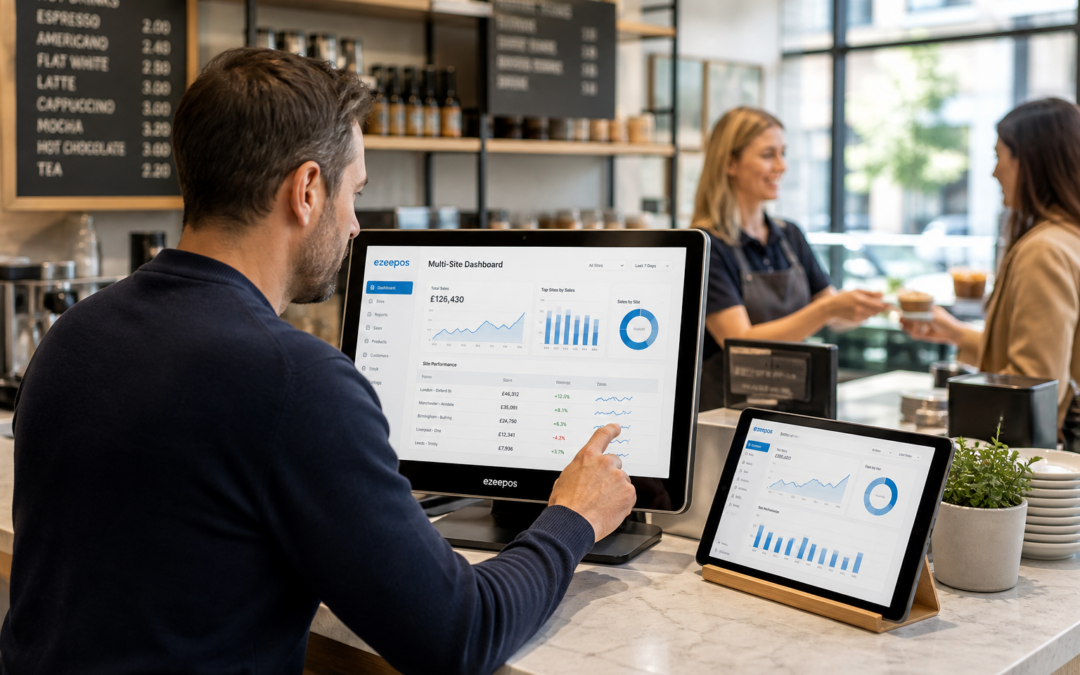
When a business grows beyond one shop, cafe, restaurant or takeaway, the challenge changes. You are no longer only looking at what happened at one till. You are trying to understand how different sites are performing, where your busiest periods are, and which locations need more attention. That is where multi-site reporting becomes especially useful.
For growing businesses, reporting is not just about numbers on a screen. It is about having a clearer view of trading across all locations, so you can make practical decisions without relying on guesswork. If you are exploring a more organised EPOS setup, eZeePOS can help businesses think through the reporting side of day-to-day operations in a simple, usable way.
What multi-site reporting actually does
Multi-site reporting brings sales and performance information from more than one location into a single view. Instead of checking each branch separately, owners and managers can compare results side by side and look for patterns across the business.
For example, you might want to see:
- Which location is trading strongest on weekdays or weekends
- How different sites compare by takings, covers or order values
- Which branches are busy at the same times
- Where sales vary by product range or menu mix
- How individual teams are performing over time
That kind of visibility can be valuable whether you run retail stores, cafes, restaurants, bars or takeaways. It helps turn day-to-day trading data into something more useful and easier to act on.
Why clearer location-by-location visibility matters
It is easy for a growing operation to become fragmented. One site may be busier than expected, another may be underperforming, and another may have different trading patterns depending on the season. Without good reporting, these differences can take longer to spot.
Spotting which sites need support
If one branch is consistently quieter than the others, there may be a staffing issue, a local demand issue or a pricing issue worth looking into. Multi-site reporting gives you a starting point for those conversations. It does not replace management judgement, but it helps you ask better questions.
Understanding trading patterns across the business
Different locations often behave differently. A town-centre cafe may be stronger at lunchtime, while a suburban takeaway may be busiest in the evening. A retail site in a tourist area may trade well at weekends but slow down during the week. When those patterns are visible, you can plan rotas, stock, promotions and staffing with more confidence.
Helping managers work from the same information
When more than one manager is involved, reporting can help everyone work from the same facts. That makes meetings more productive and reduces confusion about where the business stands. Instead of comparing separate spreadsheets or printed summaries, you can use a more consistent view of performance across all locations.
Useful decisions multi-site reporting can support
Good reporting is most valuable when it leads to action. For growing UK businesses, that action might involve small day-to-day changes rather than major strategic decisions.
Staffing and rota planning
If one location regularly sees a lunchtime rush while another is busier later in the evening, staffing can be aligned more carefully to demand. That can improve service and help managers avoid overstaffing or under-staffing.
Menu, product and offer review
Multi-site reporting can show whether certain items perform better in one location than another. In hospitality, this may help with menu planning. In retail, it may highlight products that work well in one branch but not another. That can inform future ranges and local promotions.
Seasonal planning
For businesses with changing footfall, reporting across multiple sites can show how each location reacts to seasonal trade. Garden centres, gift shops, cafes and visitor-led businesses often see different patterns from branch to branch. Comparing those trends can make future planning much easier.
Monitoring consistency
When locations are meant to operate in similar ways, reporting can help highlight whether each site is following the same approach. For example, if average transaction values are very different, it may be worth checking whether customer service, product mix or local trading conditions are driving the gap.
How multi-site reporting helps retail businesses
For retail businesses, especially those with more than one shop, reporting can help keep the business organised without adding more admin. Owners can review sales by site, compare performance over time and see which branches are doing well with specific product categories.
This is particularly useful for businesses with mixed trading conditions. One shop may serve commuters, while another depends on passing trade. One may be in a busy high street location, while another works more like a neighbourhood store. Multi-site reporting can help make sense of those differences.
It can also support decision-making when opening new locations. If you already know how similar branches perform, it is easier to judge whether a new site is likely to follow the same pattern or need a different approach.
How it helps hospitality businesses
In hospitality, multi-site reporting often becomes valuable as soon as there are two or more venues to manage. A cafe group, restaurant chain, bar operator or takeaway owner may need a quick way to understand which sites are busiest, which teams are performing well and which trading periods need more attention.
That insight can support everything from rota planning to service improvements. If one branch is regularly attracting more covers or more takeaway orders, managers can look at what is working there and decide whether it can be applied elsewhere.
For businesses with table service, takeaway counters or mixed service styles, seeing the complete picture can also help with consistency. A well-structured EPOS setup can make those comparisons easier to manage without adding complicated manual reporting.
Choosing reporting that is easy to use
The best reporting tools are usually the ones people actually use. If the system is too complicated, teams may stop checking it regularly. That means useful information gets missed.
When looking at reporting for multiple locations, it helps to think about:
- How quickly managers can access the information
- Whether the data is clear enough to compare sites easily
- Whether reports can be reviewed daily, weekly or monthly
- How much training staff will need to use the system properly
- Whether you can focus on the measures that matter most to your business
A practical EPOS system should make it easier to see what is happening, not harder. That is especially important for busy owners who do not have time to dig through manual spreadsheets every day.
Bringing all your sites into one clearer picture
If your business is starting to grow, reporting becomes one of the most useful parts of your EPOS setup. It can help you compare branches, understand performance and make better decisions without losing sight of the day-to-day detail.
eZeePOS is designed to support UK retail and hospitality businesses that want a more straightforward way to manage trading across one or more locations. If you are planning your next stage of growth, it is worth exploring how reporting can support that process at www.ezeepos.co.uk.
Contact YCR Distribution at sales@ezeepos.co.uk or call 01924 438238.
Recent Comments