
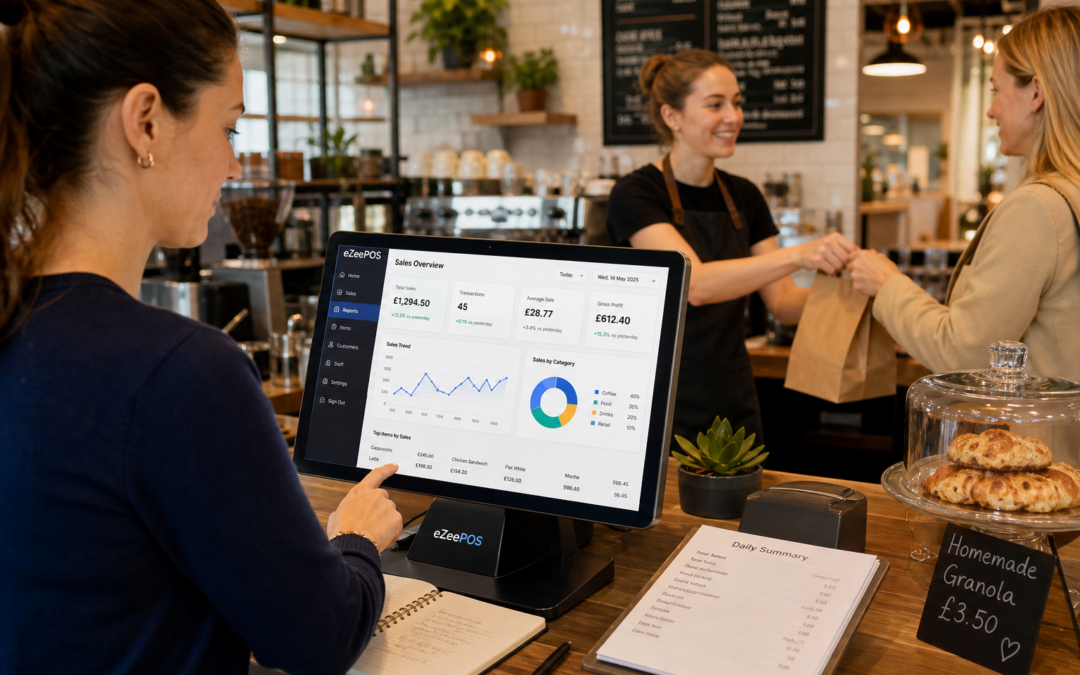
Clear reporting is one of the most useful parts of a modern EPOS system, yet it is often overlooked when businesses are choosing new till software. For independent retailers, cafés, restaurants and takeaways, good reports can turn day-to-day sales data into practical decisions that improve trading, reduce waste and support better planning.
If you are reviewing your current setup, eZeePOS is designed to help UK businesses work more efficiently with straightforward reporting tools that make the numbers easier to use. Instead of relying on guesswork, owners can check what is selling, when trade is strongest and where the business may need a small adjustment.
Why reporting matters in everyday trading
Many small businesses start with a basic till or manual records, then reach a point where the numbers become harder to track by hand. At that stage, reporting is no longer just a nice extra. It becomes a practical tool for understanding the business properly.
Good EPOS reporting helps answer simple but important questions:
- Which products or menu items are selling best?
- What times of day are busiest?
- Which days are quieter than expected?
- How much has been taken over a week or month?
- Are different staff members following the same process?
Those answers can help business owners act sooner, rather than waiting until problems become obvious. That might mean adjusting opening hours, changing a product range, planning staff rotas more carefully or focusing more attention on popular items.
What useful EPOS reports can show
Not every report needs to be complicated. In fact, the most useful reports are often the ones that are easy to read at a glance. A good EPOS system should present information in a way that makes sense in real business settings, not just in a spreadsheet.
Sales summaries
Sales summaries help owners see total takings over a chosen period. This is useful for checking daily performance, comparing weeks and spotting general trading trends without digging through individual receipts.
Product or item performance
For retail and hospitality businesses, item-level reporting can highlight which products are driving sales. A shop may find that one range performs strongly at weekends, while a café may notice that certain drinks sell far more than expected during school run times or lunch periods.
Busy periods and trading patterns
Understanding peak times is especially helpful for staffing and service planning. If a takeaway is regularly busiest between 6 pm and 8 pm, or a convenience store has a clear morning rush, that information can support better shift planning and quicker service.
Staff performance and till activity
Some businesses also use reporting to understand how the till is being used across the team. This is not about micromanagement. It is about making sure the business has a clear picture of transactions, refunds and voids so that managers can keep things accurate and consistent.
How reporting helps different UK businesses
Retail shops
For retailers, reporting can show which product groups are doing well and which ones may need more promotion. Independent gift shops, fashion stores and convenience stores can all benefit from knowing which lines attract regular sales and which items slow down on the shelf.
That insight helps with stock ordering, promotions and space planning. It can also support decisions about whether to keep certain lines, price them differently or move them to more visible areas in the shop.
Cafés, restaurants and takeaways
In hospitality, reporting can be especially useful for understanding menu performance. A restaurant might notice that certain dishes sell well at lunch but not in the evening, while a takeaway may find that specific meal deals drive larger orders on busier nights.
This kind of information can help with menu changes, pricing decisions and staffing levels. It also gives owners a clearer idea of what their customers really want, rather than what they assume is selling best.
Bars and pubs
For bars and pubs, reporting can help identify trading patterns across the week, popular drink categories and quieter sessions. That can support smarter rota planning and better management of promotions during slower periods.
Using reports to make better decisions
The real value of reporting comes from using the information regularly. A weekly check of sales and trading patterns can be enough for many small businesses. Over time, the same reports can show whether changes are working or whether a new approach is needed.
For example, a business might use reporting to:
- Plan staff shifts around busy trading times
- Review which products or menu items are most profitable
- Compare weekday and weekend performance
- Spot quieter periods that could benefit from a promotion
- Track whether a recent pricing change is having the right effect
When reports are easy to understand, they become part of everyday decision-making rather than something that is looked at only once in a while.
Why simple reporting is often best
Small businesses do not always need complex dashboards or layers of difficult data. In many cases, simple reports are more valuable because they can be checked quickly during a busy day. The aim is to save time, not create more admin.
A well-set-up EPOS system should help business owners access the information they need without extra effort. That might include daily takings, category summaries, item sales or basic performance trends. The important part is that the data is clear enough to act on.
Choosing EPOS reporting that suits your business
When comparing systems, it is worth asking how reporting is presented and how easy it is to use. Some businesses want a quick overview, while others need more detailed information for multiple sites or different departments. The right approach depends on the type of business and how the team works.
If you are looking for a practical UK EPOS solution, eZeePOS at www.ezeepos.co.uk can help businesses explore features that support clearer reporting and better day-to-day control. For many independent retailers and hospitality operators, that kind of visibility makes a real difference.
Contact YCR Distribution at sales@ezeepos.co.uk or call 01924 438238.
Visit eZeePOS to find out more about EPOS reporting for your business.
Recent Comments