
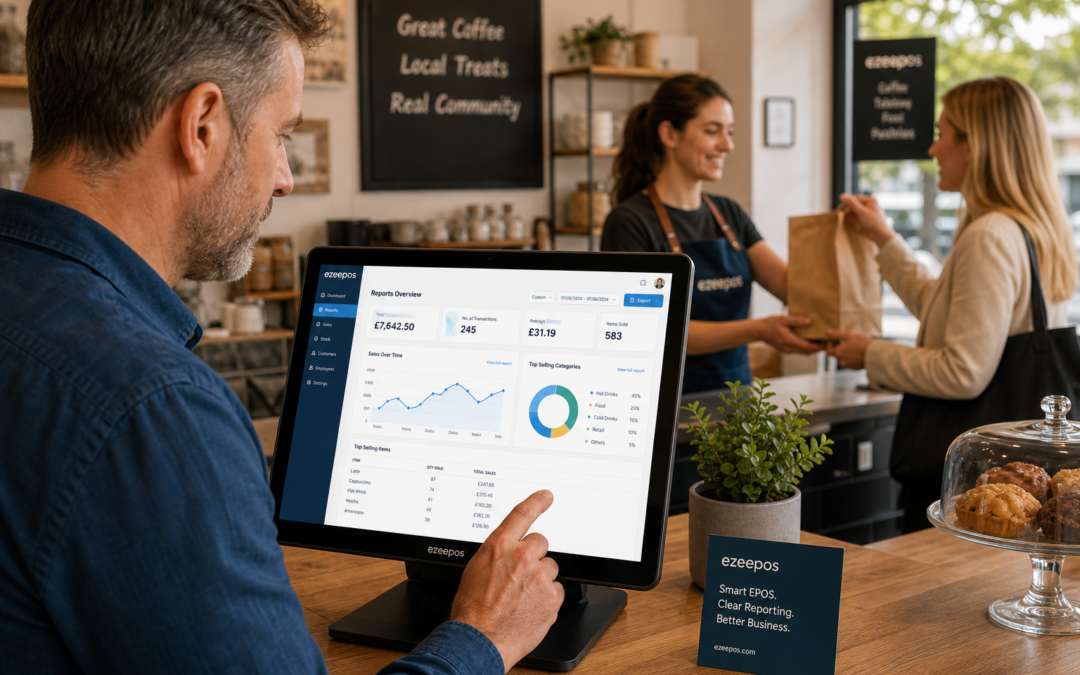
For many independent businesses, the till records a lot more than payments. It captures what sells, when customers visit, which products perform well and how trading changes across the week. With the right setup from eZeePOS, that everyday data can become a useful guide rather than something that sits unused at the end of the day.
At www.ezeepos.co.uk, businesses can explore practical EPOS software built for retail and hospitality. One of the most useful features is reporting, because clear reports help owners make calmer, better-informed decisions without relying on guesswork.
Why reporting matters in day-to-day trading
It is easy to focus only on the rush of serving customers, but reports help show the bigger picture. A good EPOS system can highlight trends that are hard to spot from memory alone. That might be a lunchtime spike in a cafe, a strong Saturday in a shop, or a particular menu item that performs better than expected during school holidays.
For independent businesses, this is especially useful because there is rarely time to dig through spreadsheets or compare handwritten notes. EPOS reporting brings key information into one place, making it easier to review trading without slowing the business down.
What business owners can learn from reports
Useful reporting is not about collecting more numbers for the sake of it. It is about answering practical questions such as:
- Which days are busiest?
- What times of day bring in the most sales?
- Which products, dishes or categories are performing best?
- Are there quieter periods that need different staffing decisions?
- Do sales change when the weather, season or local events change?
These insights matter for both retail and hospitality. A clothing shop may notice that certain ranges perform better on payday weekends. A takeaway may see that Friday evenings are consistently stronger than midweek. A cafe may find that breakfast trade grows while afternoon sales remain steady but smaller. These patterns are useful because they help businesses plan with more confidence.
Turning sales data into practical decisions
The value of reporting comes when the results are used in everyday decisions. It can help owners plan rotas, prepare for busy periods and understand how trading is changing over time.
Better staffing decisions
If reports show that the busiest period is between 12pm and 2pm, it makes sense to have more team members visible on the counter or floor during those hours. If trade is quiet first thing in the morning but picks up sharply later, staffing can be adjusted accordingly. That can improve service and help reduce unnecessary labour costs.
More confident buying and menu planning
Retailers can use reports to identify products that sell consistently and lines that may need reconsidering. Hospitality businesses can check which dishes or drinks are selling well, which items are often ordered together and which promotions are actually working. Even simple reporting can make purchases and menu changes feel less risky.
Smarter seasonal planning
Many UK businesses trade differently across the year. Gift shops, cafes, garden centres and takeaways often see marked changes in demand around holidays, school breaks and local events. Reporting helps owners compare current trade with previous weeks or months, so they can prepare stock, staff and opening plans in good time.
Reports that are actually worth checking
Not every report needs to be reviewed daily, but a few useful ones can give a clear picture of performance.
Daily sales summaries
These are helpful for checking how much takings changed compared with the previous day or a similar day last week. They can also help spot whether sales are steady or fluctuating more than expected.
Category or department reports
For shops with mixed product ranges, category reporting can show whether certain departments are carrying the business more than others. For hospitality, it can reveal which sections of the menu are strongest and where there may be room for improvement.
Time-of-day reports
Understanding when customer activity peaks is often more useful than looking at totals alone. If you know the busiest windows, you can prepare tills, staff and workflow more effectively.
With eZeePOS, reporting is designed to be practical rather than complicated. That matters for independent businesses that need clear information fast, not a system that takes hours to interpret.
Reporting for retail and hospitality businesses
Although the core idea is the same, the way reporting is used can differ by business type.
For retail shops
Retailers often want to know which departments, product types or categories are driving footfall and basket value. Reporting can help shops monitor performance during promotions, compare weekends with weekdays and understand how trade changes across the month.
For cafes, restaurants and takeaways
Hospitality businesses may use reports to see which meals, drinks or add-ons are most popular, when the busiest service periods happen and how sales vary by day. That can support table planning, prep and staffing decisions, especially when service gets busy.
Why simple reporting is better than no reporting
Some businesses still rely on gut feeling, memory or rough notes. That can work for a while, but it becomes harder to manage as trade grows. Clear reporting does not replace experience; it supports it. Owners still know their customers and their local market best, but reports give them evidence to back up decisions.
That can be especially helpful when reviewing a new promotion, changing opening hours or testing a new product range. Instead of asking whether something felt busy, you can see whether it genuinely improved sales.
Choosing an EPOS system that makes reporting easy
If reporting is important to your business, it is worth choosing an EPOS system that presents information clearly. A good setup should make it easy to review sales without needing to export data into separate tools. It should also suit the way your team works day to day, whether you run a counter service site, a busy restaurant or an independent retail shop.
eZeePOS is built for UK businesses that want a practical system for everyday trading, including useful reports that help owners understand performance without adding unnecessary complexity. If you are comparing options, it can be helpful to focus on how quickly you can see the information you need, rather than how many charts are available.
For businesses that want to improve decision-making, reporting is one of the simplest and most valuable EPOS features to get right.
Contact YCR Distribution at sales@ezeepos.co.uk or call 01924 438238.
To learn more about eZeePOS and how it can support your business, visit www.ezeepos.co.uk.
Recent Comments