
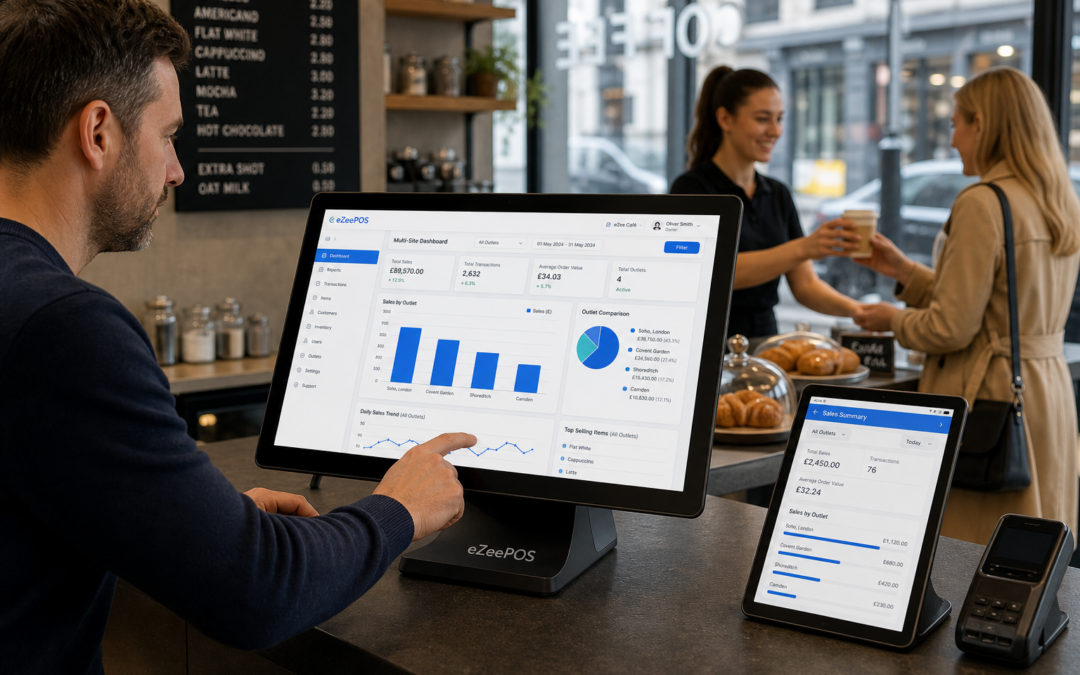
When a business starts trading from more than one location, the day-to-day numbers become harder to read at a glance. A busy café, a second retail site or a small hospitality group may all perform well on their own, but without the right reporting setup it can be difficult to see what is happening across the whole business.
That is where multi-site reporting becomes genuinely useful. It gives owners a clearer view of sales, trading patterns and branch performance without having to piece together information from separate files, spreadsheets or different systems. For growing UK businesses, that kind of visibility can save time and support better decisions.
At eZeePOS, we work with independent retail and hospitality businesses that want practical EPOS software rather than unnecessary complexity. If you are comparing head office reporting, branch-level sales or daily trading summaries, you can learn more at www.ezeepos.co.uk.
Why multi-site reporting becomes important as you grow
A single-site business can often keep track of performance by looking at the till at the end of the day. Once there are two or more locations, that approach quickly becomes less effective. One branch may trade strongly at lunchtime, another may excel on weekends and a third may depend on seasonal footfall.
Without multi-site reporting, it is easy to focus on the busiest location and miss small but important differences elsewhere. A branch with lower turnover may still be more profitable, or a site with strong weekend trade may need more staff support on those specific days. Reporting across locations helps owners see those patterns sooner.
Compare like with like
The most useful reporting does not simply add all sales together. It allows you to compare branch by branch, date by date and category by category. That can help you understand:
- which locations are driving the most revenue
- which sites perform best at certain times of day
- how seasonal trade differs between branches
- whether promotions are working equally well in every location
For retailers, that might mean comparing a town-centre shop with a suburban branch. For hospitality businesses, it could mean comparing a café counter, a takeaway outlet or a pub service area. The key benefit is clarity.
What good multi-site reporting should show
Multi-site reporting is most helpful when it gives owners a straightforward summary of the numbers that matter. A good setup should let you review sales without getting lost in unnecessary detail, while still making it easy to drill down when you need more context.
Sales by branch
Basic sales totals are important, but they are only the starting point. You need to know which location generated the sale, whether a site is improving over time and how each branch is tracking against the rest of the business.
Product or category trends
Some branches may sell more of certain products or menu items than others. A garden centre café, for example, may have very different demand from a retail counter in the same business. Multi-site reporting can help owners see which categories deserve more attention in each location.
Time-based performance
Different sites often have different busy periods. One branch might be strongest first thing in the morning, while another peaks in the late afternoon. Knowing when each location sells best can help with staffing, stock planning and service flow.
How reporting can support better decisions
Reporting is only useful if it helps you act on the information. For growing businesses, multi-site reporting can highlight small changes before they become larger problems. If one site is underperforming, you can look at the numbers early rather than waiting until the end of the quarter.
Spotting branch-specific issues
If one location is consistently slower, it may not mean the business model is failing. It could point to a local issue such as less footfall, a different customer mix or the need for better staff rota planning. Clear reporting helps you ask better questions.
Improving staffing decisions
When you can see exactly when each branch is busiest, staffing becomes easier to plan. A retail site with morning trade may need stronger early cover, while a hospitality location might need more support around lunch or evening service. Better reporting can make rotas feel more grounded in real sales patterns.
Making promotions more consistent
Multi-site reporting also helps with offers and promotions. If a discount performs strongly in one location but not another, you can review how it is being presented or whether the customer base is different. That helps keep offers relevant instead of applying the same approach everywhere by default.
Why independent businesses benefit from a single view
Many growing businesses start with separate systems, spreadsheets or branch-by-branch manual reports. That can work for a while, but it often creates extra admin and makes management meetings more difficult. A single reporting view saves time and reduces the chance of missed information.
For owners who split time between locations, the benefit is even greater. Instead of calling each branch for updates or waiting for end-of-week figures, you can check trading performance from one place and see how the business is doing overall.
Multi-site reporting in retail and hospitality
The value of multi-site reporting is slightly different depending on the business type, but the overall principle is the same: better visibility leads to better decisions.
Retail businesses
Retails groups, gift shops, fashion stores and convenience stores often need to compare branch sales, product ranges and seasonal trading patterns. A multi-site report can reveal whether one location is more successful with certain categories or whether another site needs more support during busy periods.
Hospitality businesses
Cafés, takeaways, restaurants and bars often rely on fast service and quickly changing demand. A multi-site setup can show which branches handle peak periods best, where menu items sell strongest and how each site performs across the week.
Mixed businesses
Some businesses combine retail and hospitality sales under one umbrella, such as a farm shop with a café or a garden centre with multiple counters. In those cases, multi-site reporting can be especially useful because it helps distinguish between different trading areas without mixing the figures together.
How eZeePOS can help
eZeePOS is designed for UK retail and hospitality businesses that want EPOS software they can actually use day to day. For growing businesses, that includes practical reporting that can support multi-site management without making the system harder to operate.
If you are moving from a basic till, a manual spreadsheet process or a setup that only shows one branch at a time, it may be worth reviewing what better reporting could do for your business. More visibility does not always mean more complexity. Often it means less guesswork.
Final thoughts
Multi-site reporting is not just for large chains. It can be just as valuable for independent businesses taking their first steps beyond one location. When you can see branch performance clearly, it becomes easier to plan staffing, monitor trends and make decisions with more confidence.
If you are ready to take a closer look at practical EPOS software for growing UK businesses, visit www.ezeepos.co.uk.
Contact YCR Distribution at sales@ezeepos.co.uk or call 01924 438238.
Recent Comments