
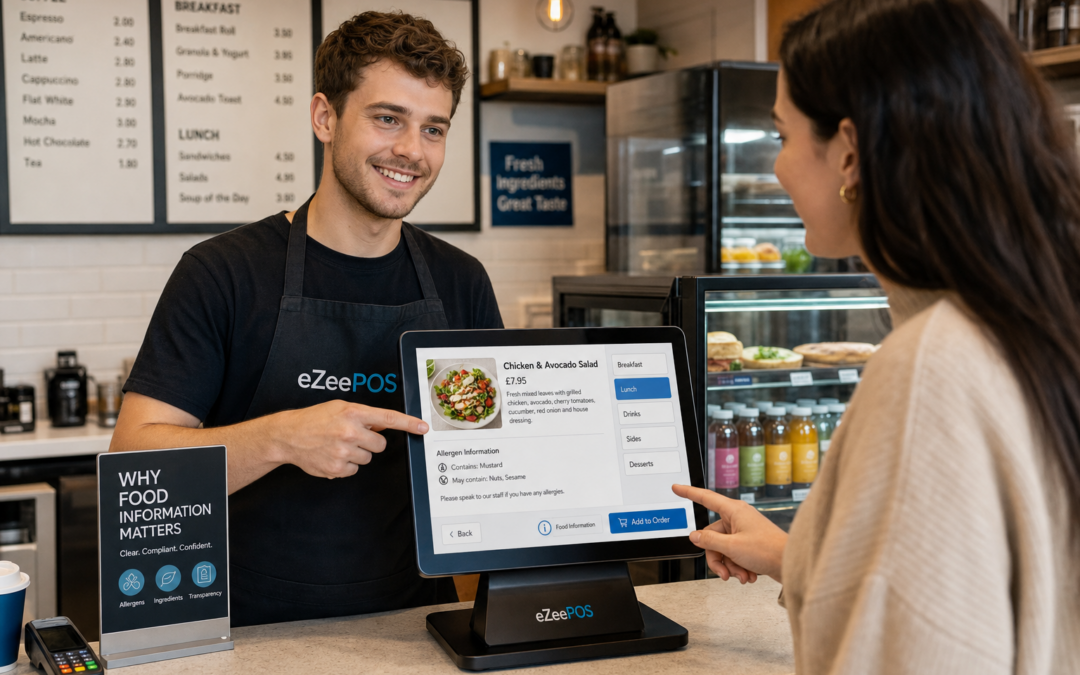
Why food information matters at the till
For cafes, restaurants and takeaways, the till is often where the customer conversation turns from browsing to buying. That is why clear food information matters so much. When staff can quickly see ingredients, allergens, meal options and item notes, they are better placed to answer questions accurately and keep orders moving.
A practical EPOS setup from eZeePOS can help make that information easier to use in day-to-day service. Instead of relying on memory, printed notes or manual checks, businesses can keep important details close to hand at the point of sale.
What kind of food information is useful in hospitality EPOS?
The most useful information is usually the kind staff need fast. In a busy service, nobody has time to search through folders or ask another colleague for every question. The right EPOS layout can help present the key details clearly.
Common examples include:
- Allergen notes for cakes, mains, sides and drinks
- Ingredient details for customer questions
- Dietary markers such as vegetarian or vegan
- Portion choices, meal upgrades and add-ons
- Special instructions or common serving notes
- Item names that are easy to recognise at the till
When this information is organised well, staff can answer questions with more confidence and avoid sending customers away with uncertainty.
Helping front-of-house teams serve with confidence
In a cafe or restaurant, front-of-house staff often need to make quick decisions while also being friendly and efficient. If a customer asks whether a soup contains dairy, or whether a takeaway wrap can be adjusted, the answer needs to be found quickly.
With clear food information on screen, staff are less likely to guess. That helps reduce mistakes and makes the customer feel listened to. It also supports newer team members, who may not yet know every item on the menu.
For takeaways and quick-service food businesses, this can be especially valuable during peak periods. Orders are often placed quickly, custom requests are common, and the team may be juggling a counter, phone orders and collection times all at once.
Reducing avoidable errors with better menu details
Food-related mistakes are not always about incorrect cooking. Sometimes they happen earlier, at the point of sale, when a label is unclear or a staff member misses a special instruction. A good EPOS setup can reduce that risk by making item information easier to understand.
For example, if a dish includes an optional sauce, a side choice or an allergy warning, that detail should be easy to see before the order is sent on. The same applies when a customer asks for something to be left out. Clear item naming and tidy menu organisation can help prevent confusion later in the service chain.
This is not about making the system complicated. In fact, the best hospitality EPOS setups usually make the till simpler to use by keeping the most relevant information visible and easy to follow.
Why allergen information should be easy to access
Allergen discussions are an important part of hospitality service in the UK. Customers expect accurate information, and staff need a process that helps them respond carefully. While EPOS does not replace good kitchen procedures, it can support them by helping teams see the right details faster.
A good setup can make it easier to:
- Check allergens before confirming an order
- Highlight dishes with common ingredient concerns
- Remind staff when a customer has asked for an adjustment
- Support more consistent communication between till and kitchen
That kind of consistency can be especially useful in busy cafes and restaurants where several team members may handle the same table or order during one visit.
Making custom orders easier to manage
Custom orders are part of daily life in hospitality. A customer may want no onions, less spice, extra sauce or a different milk option. The more clearly those changes are captured at the till, the easier it is for the kitchen and front-of-house team to stay aligned.
EPOS can help by storing common product options in a structured way rather than relying only on free text. That can make the ordering process faster and reduce the chance of an important note being overlooked.
For businesses with a menu that changes regularly, a tidy digital menu structure also helps keep information current. When dishes, ingredients or serving notes change, staff benefit from having a clear system they can trust.
How this helps different hospitality businesses
Cafes
Cafes often serve sandwiches, cakes, baked goods, soups and drinks with varied ingredients. Clear food information helps staff answer simple but important questions quickly, especially where allergens or dairy-free options are involved.
Restaurants
Restaurants may deal with fuller dish descriptions, starter and main choices, sides and special requests. A better EPOS layout can help the team manage those details without slowing down the table.
Takeaways
Takeaways need speed and accuracy during busy periods. Clear item notes and menu details can help reduce the kind of confusion that leads to incorrect orders, callbacks or complaints.
Food information and the customer experience
When customers feel that staff know the menu well, they are more likely to trust the business. Clear food information supports that feeling. It also makes the interaction smoother, because customers do not have to repeat themselves or wait while staff try to check a detail elsewhere.
That small improvement can make a real difference in a busy environment. In practice, it helps the business feel more organised, more professional and easier to deal with.
Using EPOS as part of a better service routine
Food information works best when it is part of a wider service routine. That includes how the menu is set up, how staff are trained and how orders are passed through the business. EPOS is useful here because it gives businesses a central place to keep information consistent.
For independent hospitality businesses, that consistency can be a real advantage. It supports quicker service, better communication and fewer avoidable interruptions during peak trading.
Choosing a setup that works for your menu
If your business serves food, the right EPOS setup should help your team rather than slow them down. That means a system where food information, menu options and customer notes are easy to access and simple to understand. Whether you run a cafe, restaurant or takeaway, it is worth reviewing how your current till handles menu details.
eZeePOS offers a practical UK EPOS option for hospitality businesses that want a clearer, more organised way to manage everyday service. To learn more, visit www.ezeepos.co.uk.
Contact YCR Distribution at sales@ezeepos.co.uk or call 01924 438238.
For a simple, helpful EPOS setup that supports hospitality service, explore eZeePOS today.
Recent Comments