
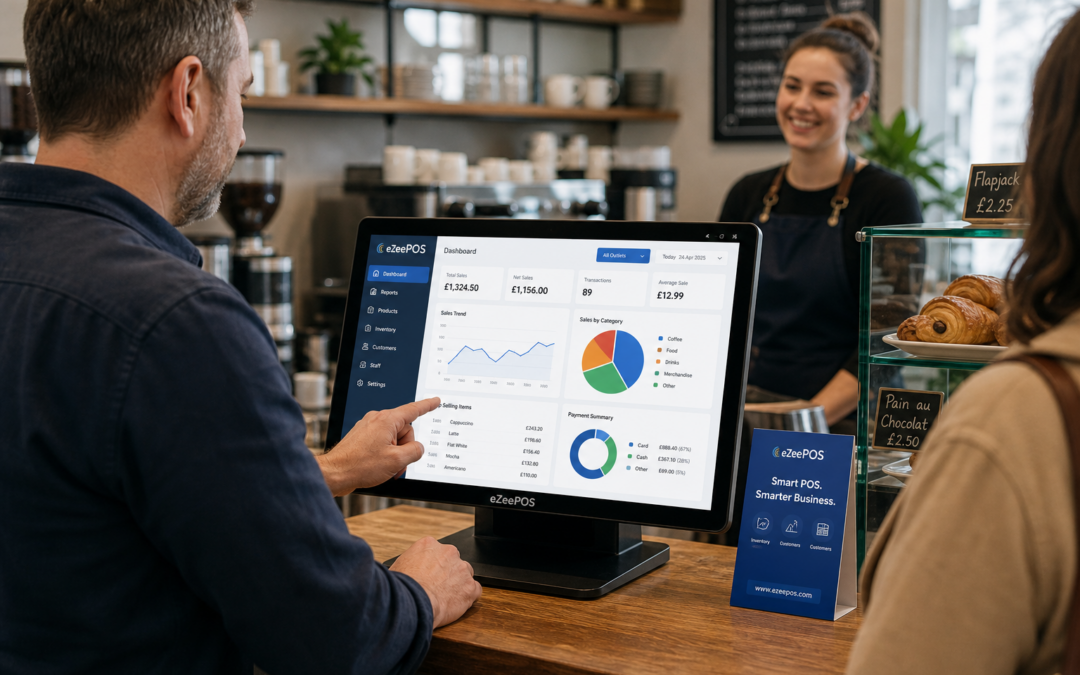
Why reporting matters more than many businesses realise
For many independent businesses, the till is treated as the place where money comes in and receipts go out. But a modern EPOS system can do much more than record sales. It can show you what is happening across the day, the week and the month, helping you make decisions based on real trading patterns rather than guesswork.
With eZeePOS, reporting becomes a practical part of daily management for UK retailers, cafés, restaurants, takeaways and other busy businesses. Instead of waiting until the end of the month to understand performance, you can see clear information much sooner and use it to keep trading organised.
What good EPOS reporting can tell you
A useful reporting setup should be easy to read and relevant to the way you trade. It should not overwhelm you with numbers that are difficult to apply. The most helpful reports usually answer straightforward questions such as:
- Which products or menu items are selling best?
- What times of day are busiest?
- How do weekday and weekend sales compare?
- Which staff shifts are handling the most transactions?
- Are there busy periods that need more organisation?
These insights are valuable whether you run a convenience store, a busy café, a takeaway or a small multi-department retail shop. When the data is easy to understand, it becomes easier to spot trends and plan with confidence.
Turning sales data into day-to-day decisions
Many business owners already know what feels busy. The difference with EPOS reporting is that you can back that feeling up with clear figures. If Friday afternoons are consistently strong, you may decide to schedule more staff at that time. If certain products only sell well at weekends, you can plan displays or preparation around that pattern.
For hospitality businesses, reporting can help you understand which service periods are under pressure. A breakfast café may find that trade spikes sharply between 8am and 9:30am, while a takeaway might see a late-evening rush. Knowing this helps with staffing, stock preparation and customer service.
For retail businesses, reporting can show which product categories deserve more space near the counter or which items need better visibility on the shop floor. It is a simple way to make the layout of the business work harder without relying on instinct alone.
Why this is especially useful for independent businesses
Large chains often have dedicated teams to analyse performance. Independent businesses usually do not have that luxury. The owner or manager often has to make decisions quickly, while also serving customers and keeping the day running smoothly. That is why accessible reporting matters.
Instead of spending hours collecting figures from different places, a good EPOS system can bring sales information together in one place. That can save time and reduce the risk of missing patterns that may affect staffing, promotions or trading hours.
In smaller businesses, small changes can have a noticeable effect. If you can see that a product range is slowing down, a daypart is underperforming or a particular shift is regularly busy, you can respond before the issue grows.
Useful report types to look for
Sales by product or category
This helps you see what customers are actually buying. In a shop, that might mean checking which lines are driving most sales. In a café or restaurant, it could mean seeing which menu items perform best.
Time-based sales reports
These show when trade is strongest. They are useful for planning rotas, preparing stock or adjusting opening hours if your business has seasonal or variable traffic.
Staff performance reporting
For managers, staff-based reports can help you understand transaction volumes and service patterns. Used properly, this is about better organisation rather than pressure. It can support training and help identify where extra support may be needed.
End-of-day summaries
A clear daily summary can be useful for checking that everything has balanced, reviewing busy periods and spotting anything unusual before the next trading day begins.
Reporting for retail and hospitality works in different ways
The value of reporting is the same across sectors, but the questions are slightly different. In retail, the focus may be on product movement, category performance and footfall patterns. In hospitality, the focus often shifts to service times, menu popularity and peak trading periods.
That is why a flexible EPOS system matters. The best reports are not just technically detailed; they are relevant to your business type. eZeePOS is designed as a practical UK EPOS and POS solution for both retail and hospitality businesses, so reporting can support the decisions that matter most to your day-to-day trading.
Making reporting part of your routine
Reporting only helps if it becomes part of normal business habits. That does not mean spending hours studying spreadsheets. It can be as simple as checking a few key figures at the end of the day or reviewing weekly trends before placing orders, arranging staff or planning offers.
Here are a few sensible habits many businesses find useful:
- Review daily sales after closing
- Compare busy periods across the week
- Check top-selling products or menu items regularly
- Use monthly summaries to spot longer-term trends
- Discuss the findings with staff when planning rotas or service changes
These small routines can make reporting feel manageable and genuinely useful, rather than another task that gets ignored.
What to avoid when looking at EPOS reports
Not every report is helpful simply because it exists. Overcomplicated systems can make it difficult to see what matters. The goal is to find reporting that is easy to access, simple to interpret and relevant to the business you run.
It is also worth remembering that numbers should create context, not replace judgement. A busy Saturday does not automatically mean you need to change your whole setup, but if the same pressure appears every week, the data is telling you something useful.
A smarter way to manage the business
Good reporting gives small businesses a clearer view of how they really trade. It can help with staffing, stock planning, service timing and general organisation, all without adding unnecessary complexity. For business owners who need simple, practical information, that is a major advantage.
If you are looking for a UK EPOS solution that supports clearer decision-making, visit www.ezeepos.co.uk to learn more about eZeePOS and how it can help your business stay organised.
Contact YCR Distribution at sales@ezeepos.co.uk or call 01924 438238.
Recent Comments