
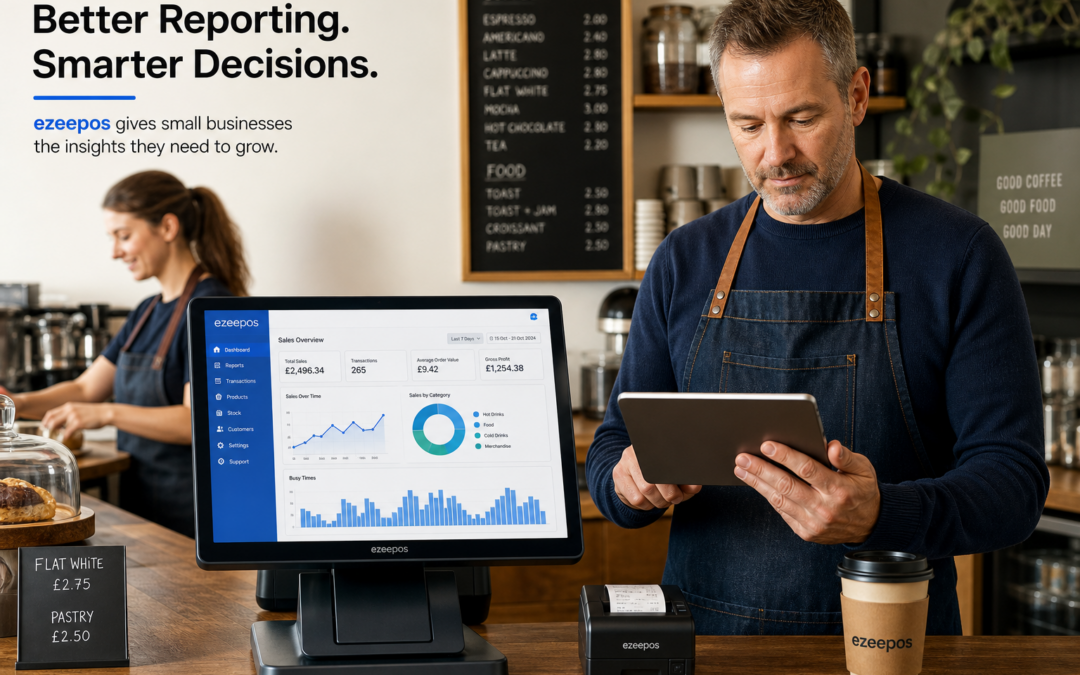
For many independent businesses, the hardest part of running a busy shop, caf̩, restaurant or takeaway is not collecting the sales data Рit is turning that data into something useful. That is where better reporting can make a real difference. With eZeePOS, sales information is easier to review, easier to understand and easier to use when you need to make decisions quickly.
Whether you are checking your busiest trading times, comparing weekdays with weekends, or seeing which products or menu items are performing best, clear reports help remove guesswork from everyday business management. For UK retailers and hospitality venues, that can mean better staffing decisions, smarter promotions and a stronger understanding of what is actually happening on the counter.
Why reporting matters more than many businesses realise
A till system is not just for taking money. It also holds useful trading information that can tell you how your business is really performing. When reports are simple to access and easy to read, they become a practical management tool rather than something that only gets opened at the end of the week.
Basic tills and manual records often leave owners trying to piece together sales from receipts, spreadsheets or memory. That can make it difficult to answer simple questions such as:
- Which hours are busiest?
- Which products or menu items sell best?
- Are certain days consistently stronger than others?
- How do sales change across weeks or seasons?
- Are staff sales patterns looking as expected?
Good EPOS reporting gives you those answers in one place. For busy independent businesses, that clarity can save time and reduce costly assumptions.
What useful reports can tell you
The most effective reports are not necessarily the most complicated. In many small businesses, the most valuable information is often the simplest. A well-organised EPOS setup can help you review live trading and historical performance without needing to dig through paper records.
Sales by day and time
Knowing when trade peaks is useful across both retail and hospitality. A coffee shop may discover that mornings need a different staffing pattern to afternoons. A shop may find that late Saturdays are busier than expected. A takeaway might spot a clear evening rush that needs extra preparation before service starts.
Product and category performance
Understanding what sells well helps with display, menu planning and demand forecasting. In retail, that might mean seeing which categories drive the most turnover. In hospitality, it could show which dishes, drinks or combo deals are popular. This is especially helpful when you are deciding what to promote or where to focus your floor space.
Staff and transaction patterns
Some businesses also want a clearer picture of till activity across different staff shifts. Reporting can help managers review transaction volumes, busy service periods and general trading trends without relying on assumptions. Used properly, it supports fairer, more confident day-to-day oversight.
How reporting helps retail businesses
In retail, reporting can make a big difference to planning and customer service. A convenience store may use sales trends to understand when to schedule staff. A gift shop may notice that demand rises around certain events or holidays. A garden centre may want to see which product types are strongest at different points in the year.
That kind of information is valuable because it helps you respond to real customer behaviour. Instead of stocking shelves or setting staff rotas based on guesswork, you can use actual sales patterns to guide decisions. For independent retailers, that can make trading feel more organised and less reactive.
How reporting helps hospitality businesses
For cafés, restaurants, bars and takeaways, reporting is just as useful. It can show you which periods are busiest, which items bring in the most sales and when you may need more hands on deck. A clear view of trading also helps when you are planning promotions, adjusting opening hours or reviewing menu performance.
For example, a takeaway might notice a strong Friday night uplift but weaker midweek trade. A caf̩ may find that lunch trade is healthy but early morning sales need attention. A restaurant may discover that certain dishes are popular but slow down service, which is useful when considering seasonally changing menus. In each case, the report is not just data Рit is a way to improve the way the business runs.
Making decisions easier for owners and managers
One of the biggest benefits of better reporting is confidence. When the numbers are clear, it becomes easier to make decisions about staffing, promotions, opening times and customer experience. That matters when you are running a small business and every trading decision has a visible impact.
Instead of waiting until month-end to understand what happened, owners and managers can review performance more regularly. That means problems are spotted sooner and good trends can be acted on while they are still relevant. In practice, reporting turns your EPOS system into a day-to-day management tool rather than a simple till.
What to look for in a reporting setup
If reporting is important to your business, it helps to choose an EPOS system that presents information in a clear and practical way. You do not need complex dashboards full of data you will never use. You need reports that are easy to read and directly useful to your business model.
- Simple sales summaries
- Busy-time and peak-trading views
- Product or category breakdowns
- Useful staff activity information
- Easy access to daily, weekly and monthly reports
That balance of clarity and detail is what makes reporting useful for real-world business decisions.
When reporting and payment insights work together
Some businesses also want a clearer view of how sales reports line up with card payments and daily takings. In that case, it can be worth discussing payment integration options alongside reporting needs. Options such as Teya and Dojo Payments may be relevant depending on how your business is set up, and it is sensible to discuss the practical choices with YCR Distribution before making a decision.
Even when your main focus is reporting rather than payments, having your EPOS and payment information work neatly together can make daily reconciliation less time-consuming and give you a clearer picture of trading.
A practical step towards better business decisions
For many independent UK businesses, better reporting is one of the simplest ways to improve control without changing the whole way they work. It helps you understand customers, support staff planning and make decisions using real trading data instead of assumptions.
If you are looking for a practical EPOS solution that supports clearer reporting for retail or hospitality, take a look at www.ezeepos.co.uk. eZeePOS is designed to help businesses stay organised, see what is happening more clearly and make better decisions day to day.
Contact YCR Distribution at sales@ezeepos.co.uk or call 01924 438238.
Recent Comments