
TL;DR:
- Contactless payments in UK venues rely on NFC technology, tokenisation, and real-time approval.
- The upcoming removal of the £100 cap in March 2026 will require updated policies and staff training.
- Flexibility and quick adaptation to technology changes are essential for maintaining competitiveness and customer satisfaction.
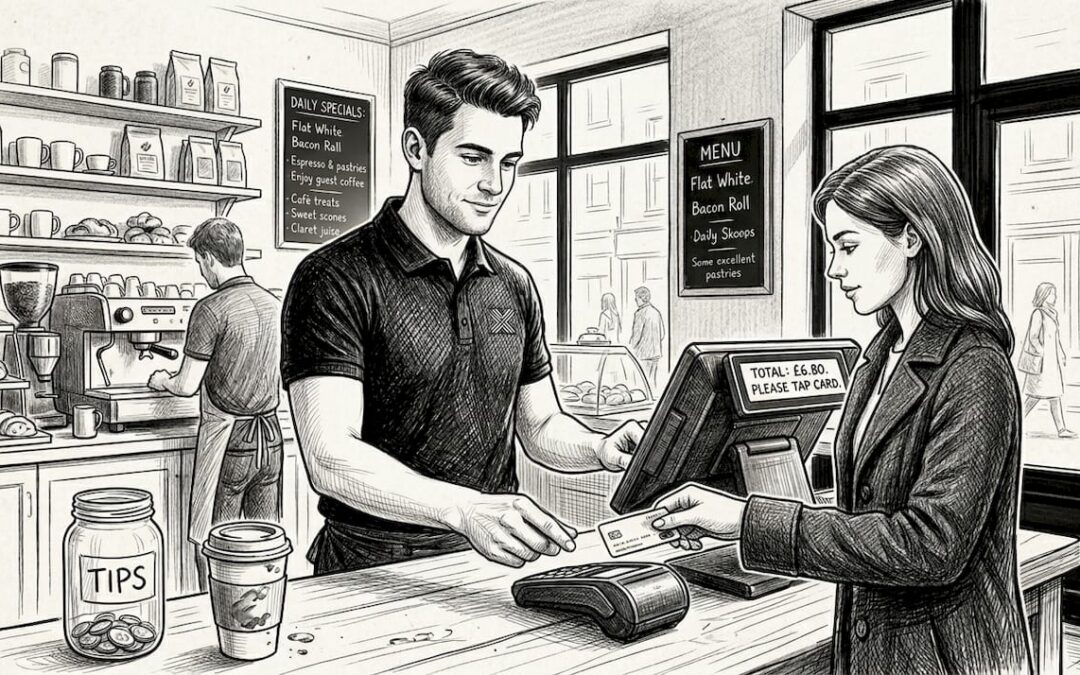
Choosing the right contactless payment solution for your venue has never felt more urgent. Customer expectations are rising, regulatory rules are shifting, and the technology itself keeps moving. With the £100 cap ending in March 2026, UK hospitality owners and managers need clear, practical guidance rather than vague promises. This guide walks you through the most common contactless payment examples used in bars, restaurants, cafés, and hotels across the UK, comparing how they work, where they shine, and what you need to consider before making decisions that affect your team and your guests.
Table of Contents
- How contactless payments work in hospitality
- Tap-to-pay cards: The gold standard in customer convenience
- Mobile wallets and NFC devices: Secure, flexible, and future-proof
- EPOS terminals and table-side payments: Enhancing service and revenue
- Contactless payment challenges and expert tips for UK venues
- A fresh perspective: Why agility beats perfection in payment innovation
- Power your venue with the best POS for contactless payments
- Frequently asked questions
Key Takeaways
| Point | Details |
|---|---|
| Tap-to-pay leads | Contactless cards remain the most common payment method for UK hospitality venues. |
| Mobile wallets expand options | Apple Pay, Google Pay, and wearables allow secure high-value payments and appeal to younger customers. |
| Regulation is changing | The £100 contactless cap ends March 2026, so venues should update policies and technology. |
| EPOS boosts revenue | Integrated EPOS with contactless can deliver a 15% uplift in revenue via faster service and upsell. |
| Stay agile | Choosing flexible, upgradable systems helps venues keep pace with rapid payment innovation. |
How contactless payments work in hospitality
Before comparing options, it helps to understand what is actually happening when a guest taps their card or phone. Contactless payments rely on Near Field Communication (NFC), a short-range wireless technology that transmits encrypted payment data between a card or device and a terminal within roughly five centimetres. The process uses tokenisation, which means your guest’s actual card number is never transmitted. Instead, a unique token is generated for each transaction, making interception almost worthless to fraudsters.
In a busy hospitality setting, speed matters enormously. A typical NFC tap-to-pay transaction completes in under five seconds, compared to ten to thirty seconds for chip-and-PIN. At a packed bar on a Friday night, that difference adds up fast.
Currently, the UK applies a £100 single transaction limit for contactless cards, alongside a cumulative £300 limit before a PIN is required. Both of these thresholds are set to be removed for many providers from March 2026, so now is the time to review your payment policies. Mobile wallets such as Apple Pay and Google Pay bypass these limits entirely when the customer authenticates with biometrics, such as a fingerprint or face scan.
Key features of contactless payments in hospitality:
- NFC technology transmits encrypted data within five centimetres
- Tokenisation protects card details on every transaction
- Real-time authorisation confirms payment in under five seconds
- Mobile wallets remove transaction caps when biometrics are used
- POS integration allows seamless receipt printing and order routing
Pro Tip: When setting up mobile POS devices, always configure an offline fallback procedure. Signal drops happen, and your team needs a clear protocol so service never grinds to a halt.
For a broader look at how technology is reshaping venues, the hospitality technology examples from forward-thinking UK operators offer useful context.
Tap-to-pay cards: The gold standard in customer convenience
Contactless debit and credit cards remain the most widely used payment method in UK hospitality. Almost every adult in the UK carries at least one, and the tap-and-go experience has become second nature for most customers. For venue operators, this familiarity is a genuine operational asset.
When a guest taps their card for a transaction under £100, the process is instant. Over that threshold, the terminal prompts for a PIN. Once the March 2026 changes take effect, many providers will remove this cap, though some may retain their own internal limits. Staff should understand both scenarios to avoid awkward moments at the bar or table.
Common scenarios where tap-to-pay cards excel:
- Quick bar purchases where speed is the priority
- Table-side payments at the end of a meal
- Fast-casual counter service with high customer throughput
- Hotel checkout where guests expect frictionless departures
Security is a frequent concern, but the risk is lower than many assume. Contactless fraud rose 27% year-on-year but remains a small fraction of total card transactions. Crucially, banks reimburse customers for losses from lost or stolen cards unless gross negligence is proven, so your guests are well protected.
“Contactless fraud figures sound alarming in headlines, but in absolute terms the risk per transaction remains very low. The real exposure is reputational, not financial, for most venues.”
Pro Tip: Enable real-time alert features within your POS system so your team is immediately notified of declined or flagged transactions. This reduces queue build-up and keeps service flowing. Understanding the service modes in POS that suit your venue helps you configure alerts appropriately.
For a full breakdown of hardware options that support card payments, exploring the types of hospitality POS systems available to UK venues is a strong starting point.
Mobile wallets and NFC devices: Secure, flexible, and future-proof
Mobile wallets, including Apple Pay, Google Pay, and Samsung Pay, represent the fastest-growing segment of contactless payments in UK hospitality. Smartwatches and fitness trackers with NFC chips are also increasingly common, particularly among younger and international guests.
The defining advantage of mobile wallets is that biometric authentication removes the transaction cap entirely. A guest paying a £250 restaurant bill can tap their phone, confirm with a fingerprint, and walk away in seconds. No PIN, no delay, no friction. For premium restaurants, hotel bars, and event venues handling high-value transactions, this is a significant operational benefit.
Security is also stronger than with physical cards. The device never transmits the actual card number, and if a phone is lost, the wallet can be remotely disabled. International guests often prefer mobile wallets because they avoid foreign transaction fees on physical cards.
Here is how the three main contactless methods compare:
| Method | Speed | Transaction limit | Security | Best for |
|---|---|---|---|---|
| Contactless card | Under 5 seconds | £100 (until March 2026) | Tokenised, bank-backed | Quick service, bars |
| Mobile wallet | Under 5 seconds | No cap with biometrics | Device-encrypted, remotely lockable | Premium dining, events |
| Wearable device | Under 5 seconds | Varies by provider | Device-encrypted | Festivals, casual venues |
For venues exploring what mobile POS means in practical terms, the technology integrates directly with your existing terminal infrastructure. You do not need separate hardware for each payment type. Looking at mobile POS examples from comparable UK venues can help you visualise how this works on the floor.
EPOS terminals and table-side payments: Enhancing service and revenue
An integrated Electronic Point of Sale (EPOS) system with contactless capability does far more than process payments. It connects your front-of-house team with the kitchen, tracks inventory in real time, and generates the data you need to make smarter decisions about staffing, menus, and promotions.
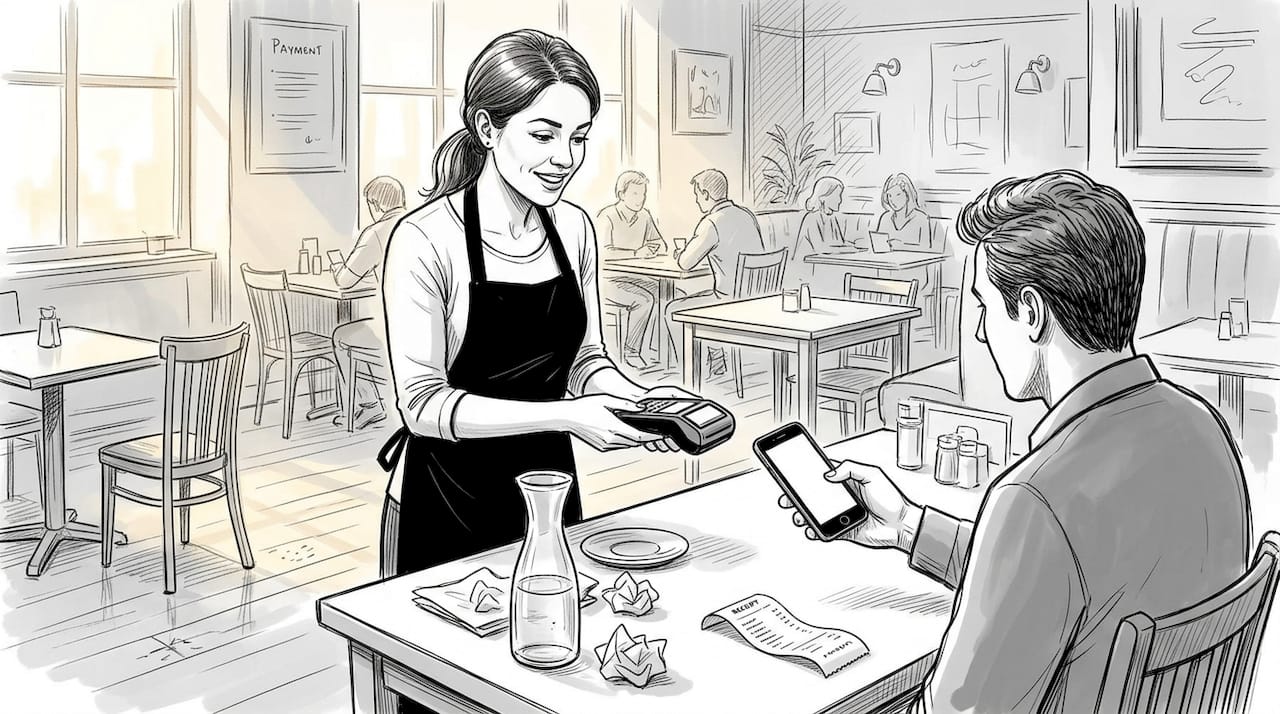
Table-side payment is where EPOS technology genuinely transforms the guest experience. Instead of the traditional process of printing a bill, taking it to a fixed terminal, and returning with a receipt, your team brings a handheld device directly to the table. The guest taps, the payment is confirmed, and a digital receipt is sent instantly. Fewer steps means fewer errors and more time for your staff to focus on hospitality rather than administration.
The revenue impact is measurable. Venues adopting modern contactless EPOS report up to 15% revenue uplift through faster table turns and higher upsell rates when staff spend less time on payment logistics.
| Metric | Traditional payment | Contactless EPOS |
|---|---|---|
| Average transaction time | 90 seconds | Under 30 seconds |
| Tip rate increase | Baseline | Up to 12% higher |
| Revenue uplift | Baseline | Up to 15% |
Pro Tip: When selecting a provider, prioritise established systems with a proven track record in UK hospitality over newer, unproven alternatives. The cloud POS efficiency gains from a reliable platform compound over time.
For venues with kitchen operations, EPOS kitchen integration ensures orders flow directly from the table to the kitchen screen without manual re-entry. Pair this with dynamic EPOS screens to keep your team informed and your service consistent.
Contactless payment challenges and expert tips for UK venues
Even the best technology creates operational challenges if your team is not prepared. The upcoming regulatory changes make preparation more urgent than ever.
The £100 cap will be removed for many low-risk transactions from March 2026, which means your payment policies, staff training materials, and customer communications all need updating before that date.
“The removal of the £100 cap is not just a technical update. It is a policy shift that requires venues to rethink how they communicate payment options to guests and how staff handle edge cases.”
Here are five practical steps every UK hospitality venue should take now:
- Stay informed about FCA guidance and your payment provider’s specific implementation of the cap changes.
- Train your team on new transaction thresholds, what triggers a PIN request, and how to handle declined payments calmly.
- Enable real-time alerts in your POS system to flag unusual transactions before they become problems.
- Update your systems before March 2026 to ensure full compatibility with the new rules and avoid service disruptions.
- Communicate changes to guests via signage or digital menus so they are not caught off guard at the point of payment.
Signal issues and exceeded cumulative limits are the two most common causes of failed contactless transactions. Your team should always have a clear fallback: politely request PIN entry, or offer an alternative method without making the guest feel embarrassed. For venues using mobile POS for catering, offline payment modes are particularly worth configuring in advance.
A fresh perspective: Why agility beats perfection in payment innovation
Most conversations about contactless payments focus on which technology is best right now. That is the wrong question. The right question is: how quickly can your venue adapt when the answer changes?
Technology, customer habits, and FCA regulations are all moving targets. The venues that gain the most from payment innovation are not the ones who chose the theoretically perfect system in 2023. They are the ones who built adaptable processes, trained their teams continuously, and updated their infrastructure without drama when the rules shifted.
Waiting for a perfect solution puts your revenue and customer satisfaction at risk. Every month you delay modernising your payment setup is a month where faster competitors are turning tables more quickly and capturing higher tips.
“In payment technology, flexibility is now the true competitive differentiator. The venue that adapts fastest wins, not the one that waits longest.”
The practical implication is straightforward. Choose platforms that update automatically, support multiple payment types without additional hardware, and come with genuine human support when things change. Explore innovative hospitality solutions from venues already operating at this level. Agility is not a luxury. It is the baseline for staying competitive in UK hospitality right now.
Power your venue with the best POS for contactless payments
If this guide has clarified what contactless payments can do for your venue, the next step is finding a system that makes it all work seamlessly in practice. eZeepos is built specifically for UK hospitality, supporting tap-to-pay cards, mobile wallets, and table-side payments through a single, unified platform.
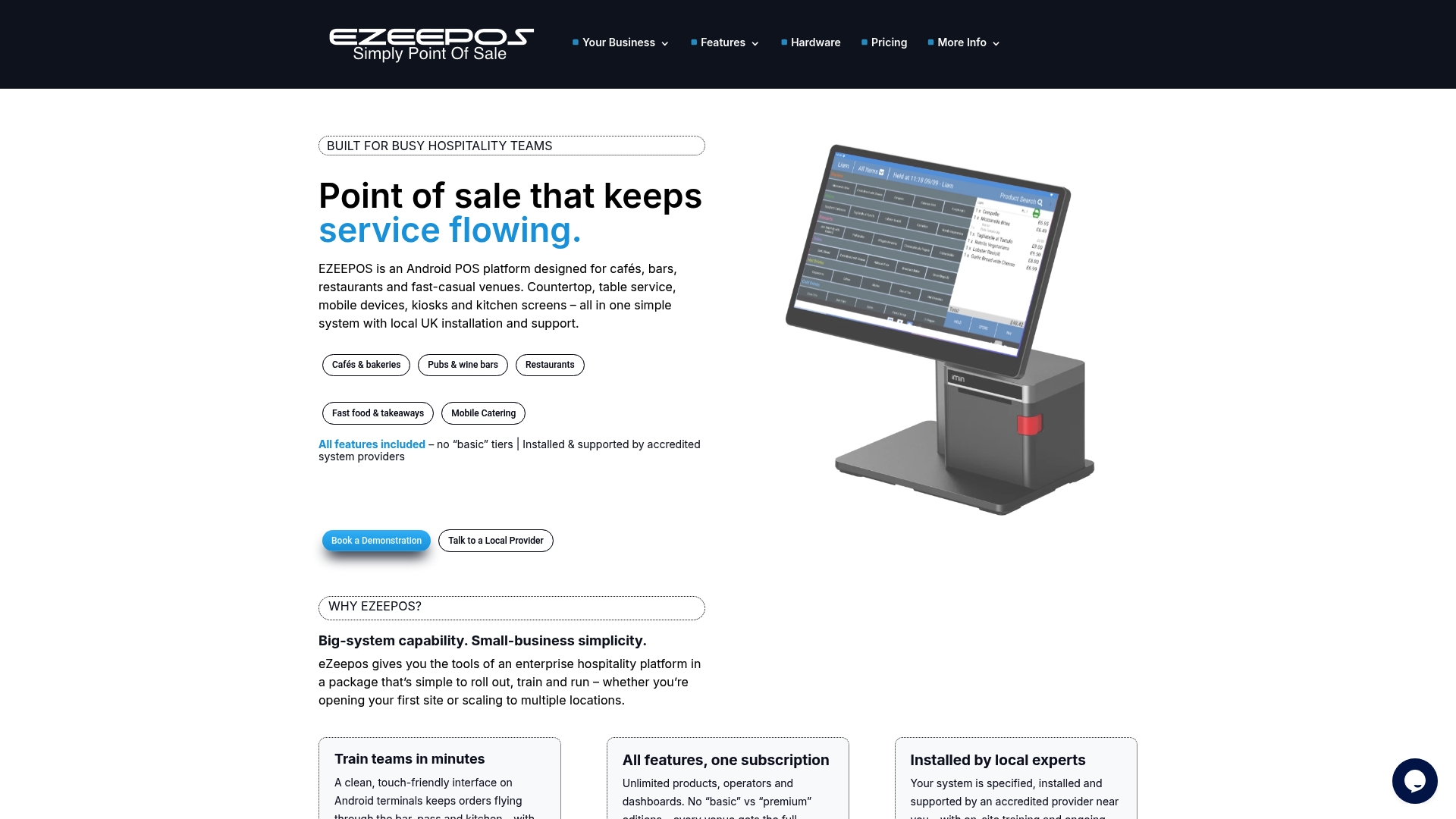
From defining hospitality POS fundamentals through to the unified POS benefits of a fully integrated system, eZeepos gives you the tools to modernise your payment experience without the complexity. Local UK installation, ongoing human support, and a platform that grows with your venue make it a practical choice for operators who want results rather than promises. Visit eZeepos to see how it fits your operation.
Frequently asked questions
What are the most common examples of contactless payments in UK hospitality?
The most common examples are tap-to-pay cards, mobile wallets like Apple Pay and Google Pay, and wearable devices such as smartwatches, all using NFC for cards and mobile wallets to complete payment by simply tapping a compatible terminal.
How does the end of the £100 cap in March 2026 affect my venue?
From March 2026, the £100 cap is removed for many low-risk transactions depending on your provider, so you should review and update your payment policies, staff training, and guest communications before that date.
Is contactless payment safe for my business and my guests?
Yes. Contactless uses tokenisation and real-time authorisation to keep data secure, and banks reimburse lost card losses unless gross negligence is proven, keeping both your business and your guests well protected.
What happens if a contactless transaction fails at my venue?
If contactless fails due to an exceeded limit, poor signal, or a technical issue, train staff to handle the situation calmly by requesting PIN entry or offering an alternative payment method without delay or embarrassment to the guest.
Recent Comments