

Running a fine dining restaurant comes with its own set of challenges and surprises. The right point of sale system can make a world of difference in how smoothly service flows, how orders are managed, and how guests remember their experience. From handling complex menu items to managing reservations, these tools quietly shape the atmosphere behind the scenes. With fresh advances and clever features, modern solutions can offer efficiency without sacrificing the personal touch that guests appreciate. Wondering which options rise to the top and offer the most for ambitious restaurateurs? The answers might make you look at restaurant tech in a whole new light.
Table of Contents
EZEEPOS
At a Glance
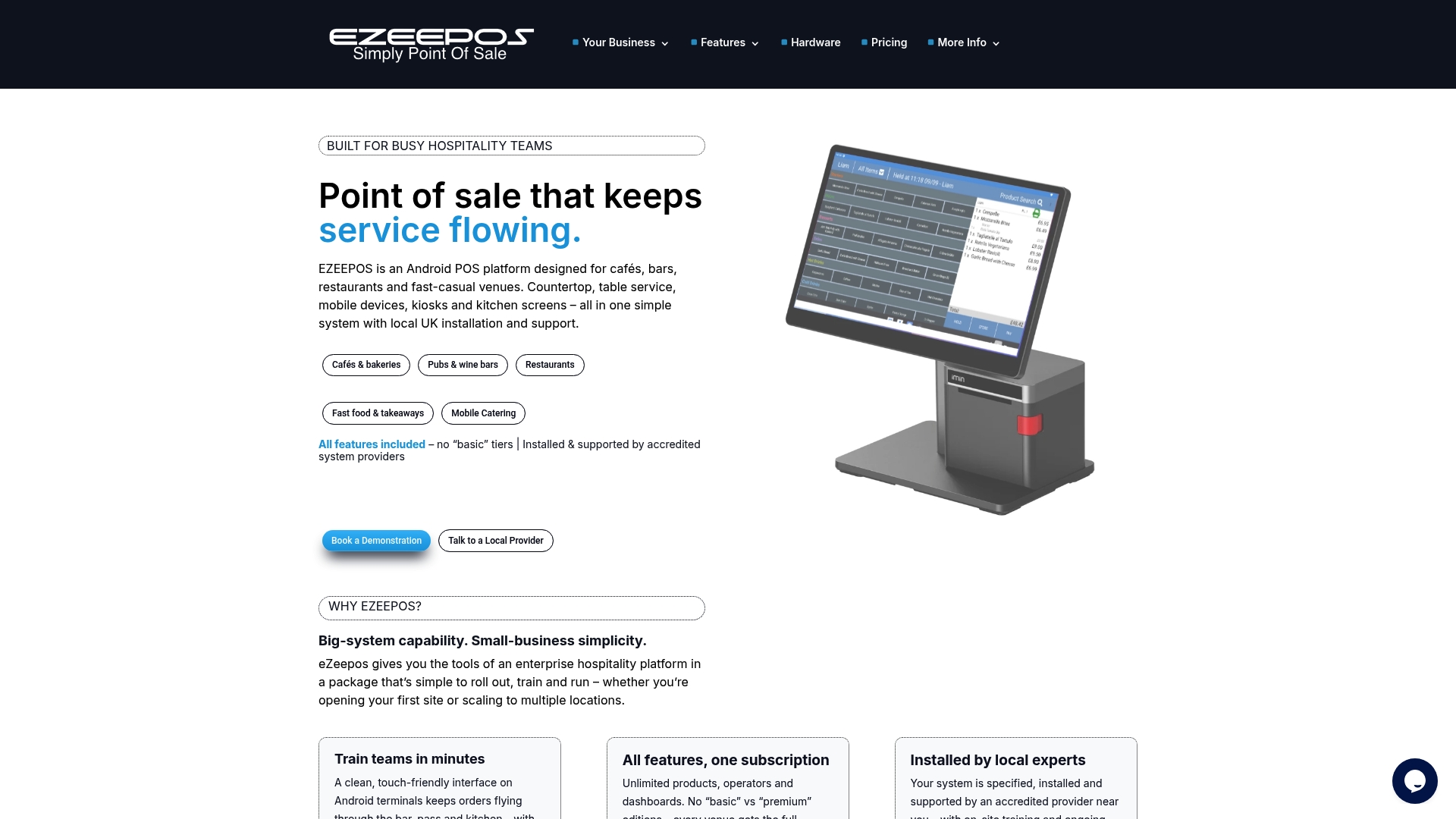
EZEEPOS is the clear winner for fine dining venues that require an enterprise-capable yet simple POS. It pairs an Android platform with local UK installation and ongoing human support to deliver reliable, consistent performance from day one.
Core Features
EZEEPOS combines Android-based POS hardware with a real-time cloud back-office to manage menus, stock, promotions and reporting. The system supports countertop terminals, handhelds, kiosks and kitchen screens and covers table, counter, mobile and self-service modes.
Pros
- All features included: The platform offers full functionality without tier restrictions so your team accesses inventory, staff management and analytics from the start.
- Local UK support: Accredited providers handle installation and ongoing support which reduces downtime and speeds staff onboarding.
- Flexible hardware choices: Counters, handhelds and kiosks mean you can match devices to service flow across front of house and kitchen.
- Multiple service modes in one platform: Table service, counter transaction, mobile POS and kiosks operate under one unified system to avoid data fragmentation.
- Cloud management: Real-time visibility of sales and stock lets managers react quickly across sites and shifts.
Who It’s For
High-end cafés, wine bars and restaurants that demand dependable service and precise stock control will benefit most. Operators running multiple outlets or mixed service styles such as table service plus takeaway will value the unified approach. Mobile catering and fast-food operators seeking faster throughput also find it suitable.
Unique Value Proposition
EZEEPOS delivers enterprise-level capability with an unusually simple ownership model. By including full feature access without tiered plans and pairing that with UK-based installation and accredited human support, it removes common procurement friction. Sophisticated buyers choose this system for predictable costs, local accountability and the ability to scale hardware and service modes without changing platforms. The result is a superior operational backbone that prioritises uptime and human support rather than complex licensing.
Real World Use Case
A busy café chain implemented EZEEPOS across ten sites to unify order processing, inventory control and staff reporting. The local providers completed installation, trained teams, and configured kitchen order screens so the chain saw faster order fulfilment and clearer stock visibility across morning and evening service.
Pricing
Pricing details vary depending on chosen hardware and service plan. For a tailored quote that reflects your venue size and preferred hardware mix contact EZEEPOS via the website to discuss options and timelines.
Website: https://ezeepos.co.uk
YUMA POS System

At a Glance
YUMA is an all in one EPOS designed for hospitality businesses that need broad operational control and customer facing tools in one platform. It pairs cloud based back office management with branded online ordering and loyalty programmes for growing venues.
Core Features
YUMA centralises inventory, staff and sales analytics in a single back office, while supporting dine in, delivery and takeout order flows. Key elements include branded online ordering, integration with delivery platforms, a kitchen display system and a waiter app for table service.
Pros
- Comprehensive all in one solution: YUMA combines POS, online ordering and marketing features, reducing the need for multiple disjointed tools.
- Scales across locations: The system supports single and multi store operations, making roll out across outlets straightforward.
- Training and support included: Free training and cloud based support are provided, which helps teams get operational faster.
- Delivery platform integration: YUMA connects with major delivery services such as Uber Eats and Just Eat for consolidated order handling.
- Flexible hardware and licence model: A choice of hardware bundles and scalable licence options help match budgets and growth plans.
Cons
- Pricing requires direct enquiry: Detailed costs beyond the headline licence prices are disclosed only after contact, which adds procurement friction.
- Hardware setup may be needed: Some features require hardware configuration or integration experience, so internal IT resource is helpful.
- Complex for very small operations: Very small venues that want simple till functions may find the feature set more elaborate than required.
Who It’s For
YUMA suits hospitality operators that want a single platform to manage sales, marketing and fulfilment across one or several venues. It particularly fits restaurants and café groups that prioritise branded online ordering, delivery integration and centralised reporting.
Unique Value Proposition
YUMA offers centralised control of operations and customer engagement within one platform, pairing inventory and staff management with customer facing tools such as loyalty programmes and a branded app. That combination supports consistent service and reporting across multiple sites.
Real World Use Case
A restaurant chain uses YUMA to consolidate orders from branches, send tickets to kitchen display screens, manage staff rotas from the back office and run a loyalty programme linked to the branded mobile app. Sales reports inform menu and staffing decisions.
Pricing
Pricing starts from £40 per month for a single licence, with additional licences at £10 each. Hardware bundles and extra apps carry separate costs that require discussion with sales for a full quote.
Website: https://yumapos.com
Lightspeed
At a Glance
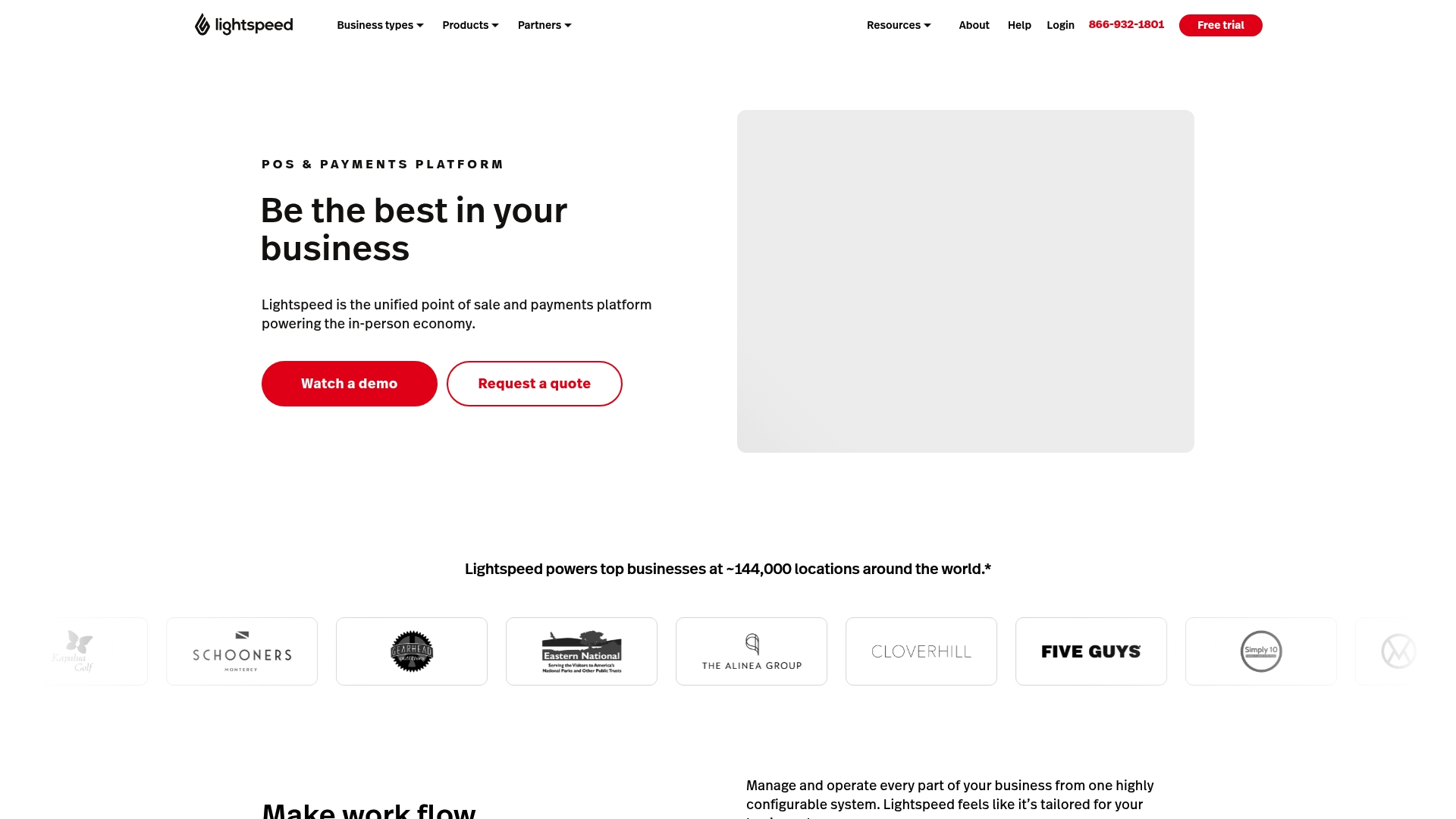
Lightspeed presents a powerful, cloud based solution built as a unified POS and payments platform for venues that sell in person and online. It balances terminal operations with back office tools to give restaurants and hospitality teams one place to run daily service.
This is a practical choice when you want inventory management and advanced analytics paired with localised support and onboarding. Quick decision: consider Lightspeed if you need a single vendor for tills, reporting and online sales.
Core Features
Lightspeed combines restaurant and retail workflows with commerce tools and integrations. The platform centralises orders, stock and customer data so teams see the same information across service modes.
- Unified point of sale and payments platform that links in person sales with online orders.
- Inventory management and order tracking for ingredients and stock across locations.
- eCommerce integration to run online menus and click and collect alongside the till.
- Advanced analytics and real time reporting to monitor sales and labour trends.
- APIs for integration and customisation plus loyalty and customer engagement tools.
Takeaway: the feature set supports multi channel operations and inventory led businesses that need consistent data across outlets.
Pros
-
Wide range of industry solutions: The platform supports restaurants as well as retail and other sectors so you can use one system across different outlets.
-
Robust inventory and order management: Central stock control and order tracking reduce stock outs and simplify purchasing decisions.
-
Strong analytics and insights: Real time reporting helps you spot shifts in covers and menu performance during service.
-
Flexible APIs and integrations: Open APIs let you connect kitchen screens, third party apps and bespoke systems without replacing core software.
-
Dedicated support and onboarding: Lightspeed provides onboarding and round the clock support so teams get live help during rollout.
Cons
-
Variable pricing by plan: The published plans have different features and additional fees for hardware and add ons can increase total cost.
-
Complexity requires training for some users: The breadth of features means staff and managers need time to learn the system fully.
-
Some features tailored to other industries: Certain tools are designed for retail or golf and may not apply to every restaurant operation.
Who It’s For
Lightspeed suits small to large businesses that want a single commerce platform covering tills, online orders and inventory. You should consider it if you manage multiple sites or aim to run retail and restaurant operations from the same system.
Takeaway: pick Lightspeed when cross channel control and detailed stock tracking matter to your kitchen and front of house.
Unique Value Proposition
The main strength is a comprehensive commerce ecosystem that links point of sale, eCommerce and inventory. That unified approach reduces reconciliation work and gives managers one dashboard for sales and stock.
Real World Use Case
A retail chain uses Lightspeed to manage stock across several stores, take payments at tills, analyse sales patterns and connect to an online shop to grow revenue. The same model applies to multi outlet restaurants centralising menu and ingredient control.
Pricing
Plans start at $89 per month for Basic, $149 per month for Core and $289 per month for Plus. Additional costs apply for hardware and optional services so budget for devices and integrations.
Website: https://lightspeedhq.com
Lightspeed

At a Glance
Lightspeed is a comprehensive commerce platform that combines unified POS and payments with industry specific tools for hospitality and retail. It suits multi location operations that need robust inventory, eCommerce links and configurable workflows.
Core Features
Lightspeed centres on a unified POS and payments platform, with industry specific modules for restaurants, retail and golf. The system includes an inventory management system, eCommerce integration and a customisable API so you can adapt workflows to how your business operates.
Pros
- Supports multiple industries: Lightspeed serves restaurants, retail, golf and wholesale which makes it flexible for groups operating several venue types.
- Scalable for growth: The platform offers tiered capabilities that allow a single site to expand into multiple locations without changing core systems.
- Extensive integrations: Lightspeed provides numerous integrations and a customisable API which helps connect accounting, online ordering and marketing tools.
- Industry specific hardware and software: The solution bundles hardware and software tailored to each sector which speeds up deployment for specialised venues.
- Strong onboarding and support: Lightspeed includes onboarding and ongoing support which helps teams adopt the platform and resolve issues faster.
Cons
- Variable pricing structure: Pricing varies by plan and industry which makes initial cost comparisons more complex for small operators.
- Training requirement for complex features: Some advanced functionality requires staff training to use effectively which adds time to full adoption.
- Small business affordability concerns: The range of plans and additional fees can overwhelm small restaurants that are starting with tight margins.
Who It’s For
Lightspeed fits businesses that require a feature rich, industry specific point of sale and commerce platform that can grow with their needs. It is most relevant for multi location restaurant groups, retail chains and venues that combine on site and online sales.
Unique Value Proposition
Lightspeed combines payments and POS in a single platform while offering specialised tools for different industries. The main advantage is that you get sector specific functionality plus an API for bespoke workflows rather than a one size fits all POS.
Real World Use Case
A retail chain uses Lightspeed to join its in store sales with eCommerce, maintain centralised inventory and analyse sales per location. Managers use the analytics to plan stock transfers and to decide where to open a new outlet.
Pricing
Lightspeed pricing varies depending on plan and features with tiers quoted between $89 and $289 USD per month. Additional costs apply for hardware, payment processing and optional services and custom enterprise solutions are available.
Website: https://lightspeedhq.com
TouchBistro

At a Glance
TouchBistro is an all in one POS and restaurant management system that combines front of house, back of house and guest engagement tools. It suits venues that want cloud access to menus, sales and staff tools without juggling multiple suppliers.
Core Features
The platform offers a Point of Sale system, Reporting & Analytics and integrated Payment Processing alongside staff and floor management. It also supports menu management, tableside ordering, inventory and labour management plus a Kitchen Display System.
The guest tools include gift cards, loyalty, marketing, online ordering and reservation features that connect front of house activity with backend reporting.
Pros
- Comprehensive platform: It combines POS, management tools and guest engagement in one place so managers reduce vendor complexity.
- Versatile for venue types: The feature set suits full service, quick service, bar and club operations without major reconfiguration.
- Cloud accessibility: Cloud based tools allow owners and managers to view sales, reports and settings from anywhere.
- Third party integrations: It integrates with industry leading services to extend payments, online ordering and reporting capabilities.
- Detailed analytics: The reporting suite provides the data needed to review sales patterns, labour costs and menu performance.
Cons
- Cookie policies and data tracking practices may raise privacy concerns for operators who prioritise guest data protection.
- Pricing details are not specified on the website which makes budgeting and direct cost comparison difficult for buyers.
- The breadth of features may feel complex for very small or simple operations that require minimal configuration.
Who It’s For
TouchBistro is aimed at restaurants seeking a comprehensive, cloud based POS and management solution to simplify operations and lift guest service consistency. It fits managers who run mixed service models and need centralised reporting and guest engagement tools.
Unique Value Proposition
TouchBistro brings front of house, back of house and guest engagement into a single platform so managers see operational and guest data in the same place. The combination of tableside ordering, kitchen screens and loyalty features makes it a cohesive option for multi service restaurants.
Real World Use Case
A restaurant uses TouchBistro to handle dine in, takeaway and delivery orders while synchronising inventory and staff schedules. Managers run marketing campaigns from the same system and use reports to identify peak trading hours and menu items that require attention.
Pricing
Pricing details are available upon request or consultation via the TouchBistro website which means you will need to contact sales for a tailored quote and implementation options.
Website: https://touchbistro.com
Epos Now
At a Glance
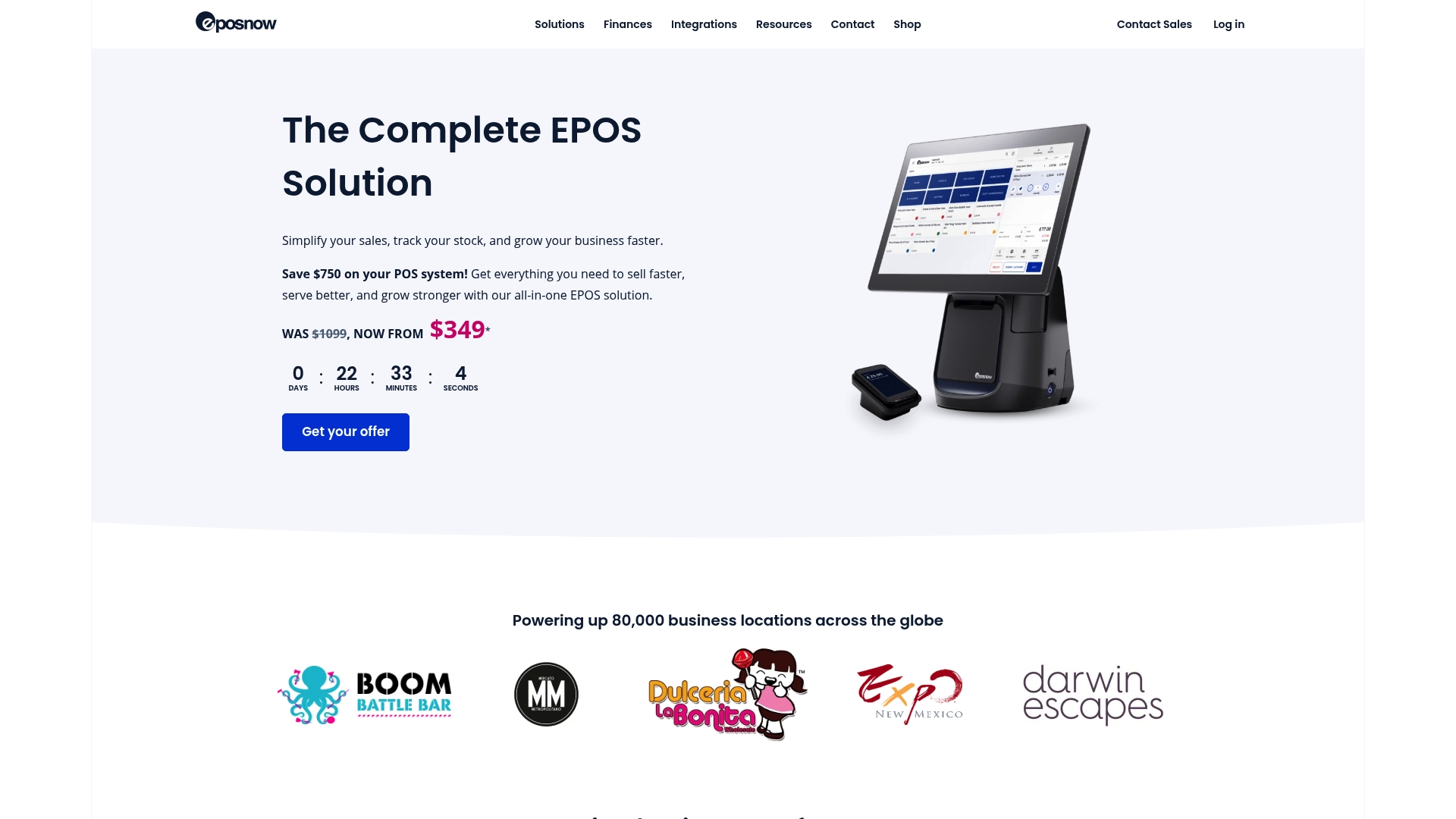
Epos Now is an accessible, all in one POS system that bundles hardware, software and payment processing into a single package. It suits hospitality venues that want quick deployment, cloud based management and clear sales reporting without buying separate components.
Core Features
Epos Now combines a complete POS kit with cloud based access and payment processing to provide a single point of control. Key capabilities include terminal, printer and card machine hardware, real time reporting, and industry specific setups for retail, hospitality and enterprise.
The platform also supports integrations with Shopify, Mailchimp, Sage and OpenTable, and provides 24/7 support alongside training resources to get teams operational fast.
Pros
-
Complete hardware and software package: You receive terminal, printer and card machine as part of the offering, reducing procurement complexity and vendor management.
-
Fast setup and training: The system is designed for quick deployment so staff are selling and serving sooner rather than later.
-
Remote management via cloud: Cloud based access lets you view sales and stock from tablets or smartphones, which helps managers running multiple shifts or sites.
-
Industry specific features: Pre configured options for restaurants and retail mean features align with common day to day tasks, so menus, modifiers and stock behave as expected.
-
Reliable customer support: Around the clock support and extensive online resources help resolve issues outside core trading hours.
Cons
-
Pricing varies with customisation: The starting price does not cover every scenario, and bespoke features and hardware add to the final bill.
-
Options can be overwhelming initially: The breadth of features and integrations requires time to select and configure what actually fits your service model.
-
Additional costs for upgrades and add ons: There is potential for ongoing expense where advanced modules or third party connections are required.
Who It’s For
Epos Now fits small to large restaurants, cafés and multi location hospitality operators that want a single supplier for hardware, software and payments. It is best where rapid rollout and centralised reporting are priorities.
Unique Value Proposition
Epos Now’s appeal is the unified offering: hardware, software and payment services delivered together so you work with one provider rather than several. That reduces setup friction and simplifies support for busy front of house teams.
Real World Use Case
A café uses Epos Now to take orders, accept multiple payment types and track ingredient stock while managers check sales and staff performance from a smartphone. Quick training gets temporary staff up to speed during busy weekends.
Pricing
Pricing starts from $349 for the complete POS system, with promotional discounts during sales or special events. Final cost depends on chosen customisation, additional modules and hardware options.
Website: https://eposnow.com
Tevalis

At a Glance
Tevalis presents a full suite of hospitality tools that link Point of Sale with enterprise management to handle orders, stock and customer data across multiple sites. For fine dining operators seeking a single ecosystem, it offers depth and sector specific reach.
Core Features
Tevalis combines POS systems, mPOS, kitchen management and self service kiosks with enterprise software for Business Analytics, Stock Management and Customer Management. The platform supports both on premise hardware and cloud based enterprise tools and integrates with multiple technology partners to manage complex operations.
Pros
- Integrated ecosystem: The platform brings POS, kitchen and enterprise layers together so operational data flows between tills and back office without manual reconciliation.
- Flexible deployment options: Tevalis supports cloud based and on premise installations which helps venues choose based on connectivity and control preferences.
- Sector specific coverage: The product provides tailored functionality for restaurants, hotels, stadia and cinemas which reduces custom development for specialised venues.
- Strong partner network: Numerous integrations and partner relationships mean you can connect payments, reporting and third party services with less friction.
- Proven scale: With over 8,000 systems transformed worldwide, the solution demonstrates capability across multiple venue sizes.
Cons
- Hardware requirements unclear: The information does not specify exact hardware needs for on premise setups which complicates procurement planning for independent restaurants.
- Integration complexity for small venues: Combining multiple modules may add configuration overhead that smaller fine dining sites will need to budget time and resource to manage.
- Pricing not published: The absence of public pricing makes it difficult to compare total cost of ownership against other providers when planning a budget.
Who It’s For
Tevalis suits hospitality groups and independent operators that require a single vendor for tills, kitchen routing and enterprise reporting. It is best for venues that run multiple service models or multiple sites and need consolidated stock and cash control.
Unique Value Proposition
The clear strength is delivering a unified technology stack from front of house to head office so you track sales, stock and customer activity in one place. That reduces data silos and speeds up month end analysis when managing several dining outlets.
Real World Use Case
A restaurant chain adopts Tevalis to handle in house orders across 12 sites, route kitchen tickets, and centralise stock control. Managers access consolidated sales and inventory reports to spot menu margins and shrinkage without exporting spreadsheets.
Pricing
Tevalis does not publish pricing on its website which suggests costs are quoted per project based on venue size, deployment model and integrations required.
Website: https://tevalis.com
POS Systems for Hospitality Comparison
Explore a comprehensive comparison of leading POS systems for hospitality businesses, detailing their features, advantages, and suitable users, to help you select the relevant solution for your operational needs.
| Product | Key Features | Pros | Cons | Pricing |
|---|---|---|---|---|
| EZEEPOS | Android-based hardware, cloud back office, multiple service modes | All features included; local UK support | Pricing requires contacting sales | Depends on hardware and service choice |
| YUMA POS System | Comprehensive POS with online ordering and delivery platform integration | Branded apps and loyalty programs; scalable and versatile | Potentially complex for very small operations; premium costs for certain add-ons | From £40/month, additional licences extra |
| Lightspeed | Unified POS and payments, inventory management, eCommerce integration | Flexible APIs for integrations; advanced analytics | Variable pricing structure; complex training required for new users | From $89/month plus additional fees |
| TouchBistro | POS and management tools including online ordering, table management | Cloud accessible; suitable for various restaurant types | Privacy concerns may arise; lacks transparent pricing | Quote available upon request |
| Epos Now | Complete POS kit with cloud-based management, industry-specific setups | Rapid deployment and excellent support; comprehensive packages | Initial setups may feel overwhelming; added costs for advancement | From $349 |
| Tevalis | POS combined with enterprise management for in-depth reporting | Tailored for multiple sectors; integrates POS with kitchen and back-end | Not beginner-friendly due to integration complexity; unclear hardware requirements | Quote available upon request |
Discover the Ideal POS System for Fine Dining Perfection
Navigating the complexities of fine dining demands a POS solution that blends enterprise-level capability with straightforward operation. If you are aiming for reliable order management, real-time inventory control and seamless multi-service modes such as table service and self-service kiosks all in one platform, EZEEPOS has the answers. This Android-based system with UK local support is designed to reduce downtime and speed staff training while providing full-featured access without tier limits.
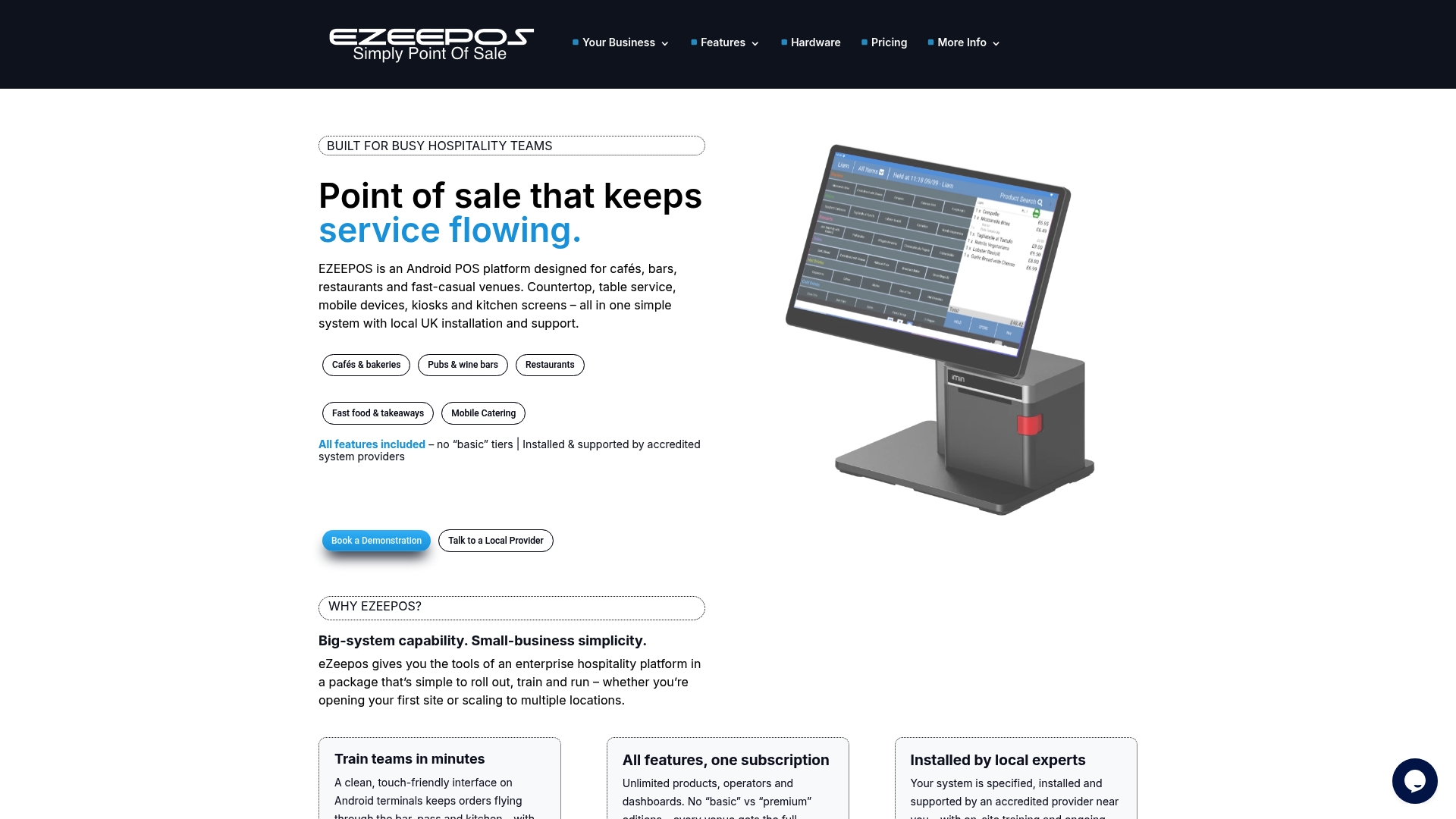
Ready to elevate your venue’s efficiency and guest satisfaction? Explore the comprehensive Point Of Sale – EZEEPos Solution and see how streamlined operations can transform your service. For hospitality professionals focused on quality and support, visit Hospitality – EZEEPos Solution today and take the next step towards an effortless, scalable POS experience at https://ezeepos.co.uk.
Frequently Asked Questions
What features should I look for in a POS system for fine dining?
A robust POS system for fine dining should include features like table management, menu customisation, and real-time reporting. Evaluate systems that streamline service efficiency and offer integrated payment processing to enhance the dining experience.
How can a POS system improve inventory management in a restaurant?
A quality POS system allows for real-time tracking of stock levels, helping prevent shortages and managing waste effectively. Implement a system that provides alerts for low inventory, enabling proactive reordering and potentially reducing waste by up to 20%.
What is the average cost of implementing a POS system in a fine dining restaurant?
The cost typically varies based on the features and hardware selected, ranging from a few hundred to several thousand pounds. Determine a budget that includes both initial setup and ongoing maintenance costs to ensure sustainability.
How long does it take to train staff on a new POS system?
Training staff on a new POS system usually requires about one to two weeks for comprehensive understanding. Schedule training sessions during off-peak hours to ensure all employees can become proficient without disrupting service.
Can a POS system help with customer engagement in fine dining?
Yes, many POS systems offer customer relationship management features that allow you to track preferences and visit history. Utilise this data to create personalised experiences and loyalty programmes that enhance guest satisfaction and encourage repeat visits.
How do I choose the right POS system for my fine dining establishment?
Assess your specific operational needs, such as multi-location support and customised reporting capabilities, to identify the best fit. Create a checklist of must-have features that align with your restaurant’s goals and prioritise systems that can scale as you grow.
Recent Comments