

Managing long queues and nonstop orders can test the patience of even the most seasoned mobile caterer at a busy UK outdoor festival. Juggling food safety checks and council licensing rules while serving hundreds is no small feat, especially without the right tools. Modern point of sale systems offer mobile caterers a reliable way to process payments, track sales, and keep records compliant with British regulations, making service smooth even during peak crowd surges. For those wanting to combine efficient operations with peace of mind, understanding mobile catering POS solutions is key.
Table of Contents
- Mobile Catering POS Explained For The UK
- Key Features And Hardware Integrations
- Typical Use Cases At UK Outdoor Events
- Legal, Safety, And Payment Compliance Issues
- Comparing Mobile POS To Traditional Systems
Key Takeaways
| Point | Details |
|---|---|
| Importance of Mobile POS Systems | Mobile POS systems are essential for efficiently managing orders and transactions in the competitive UK mobile catering market. |
| Regulatory Compliance | Caterers must ensure compliance with local regulations, including food safety and trading licences, which mobile POS systems can help facilitate. |
| Versatile Hardware Features | Mobile POS systems provide lightweight devices and integrated solutions that enhance transaction efficiency and customer experience. |
| Shift from Traditional Systems | The transition from traditional cash registers to mobile POS allows for real-time data management and improved operational flexibility. |
Mobile catering POS explained for the UK
Mobile catering represents a dynamic and competitive sector within the UK hospitality landscape, requiring sophisticated technological solutions to manage complex operational demands. Point of Sale (POS) systems have emerged as critical tools for mobile caterers seeking efficient order management and seamless transaction processing across diverse event environments.
UK mobile catering businesses operate under stringent regulatory frameworks, necessitating flexible technological platforms that can adapt to various trading locations. Navigating street trading regulations requires precise documentation and rapid transaction capabilities that modern mobile POS systems provide.
Key features of effective mobile catering POS systems include:
- Robust offline transaction processing
- Rapid order entry capabilities
- Integrated payment solutions
- Real-time inventory tracking
- Compact, portable hardware design
- Compliance with UK food safety standards
Successful mobile catering POS implementation demands understanding both technological capabilities and local regulatory requirements. These systems transform traditional cash-based trading into streamlined, digital operations that enhance customer experience and operational efficiency.
Pro tip: Invest in a mobile POS system that offers comprehensive training and local UK support to ensure seamless integration into your mobile catering workflow.
Key features and hardware integrations
Mobile catering POS systems represent a technological revolution for UK food service professionals, offering sophisticated solutions that transform traditional outdoor event sales. Innovative hardware integrations enable mobile caterers to process transactions efficiently and enhance customer experience across diverse event environments.
The core hardware components of modern mobile catering POS systems typically include:
- Lightweight tablet devices
- Compact thermal receipt printers
- Secure mobile card readers
- Wireless payment terminals
- Rugged protective cases for outdoor use
- Portable battery backup systems
Digital capabilities extend far beyond simple transaction processing. Advanced POS platforms provide comprehensive features like interactive menu management, real-time sales reporting, and integrated inventory tracking. These systems allow mobile caterers to monitor stock levels, manage promotional discounts, and generate detailed performance analytics instantly.

The following table links key POS features with their impact on mobile catering operations:
| POS Feature | Business Impact |
|---|---|
| Offline Transaction Mode | Maintains sales during connectivity loss |
| Real-Time Sales Reporting | Instantly tracks revenue and trends |
| Cloud-Based Data Access | Enables analytics from any location |
| Integrated Payment System | Reduces queue times and errors |
Customer-facing technologies have also transformed mobile catering interactions. QR code ordering, contactless payment options, and mobile wallet integrations provide multiple convenient transaction methods that cater to diverse customer preferences and expectations.
Pro tip: Select a mobile POS system with versatile hardware compatibility and cloud-based reporting to maximise operational flexibility and insights.
Typical use cases at UK outdoor events
Mobile catering businesses encounter diverse operational challenges across different UK event landscapes, from bustling music festivals to intimate local markets. Mobile POS systems play a critical role in helping caterers manage complex transaction environments with precision and efficiency.
Typical event scenarios where mobile catering POS systems prove invaluable include:
- Large music festivals with high-volume food service
- Weekend farmers’ markets with multiple vendor stalls
- Corporate hospitality events and private functions
- Sporting events with temporary food service areas
- Community street food gatherings
- Agricultural shows and county fairs
Regulatory compliance represents a crucial consideration for mobile caterers operating across these varied settings. Modern POS systems help businesses maintain accurate records, track ingredient origins, and demonstrate adherence to food safety regulations. This documentation becomes particularly important when serving large crowds in dynamic outdoor environments.
Each event type presents unique challenges, from managing cash transactions at local markets to handling complex split-billing at corporate events. Flexible mobile POS systems enable caterers to adapt quickly, process payments securely, and provide seamless customer experiences regardless of the specific event context.
Pro tip: Configure your mobile POS system with event-specific menu and pricing templates to streamline setup and reduce administrative overhead.
Legal, safety, and payment compliance issues
Mobile catering businesses in the United Kingdom operate within a complex regulatory landscape that demands meticulous attention to legal and safety requirements. Mobile catering legal frameworks encompass multiple layers of compliance that protect both businesses and consumers across diverse event environments.
Key legal and safety compliance requirements include:
- Obtaining appropriate public liability insurance
- Passing annual gas safety inspections
- Completing electrical PAT testing
- Registering with local Environmental Health Offices
- Maintaining current Food Hygiene Level 2 certification
- Adhering to waste disposal regulations
- Securing necessary trading licenses
Payment system compliance represents another critical consideration for mobile caterers. Digital transaction platforms must align with UK financial regulations, ensuring robust customer data protection and implementing sophisticated fraud prevention mechanisms. This includes maintaining secure payment gateways, encrypting sensitive financial information, and following stringent data handling protocols established by financial regulatory bodies.
Beyond administrative requirements, mobile catering businesses must demonstrate ongoing commitment to health and safety standards. This involves regular equipment maintenance, staff training, and creating comprehensive risk management protocols that address potential hazards in dynamic outdoor event environments.
Pro tip: Create a comprehensive compliance checklist that covers legal, safety, and payment regulations to ensure consistent adherence across all event settings.
Comparing mobile POS to traditional systems
The evolution of point of sale technology has dramatically transformed how mobile catering businesses manage transactions, moving far beyond traditional cash registers and manual record-keeping. Types of POS systems have revolutionised the way food service professionals handle sales, inventory, and customer interactions.
Key differences between mobile and traditional POS systems include:
- Real-time data synchronisation
- Instant inventory management
- Flexible payment processing
- Cloud-based reporting capabilities
- Minimal hardware requirements
- Enhanced mobility and portability
- Lower upfront technology investment
Traditional systems typically required significant physical infrastructure, including bulky cash registers, dedicated computer terminals, and complex networking setups. In contrast, modern mobile POS platforms operate through lightweight tablet or smartphone applications, enabling caterers to process transactions from anywhere with internet connectivity.
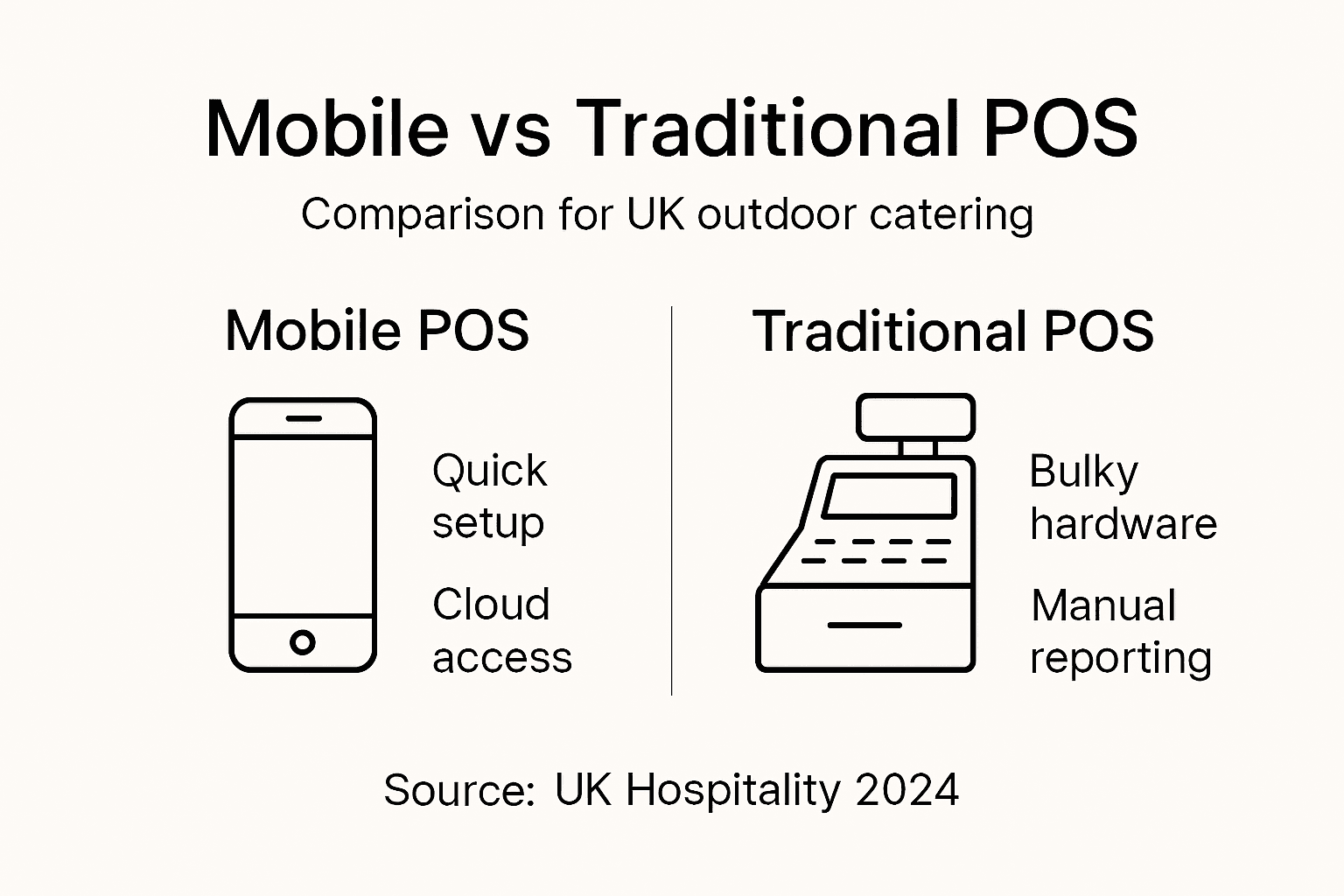
Here is a comparison of mobile POS functionality against traditional systems for UK caterers:
| Capability | Mobile POS Systems | Traditional POS Systems |
|---|---|---|
| Transaction Mobility | Process anywhere via device | Fixed to stall or van location |
| Real-Time Inventory Management | Tracks instantly across events | Requires manual stock checks |
| Upfront Hardware Costs | Lower due to portable devices | Higher for registers and terminals |
| Payment Options | Supports contactless and mobile pay | Mainly cash or chip & PIN |
The technological shift represents more than mere convenience. Mobile POS systems offer sophisticated features like detailed sales analytics, customer relationship management tools, and seamless integration with accounting software. These capabilities provide mobile caterers with unprecedented insights into their business performance, enabling more strategic decision-making and operational efficiency.
Pro tip: Conduct a comprehensive trial of mobile POS systems to ensure compatibility with your specific mobile catering business model and event requirements.
Streamline Your Mobile Catering Sales with EZEEPos
Managing outdoor event sales can be challenging with complex transactions, real-time inventory needs, and strict compliance demands. The article highlights these pain points and underscores how a flexible, mobile POS system transforms busy outdoor catering into smooth, efficient operations. EZEEPos offers a specialised Android-based platform tailored for mobile caterers, featuring portable hardware, cloud reporting, and seamless payment integrations that match these exact needs.
Discover how our Hospitality – EZEEPos Solution simplifies event-specific menu management and supports varied payment methods with secure EFT Terminals – EZEEPos Solution. Whether you are at a bustling festival or a local market our system combines powerful features with easy team training and UK-based ongoing support to help your mobile catering thrive.
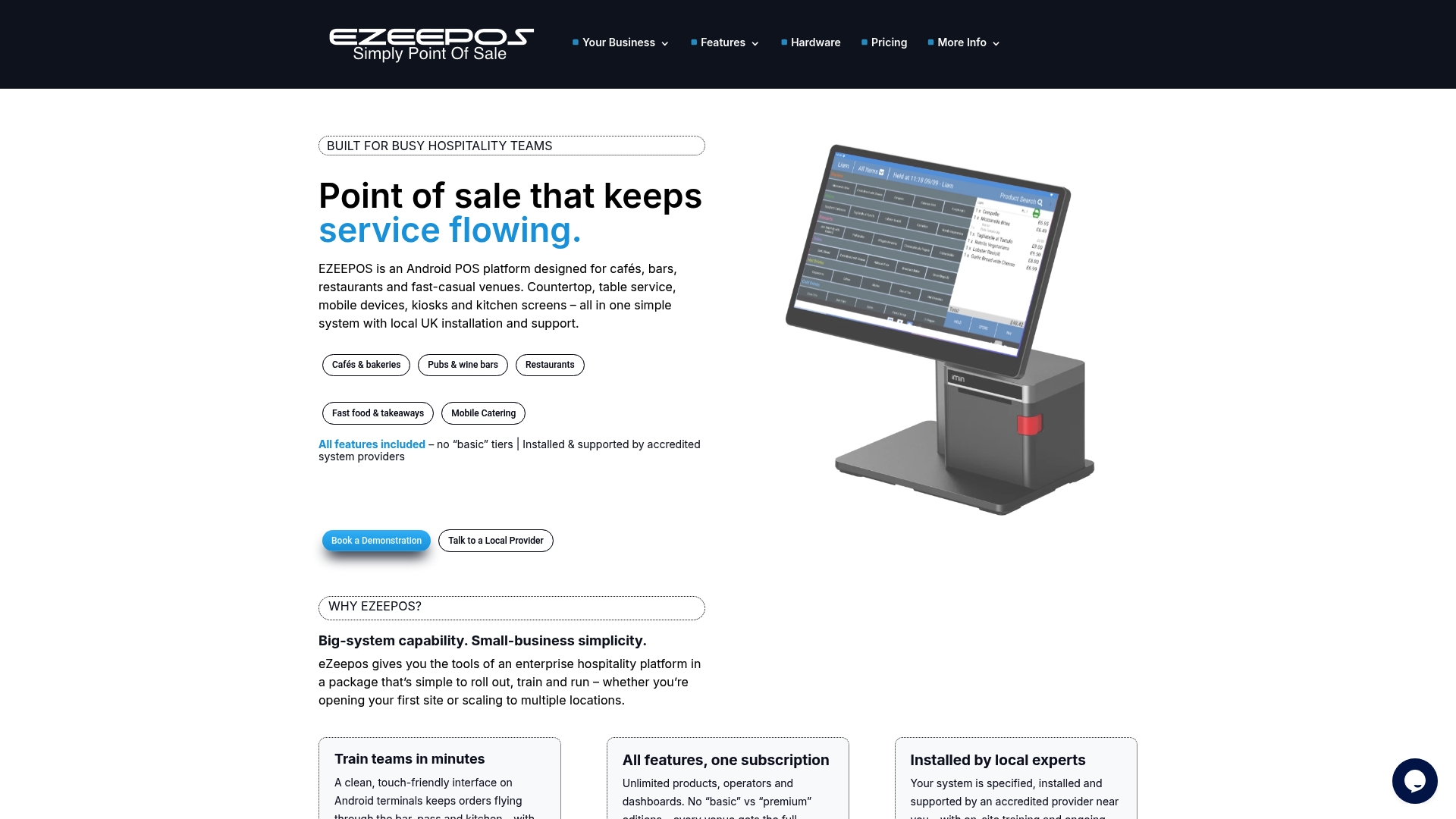
Ready to elevate your outdoor sales experience? Visit https://ezeepos.co.uk today and explore how EZEEPos can empower your mobile catering business with reliable, scalable technology designed for your success.
Frequently Asked Questions
What are the key features of a mobile catering POS system?
Key features include offline transaction processing, rapid order entry capabilities, integrated payment solutions, real-time inventory tracking, and compliance with food safety standards.
How does a mobile POS system improve sales at outdoor events?
Mobile POS systems streamline transaction processes, reduce queue times, and allow for flexibility in handling various payment methods, enhancing the overall customer experience at outdoor events.
What are the compliance requirements for mobile catering businesses?
Mobile caterers must adhere to regulations such as obtaining public liability insurance, passing gas safety inspections, registering with local Environmental Health Offices, and maintaining food hygiene certification.
How do mobile POS systems differ from traditional POS systems?
Mobile POS systems offer advantages such as real-time data synchronisation, instant inventory management, lower hardware costs, and enhanced portability compared to traditional fixed systems.
Recent Comments