
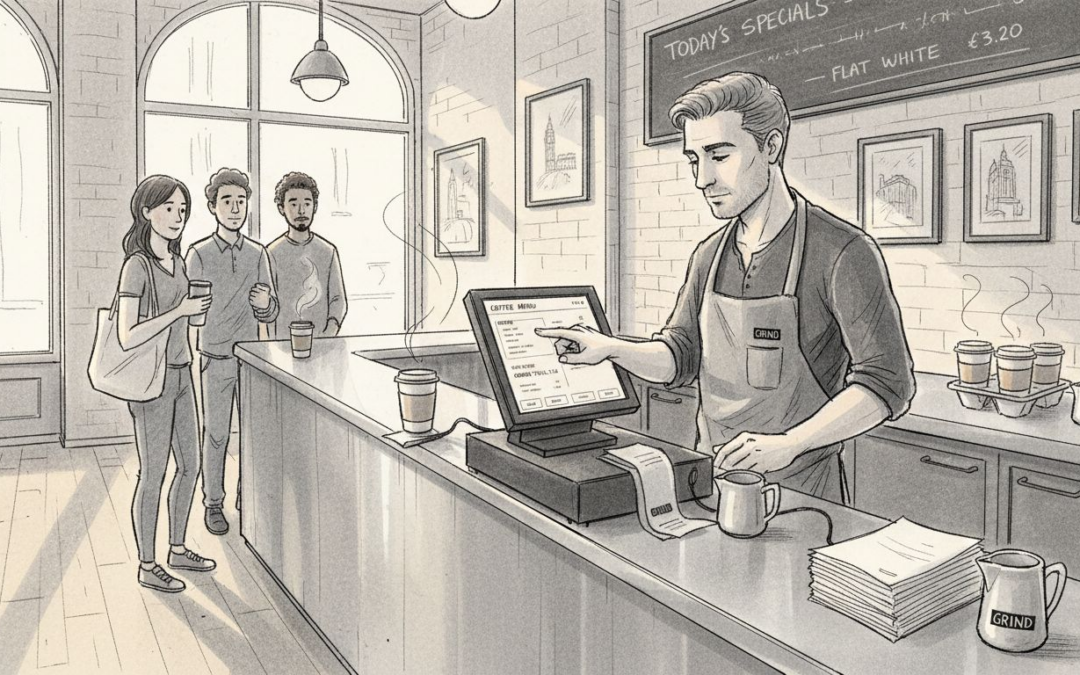
Queues can build up quickly during peak times, leaving staff stretched and customers restless. In the fast-paced world of UK hospitality, efficient counter service is no longer a luxury but a necessity for restaurants and cafés aiming to stay ahead. The right counter service POS system transforms transactions into seamless experiences, supporting everything from real-time inventory updates to flexible payment options that keep service speedy and guests satisfied.
Table of Contents
- Counter Service POS In Hospitality Venues
- Types Of Counter Service POS Systems
- Core Features And Operational Workflow
- Staff Training And Security Management
- Financial Costs And Choosing The Best Solution
Key Takeaways
| Point | Details |
|---|---|
| Transaction Efficiency | Counter service POS systems enhance transaction processing speed, reducing human error and improving service delivery in hospitality venues. |
| Flexibility in Service Modes | These systems cater to various customer interactions, supporting traditional cashiers and self-service options for greater adaptability. |
| Comprehensive Training and Security | Effective staff training and robust security protocols are essential for protecting data and ensuring operational efficiency in the use of POS systems. |
| Financial Analysis for Selection | Businesses must evaluate the total cost of ownership and consider long-term benefits when choosing a counter service POS solution. |
Counter service POS in hospitality venues
Counter service point of sale (POS) systems represent the technological backbone of modern hospitality establishments across the United Kingdom. These sophisticated systems transform traditional transaction processes by integrating multiple operational functions simultaneously. Modern POS terminals manage complex hospitality workflows with unprecedented efficiency and precision.
The core functionality of counter service POS systems encompasses several critical capabilities:
- Transaction Processing: Rapid order entry and payment handling
- Inventory Management: Real-time stock tracking and automatic updates
- Customer Data Collection: Seamless recording of purchasing patterns
- Payment Flexibility: Support for multiple payment methods including contactless
Modern hospitality venues require systems that can adapt quickly to changing customer expectations. Counter service POS platforms now offer unprecedented flexibility, supporting various service modes from traditional cashier interactions to self-service kiosks. These systems eliminate manual processes, reducing human error and accelerating service delivery times.
The technological evolution of counter service POS has been remarkable. Today’s systems integrate cloud-based technologies, enabling restaurant managers to monitor operations remotely, track sales performance, and make data-driven decisions in real-time. Mobile and tablet-based configurations have replaced traditional fixed terminals, providing unprecedented operational mobility.
Pro tip: Invest in a POS system that offers comprehensive training and local UK technical support to ensure smooth implementation and minimal operational disruption.
Types of counter service POS systems
Counter service POS systems have evolved significantly, offering hospitality businesses multiple deployment options tailored to their specific operational requirements. Hospitality POS systems in the UK range from on-premise to cloud-based configurations with distinct advantages and challenges for different business models.
The primary types of counter service POS systems include:
- On-Premise POS: Locally installed systems with complete infrastructure control
- Cloud-Based POS: Remote data access with subscription-based pricing
- Hybrid POS: Combination of local and cloud technologies
- Mobile POS: Tablet and smartphone-enabled transaction platforms
On-premise POS systems provide maximum customisation and offline functionality, making them ideal for venues with complex operational needs. These systems require significant upfront investment but offer complete data control and independence from internet connectivity. Restaurant owners can configure intricate menu structures, pricing models, and reporting mechanisms without external dependencies.
Cloud-based POS platforms represent the modern alternative, offering real-time data synchronisation, remote management capabilities, and scalable infrastructure. These systems enable hospitality managers to monitor performance, update menus, and track inventory from anywhere with internet access. The subscription model reduces initial capital expenditure while providing continuous technological updates and enhanced flexibility.
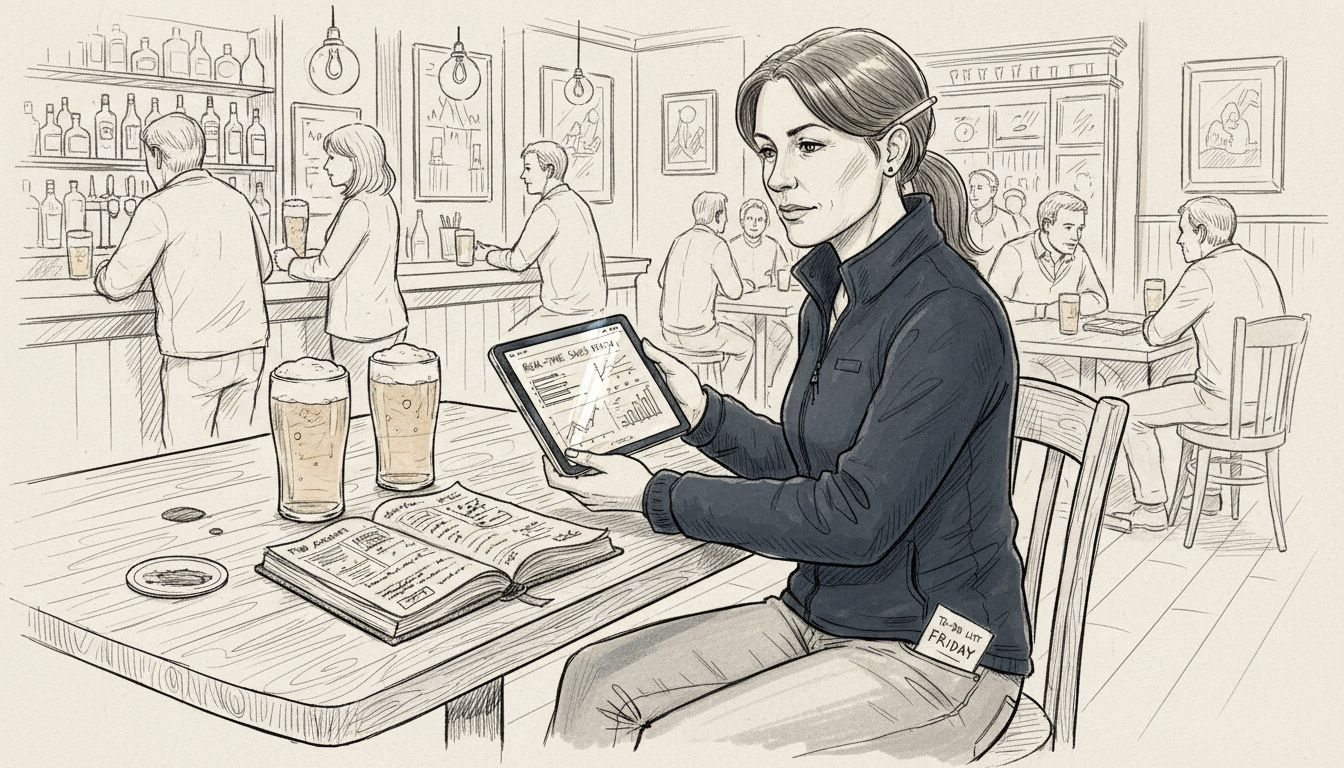
Here is a comparison of counter service POS system types and their ideal use cases:
| POS Type | Best For | Key Advantage |
|---|---|---|
| On-Premise | Complex, large venues | Full customisation, offline use |
| Cloud-Based | Multi-site, remote management | Real-time updates everywhere |
| Hybrid | Venues needing backup connectivity | Flexibility and reliability |
| Mobile | Small cafés, mobile operations | Lower cost, easy deployment |
Pro tip: Evaluate your specific hospitality venue’s operational requirements before selecting a POS system, considering factors like internet reliability, budget constraints, and desired feature complexity.
Core features and operational workflow
Counter service POS systems form the technological backbone of modern hospitality operations, integrating multiple critical functions into a seamless workflow. Quick-service POS platforms streamline complex operational processes by combining transaction management, inventory control, and customer interaction capabilities.
The core operational workflow typically encompasses several key stages:
- Order Entry: Rapid menu item selection and customisation
- Payment Processing: Multiple payment method support
- Kitchen Communication: Instant order transmission to preparation areas
- Sales Reporting: Real-time transaction and performance tracking
- Inventory Management: Automatic stock level monitoring
Transaction processing represents the most critical component of counter service POS systems. These platforms enable staff to quickly input customer orders, apply pricing modifications, handle special requests, and complete payments with minimal manual intervention. The streamlined interface reduces human error and accelerates service times, which is particularly crucial in high-volume hospitality environments.
Modern POS systems extend far beyond simple transaction recording. They function as comprehensive business intelligence tools, providing granular insights into sales patterns, staff performance, and inventory dynamics. Restaurant managers can access detailed reports, track peak service hours, analyse menu item popularity, and make data-driven decisions that directly impact operational efficiency and profitability.
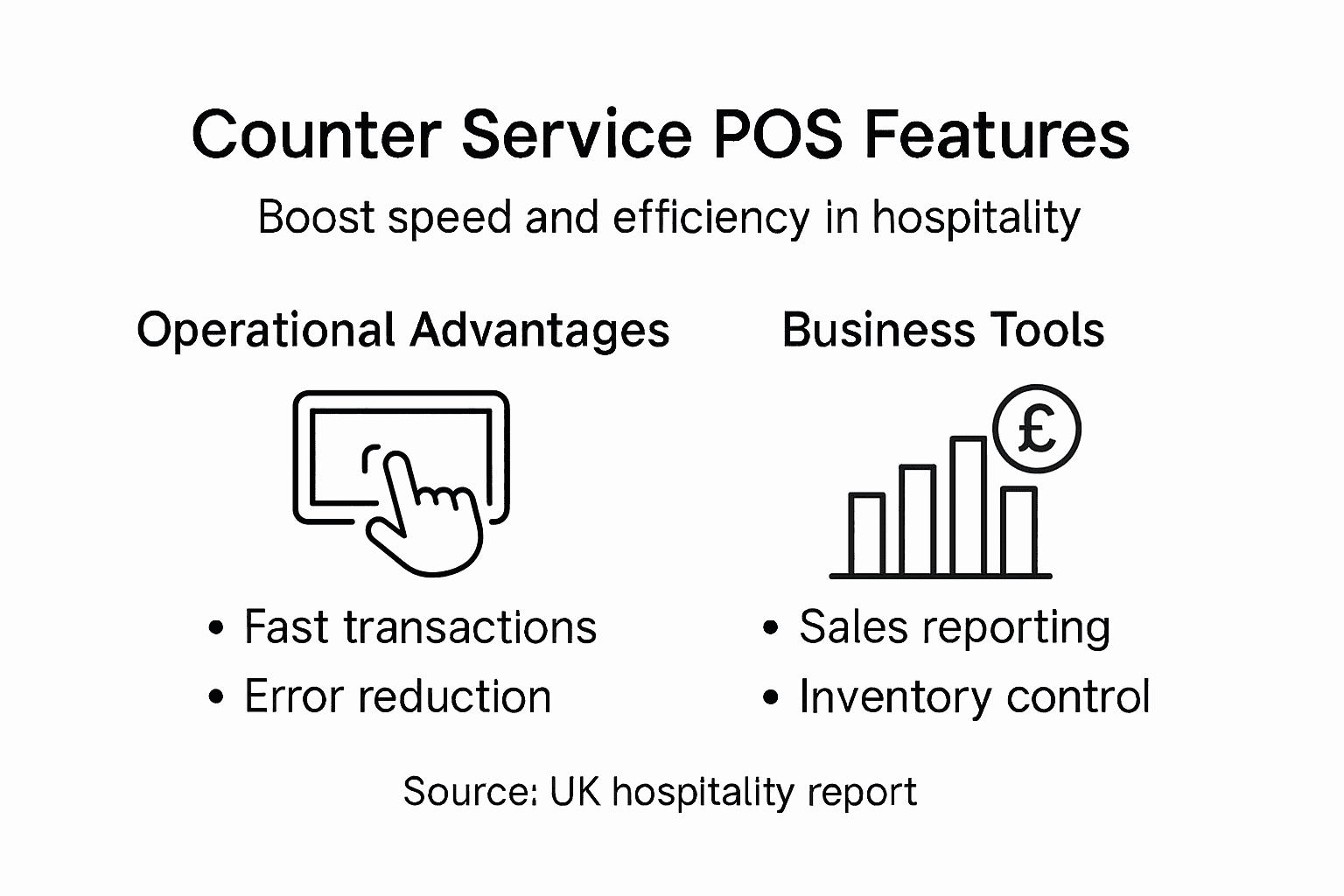
The following table summarises how core POS features impact hospitality business operations:
| Feature | Business Impact |
|---|---|
| Inventory Management | Prevents stockouts, reduces waste |
| Customer Data Recording | Enables targeted promotions |
| Kitchen Communication | Reduces errors, speeds up orders |
| Sales Reporting | Supports data-driven decision making |
| Payment Flexibility | Improves customer satisfaction |
Pro tip: Configure your POS system to generate daily performance reports, enabling quick identification of operational strengths and potential improvement areas.
Staff training and security management
Counter service POS systems demand robust staff training and comprehensive security protocols to ensure smooth operational efficiency and data protection. Hospitality-specific training courses provide critical skills for staff members navigating complex technological environments and maintaining stringent security standards.
Key aspects of staff training and security management include:
- System Access Control: User-level permissions and authentication
- Data Protection: Secure transaction and customer information handling
- Performance Tracking: Individual staff login and performance monitoring
- Compliance Training: Regular updates on operational security protocols
- Technical Skills Development: Hands-on POS system training modules
User authentication represents a critical security layer in modern POS platforms. Staff members are assigned unique login credentials with specific access levels, ensuring that sensitive financial and operational data remains protected. These granular permission settings allow managers to control system access, track individual staff performance, and maintain comprehensive audit trails of all system interactions.
Comprehensive security management extends beyond technological safeguards. Hospitality venues must invest in continuous staff training programmes that emphasise data protection, transaction security, and operational best practices. These training initiatives should cover critical areas such as recognising potential security risks, understanding data privacy regulations, and implementing proper system usage protocols to mitigate potential breaches.
Pro tip: Implement mandatory quarterly security refresher training for all staff members to maintain high standards of system competence and data protection awareness.
Financial costs and choosing the best solution
Selecting the right counter service POS system requires careful financial analysis and strategic planning for hospitality businesses. UK hospitality EPOS systems offer diverse pricing models with varying cost structures designed to accommodate different business scales and operational requirements.
Key financial considerations for POS system selection include:
- Initial Hardware Investment: Upfront equipment costs
- Monthly Subscription Fees: Platform access and software maintenance
- Transaction Processing Charges: Per-transaction percentage fees
- Additional Integration Costs: Potential expenses for specialised features
- Training and Support Expenses: Staff onboarding and ongoing technical assistance
Total cost of ownership extends beyond initial purchase price, encompassing long-term operational expenses and potential productivity gains. Hospitality venues must evaluate systems not just on price, but on their ability to streamline operations, reduce manual labour, and generate actionable business insights. Smaller cafes might prioritise cost-effective solutions with essential features, while larger restaurants could justify more comprehensive systems with advanced reporting capabilities.
Implementing a robust POS solution represents a strategic investment rather than a mere technological expense. Businesses should conduct thorough cost-benefit analyses, considering factors like potential revenue increases, operational efficiency improvements, and reduced administrative overhead. Scalable systems that can grow alongside the business offer the most compelling long-term value proposition.
Pro tip: Request detailed pricing breakdowns and negotiate flexible contract terms that allow system upgrades as your hospitality business evolves.
Transform Your Hospitality Venue with a Counter Service POS Built for Speed and Reliability
The article highlights how slow transactions and manual errors challenge hospitality venues striving for fast and efficient service. If you want to overcome these pain points, embracing a counter service POS system that seamlessly integrates order management, payment processing, and inventory control is essential. Our Android-based platform at EZEEPos empowers cafés, bars, and quick-service restaurants across the UK to accelerate service times while maintaining full control over operations.
With features like countertops, tablets, self-service kiosks, kitchen screens, and mobile POS, you can handle complex workflows effortlessly. Backed by local UK support and no tiered pricing restrictions, your team benefits from easy training and enterprise-level tools without breaking the bank. To enhance payment speed and security, explore our range of EFT Terminals designed to integrate perfectly with your system. Plus, customise your POS experience with our Add On Modules that fit your unique hospitality needs.
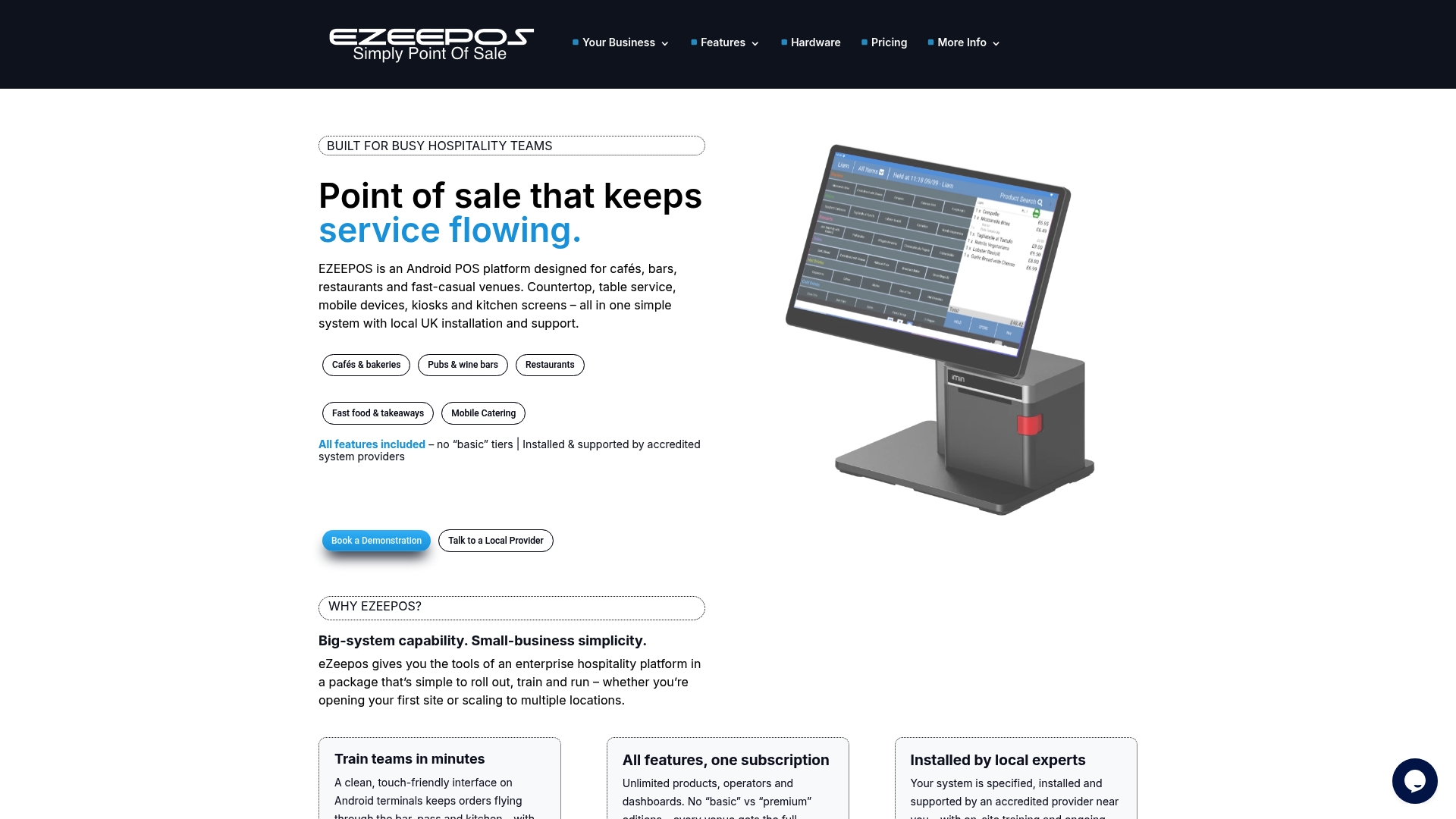
Ready to boost your venue’s service speed and accuracy using a system specifically designed for UK hospitality? Visit EZEEPos today and discover how our counter service POS solutions can transform your business operations and delight your customers. Take the first step towards a faster, smoother service experience now.
Frequently Asked Questions
What are the key features of a counter service POS system?
Counter service POS systems typically include transaction processing, inventory management, customer data collection, and payment flexibility, allowing for rapid order entry and efficient service delivery.
How does a cloud-based POS system differ from an on-premise POS system?
Cloud-based POS systems offer remote access, real-time data synchronisation, and subscription-based pricing, whereas on-premise systems require local installation and provide more customisation but require significant upfront investment.
What impact does a counter service POS system have on operational efficiency?
Counter service POS systems streamline processes by reducing manual errors, accelerating service times, and providing valuable insights into sales and inventory, ultimately enhancing overall operational efficiency.
Why is staff training important for effective POS system usage?
Staff training is crucial to ensure employees are familiar with the system’s functionalities, understand data protection protocols, and can operate efficiently, thereby minimising errors and enhancing customer service.
Recent Comments