
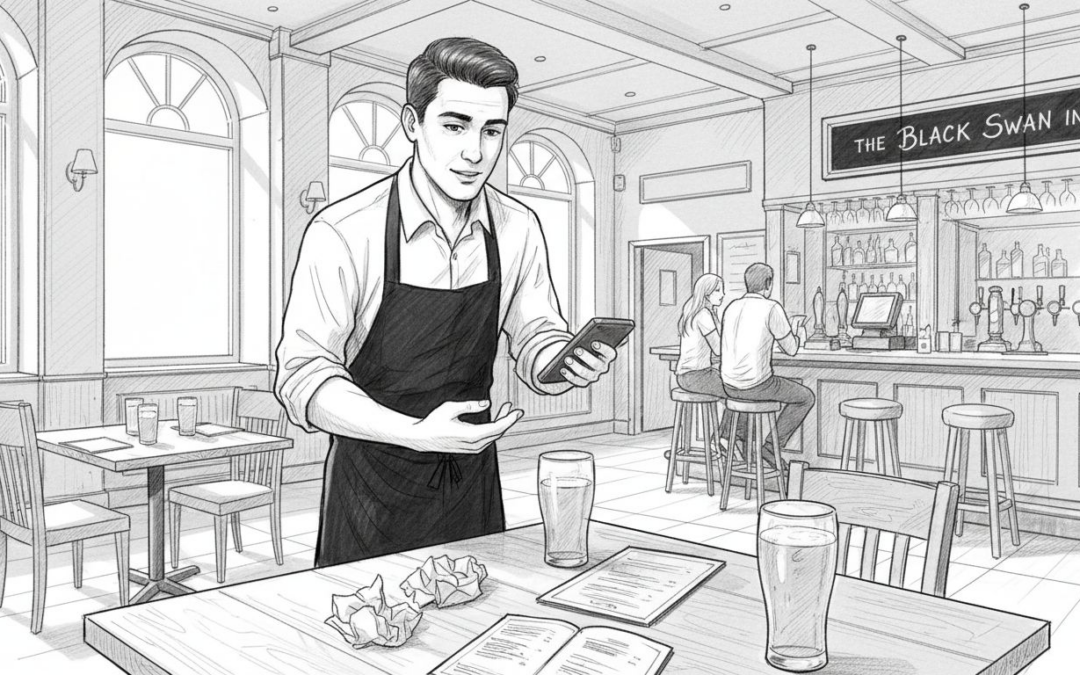
More than 60 percent of British hospitality venues have switched to mobile POS systems for faster order processing and better customer service. As restaurant and café owners know, every second counts when managing busy shifts and growing inventories. Understanding how mobile POS works in British hospitality helps you choose solutions that keep sales moving, staff coordinated, and customers happy from the first order to the last payment.
Table of Contents
- Mobile POS Defined for Hospitality Venues
- Key Mobile POS Types and Configurations
- Essential Features and How Mobile POS Works
- Real-World Applications in Cafés, Bars, and Restaurants
- Costs, Security, and Critical Mistakes to Avoid
Key Takeaways
| Point | Details |
|---|---|
| Mobile POS Enhances Flexibility | Mobile POS systems allow for sales and order management from portable devices, improving service speed and convenience in hospitality settings. |
| Integration is Crucial | When selecting a mobile POS system, ensure it integrates seamlessly with existing operations for optimal efficiency. |
| Consider Total Costs | Assessment of all costs, including hardware, software, training, and ongoing support, is essential for mobile POS implementation. |
| Prioritise Security | Implement robust cybersecurity measures like data encryption and secure authentication to protect customer information. |
Mobile POS Defined for Hospitality Venues
Mobile Point of Sale (POS) systems represent a transformative technology for UK hospitality venues, enabling businesses to process transactions and manage operations directly from portable digital devices. Unlike traditional stationary cash registers, mobile POS allows staff to conduct sales, process payments, and manage orders from smartphones, tablets, or handheld terminals anywhere within a restaurant, café, or catering environment.
In the dynamic UK hospitality landscape, digital technology is revolutionising service delivery by providing unprecedented flexibility and operational efficiency. Mobile POS systems integrate seamlessly across multiple service modes, supporting everything from table service in restaurants to order processing in mobile catering units. These systems offer real-time transaction tracking, inventory management, and comprehensive reporting capabilities that help venue managers make data-driven decisions.
Key features of mobile POS for hospitality venues typically include:
- Instant payment processing
- Real-time order management
- Inventory tracking
- Staff performance monitoring
- Customer relationship management
- Flexible payment method acceptance
The technology addresses critical challenges in the hospitality sector, such as reducing administrative overhead, minimising human error, and improving overall service speed. Flexible transaction processing supports diverse operational needs, enabling venues to adapt quickly to changing customer expectations and market dynamics.
Pro tip: When selecting a mobile POS system, prioritise solutions that offer comprehensive integration capabilities and can seamlessly connect with your existing operational infrastructure.
Key Mobile POS Types and Configurations
Mobile POS systems in the UK hospitality sector encompass a diverse range of configurations designed to meet the unique operational requirements of different venue types. Mobile hardware solutions support varied service models, from handheld devices for tableside ordering to integrated tablet systems that connect front-of-house and back-of-house operations.
These configurations typically fall into several key categories:
- Handheld Devices: Lightweight smartphones or tablets used by waiting staff for direct table-side order taking and payment processing
- Tablet Terminals: Mounted or portable touchscreen devices integrated with kitchen display systems and payment platforms
- Fixed Countertop Systems: Stationary units for quick-service restaurants and cafés with high-volume transaction needs
- Cloud-Based Configurations: Scalable solutions supporting multi-site venue management and real-time reporting
The selection of mobile POS configuration depends on multiple factors including venue size, service style, and operational complexity. Advanced platforms offer comprehensive features that extend beyond simple transaction processing, integrating staff scheduling, inventory management, and compliance tracking into a unified system.
For hospitality businesses, the right mobile POS configuration can dramatically improve operational efficiency, reduce administrative overhead, and enhance customer service experiences. By selecting a system that matches their specific operational requirements, venues can streamline processes, improve staff productivity, and create more seamless dining experiences.
Here is a summary of mobile POS types and their typical uses in UK hospitality venues:
| POS Type | Typical Environments | Main Advantage |
|---|---|---|
| Handheld Device | Table service restaurants | Enhances speed and mobility |
| Tablet Terminal | Bars, cafés, mixed venues | Connects service and kitchen instantly |
| Fixed Countertop | Quick-service cafés | Handles high transaction volumes |
| Cloud-Based Solution | Multi-site chains | Centralises reporting and control |
Pro tip: When evaluating mobile POS systems, conduct a comprehensive operational audit to identify precise technological requirements before making a final selection.
Essential Features and How Mobile POS Works
Mobile POS systems function as sophisticated digital platforms that transform traditional transaction processing in UK hospitality venues. Wireless technology enables instant order management across multiple service environments, connecting front-of-house staff with kitchen operations through seamless digital communication.
The core functionality of mobile POS encompasses several critical features:
- Real-time order transmission
- Instant payment processing
- Contactless payment acceptance
- Inventory tracking
- Sales reporting
- Customer data management
- Staff performance monitoring
These systems operate through an integrated network of wireless devices, allowing staff to capture orders directly at the point of service. Advanced platforms streamline operational workflows by instantly transmitting customer orders to kitchen displays, processing payments, and updating inventory in real-time. This digital ecosystem eliminates traditional communication barriers, reduces human error, and accelerates service delivery.

By leveraging cloud-based technologies, mobile POS systems provide hospitality businesses with unprecedented operational insights. Managers can access comprehensive sales reports, track staff performance, and make data-driven decisions instantly. The ability to capture and analyse customer data enables venues to personalise services, implement targeted marketing strategies, and enhance overall guest experiences.
Pro tip: Select a mobile POS system that offers comprehensive integration capabilities and provides robust training support for your staff to ensure smooth technological adoption.
Real-World Applications in Cafés, Bars, and Restaurants
Mobile POS technology has revolutionised service delivery across UK hospitality venues, providing dynamic solutions for diverse operational environments. Digital technology transforms hospitality service models by enabling instant communication, streamlined ordering, and enhanced customer experiences in cafés, bars, and restaurants.
In different hospitality settings, mobile POS demonstrates remarkable versatility:
- Cafés: Swift counter service with instant order processing
- Bars: Tableside payment and split billing capabilities
- Restaurants: Comprehensive order management across multiple service styles
- Quick-Service Venues: Rapid transaction handling and kitchen integration
Sustainability goals drive mobile POS adoption by reducing paper waste, optimising resource allocation, and supporting more efficient operational workflows. The technology addresses critical challenges such as staffing shortages, cost management, and evolving customer expectations by providing real-time data insights and flexible service mechanisms.
For hospitality businesses, mobile POS represents more than a technological upgrade. It’s a strategic tool that enables venues to adapt quickly, personalise customer interactions, and maintain competitive edge in a rapidly changing market. By integrating advanced digital solutions, cafés, bars, and restaurants can transform traditional service models into dynamic, responsive customer experiences.
Pro tip: Conduct a comprehensive operational audit to identify specific mobile POS features that align precisely with your venue’s unique service requirements.
Costs, Security, and Critical Mistakes to Avoid
Mobile POS investments represent a strategic financial decision for UK hospitality venues, requiring careful consideration of multiple cost factors and potential risks. Total cost of ownership extends beyond initial hardware expenses, encompassing software subscriptions, maintenance, staff training, and ongoing system upgrades.
Cost considerations for mobile POS implementation include:
- Initial hardware procurement
- Software subscription fees
- Staff training programmes
- Integration and customisation expenses
- Ongoing technical support
- Potential infrastructure upgrades
Cybersecurity represents a critical compliance requirement for hospitality businesses deploying mobile POS technologies. Venues must implement robust data protection strategies, including:
- End-to-end payment data encryption
- Secure user authentication protocols
- Regular security vulnerability assessments
- Compliance with GDPR regulations
- Timely breach detection and reporting mechanisms
Critical mistakes to avoid include underestimating implementation complexity, neglecting comprehensive staff training, and failing to establish robust cybersecurity frameworks. Successful mobile POS adoption requires a holistic approach that balances technological investment, operational efficiency, and stringent security protocols.
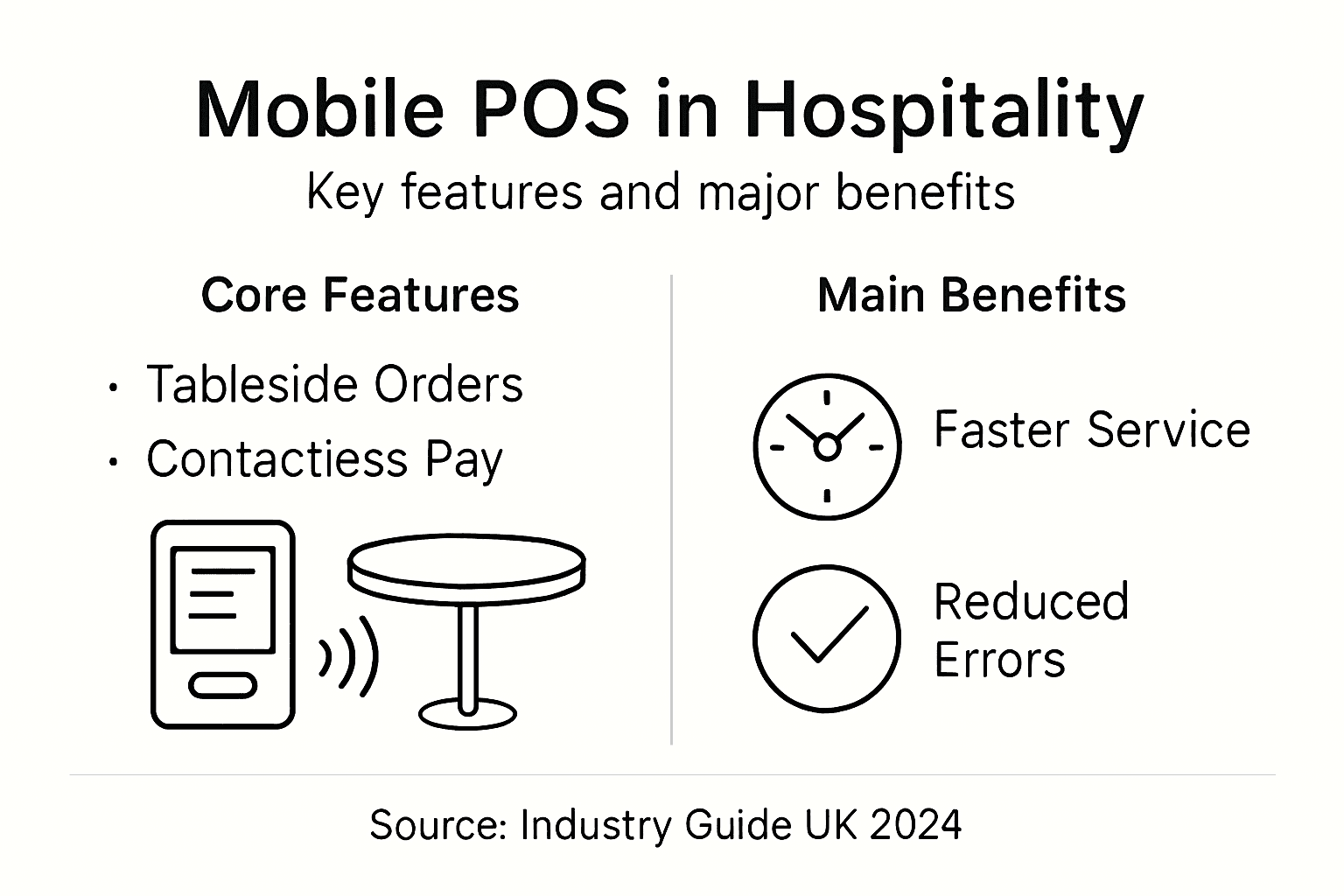
Here is a table outlining key cost factors and critical security considerations for mobile POS adoption:
| Cost Factor | Security Requirement | Why It Matters |
|---|---|---|
| Hardware outlay | Payment data encryption | Protects financial transactions |
| Software subscription | GDPR compliance | Safeguards customer privacy |
| Staff training budget | Secure log-in protocols | Prevents unauthorised access |
| Support and upgrades | Breach monitoring | Enables rapid response to threats |
Pro tip: Conduct a comprehensive risk assessment and budget analysis before mobile POS implementation, factoring in both direct and indirect costs associated with technological transformation.
Unlock Seamless Hospitality Operations with Mobile POS Solutions
The article highlights the complex challenges hospitality venues face such as managing real-time orders, streamlining payment processing, and maintaining operational efficiency under pressure. If you are looking to overcome issues like slow service, staff training complexity, or security risks mobile POS technology is key. Our specialised Android-based platform at EZEEPos is designed to simplify your operations with features including tableside ordering, integrated kitchen screens, and cloud-based reporting. This means faster service and better customer satisfaction with less administrative burden.
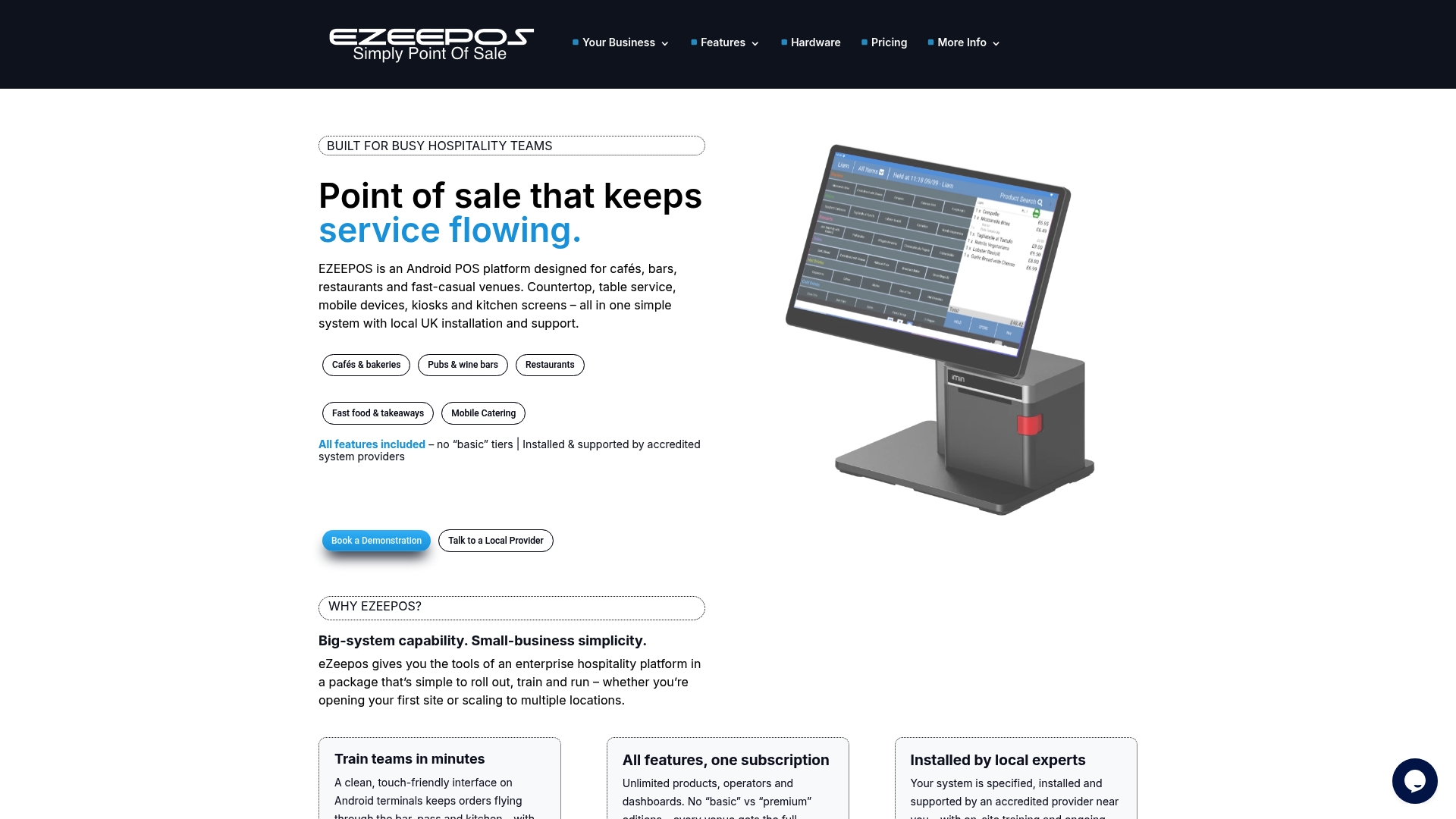
Discover how the right system tailored for UK cafés, bars and restaurants can transform your venue. Explore our Point Of Sale – EZEEPos Solution to see hardware and software working together. Enhance payment security through our supported EFT Terminals – EZEEPos Solution and ensure your team adapts quickly with our user-friendly platform. Take control of your hospitality business today by visiting https://ezeepos.co.uk and request a demonstration to experience how mobile POS can revolutionise your service delivery.
Frequently Asked Questions
What is a mobile POS system?
A mobile POS (Point of Sale) system is a digital platform that allows hospitality venues to process transactions, manage orders, and accept payments via portable devices like smartphones and tablets, instead of traditional cash registers.
What are the main benefits of using mobile POS in hospitality?
Mobile POS systems enhance operational efficiency by enabling real-time order management, reducing administrative overhead, improving service speed, and providing valuable customer data insights for personalised service.
How do mobile POS systems improve customer service?
Mobile POS systems streamline the ordering and payment processes, allowing staff to take orders tableside, process payments instantly, and manage multiple transactions efficiently, leading to a more responsive and satisfying dining experience for customers.
What should I consider when choosing a mobile POS system for my venue?
When selecting a mobile POS system, prioritise solutions that offer comprehensive integration within your existing infrastructure, scalability for future growth, robust training support for staff, and strong security measures to protect customer data.
Recent Comments