
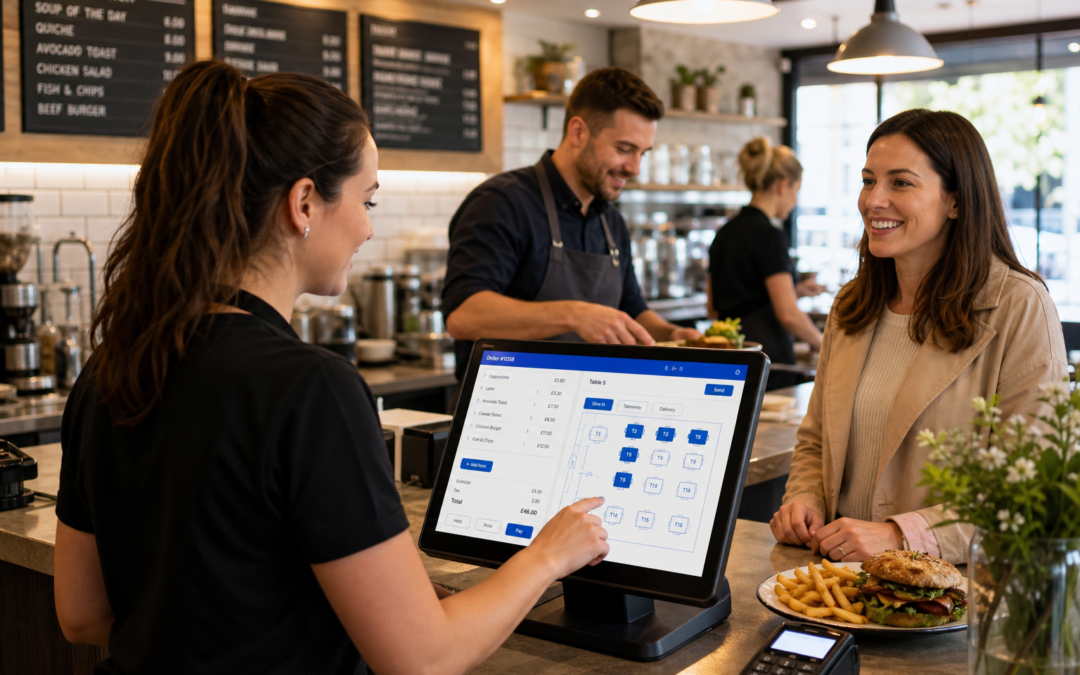
Busy service periods can test even the best-run café or restaurant. Whether it is the lunch rush, a Friday evening dinner service or a weekend spike in visitors, the challenge is often the same: keep orders moving, keep staff calm and give customers a good experience without cutting corners.
For many UK businesses, the answer is not working harder. It is working more clearly. A well-designed EPOS setup from eZeePOS can help teams stay organised, reduce avoidable mistakes and serve customers more smoothly when the pressure is on.
Why busy periods need a better workflow
When a venue gets busy, small delays quickly add up. A missed order, a table left waiting or a payment that takes too long can affect the whole service. Staff may start relying on memory, paper notes or ad hoc workarounds, which makes it harder to keep track of what is happening across the floor, counter and kitchen.
An EPOS system helps bring those moving parts together. Instead of juggling separate notes and verbal reminders, staff can enter orders clearly, send them to the right place and keep a consistent record of what has been requested. That means less confusion, fewer repeated questions and a calmer front-of-house experience.
Clearer order handling for faster service
One of the biggest benefits of a modern hospitality EPOS system is clearer order handling. Staff can take orders at the till, table or counter and see them captured in the same place. That helps reduce errors caused by handwriting issues, rushed conversations or incomplete notes.
For cafés and restaurants, clearer order handling is especially useful when:
- customers are ordering in quick succession
- tables need to be turned over quickly
- different food or drink requests need to be separated
- multiple members of staff are helping with service
When the order is clear from the start, the rest of the service is easier to manage.
Less pressure on the front counter
A busy counter can quickly become crowded if staff need to double-check orders, correct mistakes or repeat information. With a practical EPOS workflow, teams can move customers through the system more confidently and keep the queue moving. That can make a noticeable difference in compact cafés, quick-service food businesses and restaurants with busy takeaway trade.
Helping staff stay organised during the rush
Busy service is not just about speed. It is also about staying organised. When staff can see what has been entered, what is waiting and what has already been sent through, they can make better decisions on the floor. That helps avoid duplicate work, reduces stress and supports a more professional customer experience.
This is where a modern touchscreen till system can be especially useful. Touch-based layouts are often easier for team members to pick up quickly, including new starters and part-time staff. In a fast-moving environment, that can help reduce training time and make the system feel more approachable during peak periods.
Useful visibility for managers
Managers also benefit from a clearer view of service. If a venue is suddenly busier than expected, they can see whether the issue is at the counter, in the kitchen or with table turnaround. That makes it easier to respond in a practical way rather than guessing where the bottleneck is.
For independent businesses, that kind of visibility can be especially valuable because there is often no spare capacity to waste. A good EPOS setup helps owners and supervisors stay on top of the day as it happens.
Keeping the customer experience positive
Customers usually notice service problems before they notice the systems behind them. If they have to wait too long or repeat their order, the experience can feel disorganised. A smoother EPOS process helps reduce those friction points and gives staff more time to focus on the customer rather than the admin.
That can make a difference in practical ways such as:
- quicker order capture at the till or table
- fewer issues with missing items or special requests
- clearer handover between front-of-house and the kitchen
- more consistent service during busy periods
For cafés and restaurants, that consistency matters. Customers are often happy to wait when they can see things are being handled properly. What they notice most is whether the service feels organised and attentive.
Where payments and service flow meet
During busy periods, payment speed matters too. If a customer has finished their meal or drink and there is a delay at the payment stage, the whole table flow can slow down. A well-planned EPOS setup helps keep the end of the transaction as smooth as the beginning.
Businesses looking at payment integration options may also want to discuss Teya and Dojo Payments with YCR Distribution as part of a wider EPOS conversation. The right setup can help reduce unnecessary manual steps and make checkout feel more joined up, but the best fit will depend on the way each business operates.
Why this matters for independent venues
Independent cafés and restaurants often have to make every service period count. They cannot afford repeated mistakes or unnecessary delays when trade is busy. A practical EPOS system helps by making the service process clearer, more consistent and easier for staff to manage under pressure.
That is where eZeePOS can be a useful option for UK businesses looking for a reliable everyday system. It is designed to support real trading conditions, including fast-moving counters, table service and busy hospitality environments. If your current till setup feels clunky when trade picks up, it may be worth reviewing how your EPOS workflow could be improved.
Explore more at www.ezeepos.co.uk to see how eZeePOS fits into a practical hospitality setup.
Contact YCR Distribution at sales@ezeepos.co.uk or call 01924 438238.
If you want to improve the way your café or restaurant handles busy periods, eZeePOS can help you create a more organised service without complicating the day-to-day routine.
Recent Comments