
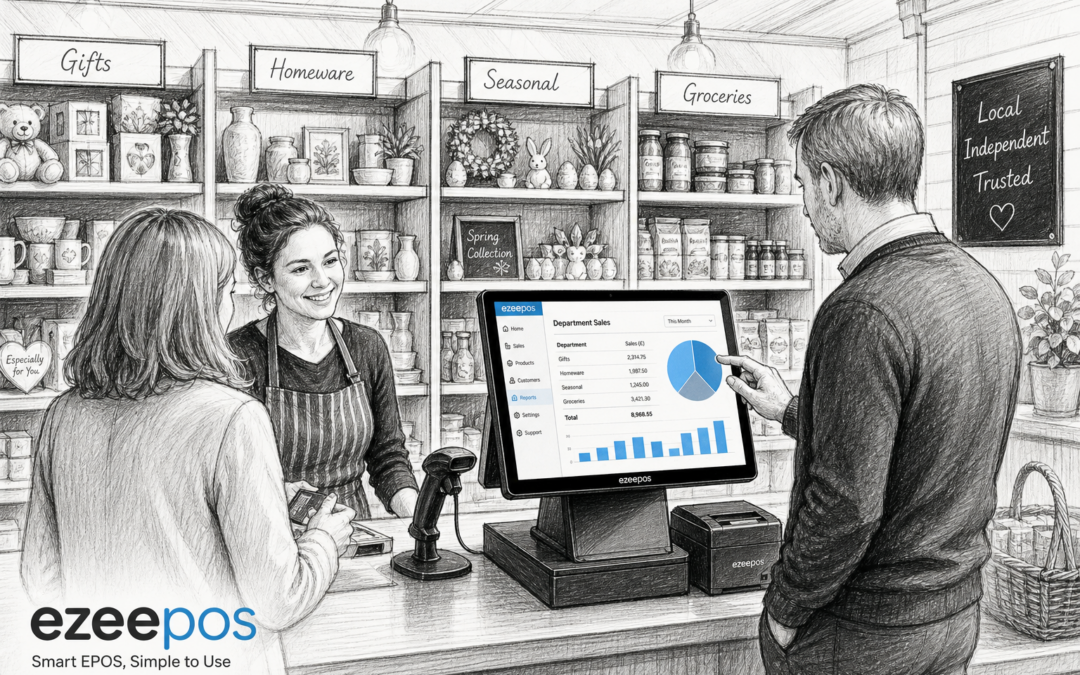
For many independent retailers, a shop is no longer just one type of business. A single store might sell homeware, gifts, seasonal items, food, clothing or accessories all under one roof. That can make day-to-day till work harder than it first appears. A basic cash register or simple POS setup may be fine for one product range, but it can quickly become clumsy when staff need to handle several departments during a busy day.
That is where a multi-department retail EPOS setup from eZeePOS can make life easier. With the right structure in place, different product ranges can be kept organised without slowing down service at the counter. For UK retailers with mixed stock and varied customers, that can make a practical difference from opening to closing.
What multi-department retail actually means
Multi-department retail is common in independent shops. It may describe a business with clearly separated areas, such as gifts, stationery and cards, or a more mixed concept like a farm shop with groceries, deli items and local produce. It can also cover stores that sell seasonal ranges alongside core stock, where the products available in January look very different from those on display in summer.
The challenge is not just selling the items. It is keeping them easy to find at the till, simple to review in reports and manageable for staff who may not know the stock inside out. A well-planned retail EPOS system helps create that structure.
How a multi-department EPOS setup helps at the checkout
When each department is set up properly in the till, staff do not need to guess where an item belongs. They can check product areas faster, apply the right pricing and keep the transaction moving. That matters in shops where customers often buy from more than one range in the same visit.
Cleaner product organisation
Different departments can be grouped in a way that reflects how the business really sells. Instead of one long list of products, staff can work through categories that make sense at the counter. This is especially useful in shops with mixed gift ranges, clothing sizes, accessory lines or food products with different pricing rules.
Faster day-to-day service
One of the biggest benefits of a clearer till structure is speed. When staff can find items more easily, the queue moves more smoothly and customers are less likely to wait while someone searches through a disorganised product list. That is valuable in smaller shops where the same person may be serving, answering questions and handling stock.
More confidence for new staff
Mixed retail businesses often rely on part-time or seasonal team members. A tidy EPOS layout can make training far easier. Rather than learning an awkward workaround, staff can use a till structure that matches the way the shop is arranged. That reduces errors and helps new starters feel comfortable more quickly.
Why reporting is more useful when departments are separated
One of the most practical reasons to set up departments properly is reporting. If all sales are mixed together, it is harder to see which area is performing well and which products may need attention. With a more structured EPOS setup, owners can review sales by department and make better decisions about buying, promotions and display space.
This is particularly useful for retailers who sell both steady core lines and more changeable seasonal products. A department-based view can help show whether gifts are outperforming homeware, whether a clothing range is worth expanding or whether a particular product group is taking up space without delivering enough return.
Clearer reporting is not about creating extra admin. It is about making the numbers easier to use in ordinary business decisions. For independent retailers, that can be the difference between working from instinct alone and seeing what the shop is actually telling you.
Where multi-department retail EPOS fits in a modern shop
Many businesses now use a touchscreen till or Android-based setup at the counter, and a multi-department configuration can sit naturally within that environment. For mixed retailers, that means the till can support the way the business already works instead of forcing the business to adapt to a basic till layout.
With eZeePOS, the aim is to keep the setup practical. A retailer does not need unnecessary complexity. What matters is being able to organise products sensibly, serve customers efficiently and understand sales performance across different ranges. For many shop owners, that is exactly what a modern EPOS system should do.
Which kinds of retailers benefit most?
Several UK business types can benefit from a multi-department till setup:
- Gift shops with cards, seasonal items and impulse purchases
- Farm shops with produce, deli goods and local products
- Garden centres with plants, tools, homeware and outdoor living ranges
- Fashion and clothing shops with different collections, sizes and accessories
- Convenience stores that stock groceries, household items and seasonal lines
- Pet shops with food, accessories and specialist products
In each case, the challenge is similar: the business needs flexibility without creating a messy checkout process. A strong EPOS structure can help both the staff and the customer experience feel more organised.
Keeping mixed sales simple for customers
Customers usually do not care how complicated your range is behind the scenes. They simply want a smooth visit, accurate pricing and a quick checkout. A multi-department setup helps make that possible by keeping the till clear and the service more consistent.
It also supports better upselling without making the process feel forced. If staff can easily see related products or move through departments quickly, they can serve customers in a more natural way. That is useful in shops where spontaneous purchases are a big part of daily trade.
Thinking about the wider setup
Multi-department retail works best when the software, hardware and staff training all support the same goal. A well-sized touchscreen till, a reliable receipt printer and a simple layout at the counter can all help keep service calm. For shops with larger product ranges, even small improvements in the till setup can reduce friction throughout the day.
If your business is starting to outgrow a basic till, it may be worth looking at a system that is designed for mixed retail sales rather than trying to force a simple setup to do too much. That approach can save time, reduce mistakes and make reporting far more useful.
Bringing more structure to mixed retail
Multi-department retail does not need to feel complicated. With the right EPOS setup, independent shops can keep different product ranges organised, train staff more easily and make better use of sales information. For businesses that sell a little bit of everything, that structure can make daily trading feel much more manageable.
If you are exploring a retail EPOS system for a mixed-product shop, visit www.ezeepos.co.uk to see how eZeePOS could fit your business.
Contact YCR Distribution at sales@ezeepos.co.uk or call 01924 438238.
Recent Comments