
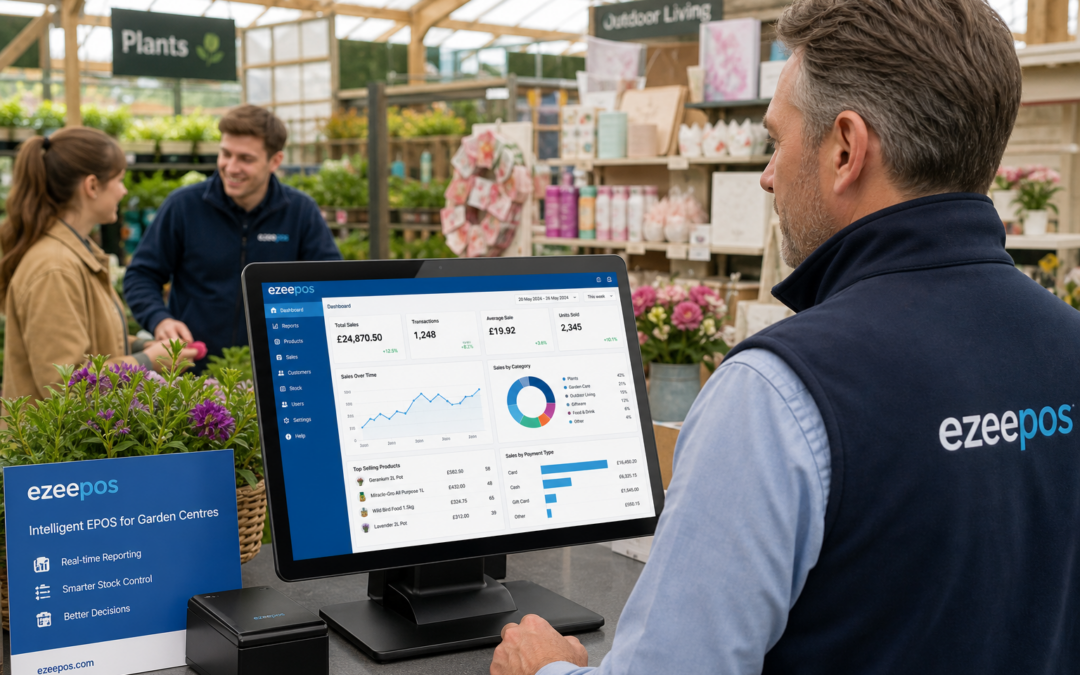
Why garden centres need clearer sales insight
Garden centres rarely have one simple trading pattern. Spring bedding plants, summer outdoor ranges, autumn bulbs, gifts, houseplants, catering and seasonal events can all affect sales at different times of year. That makes reporting especially useful, because the numbers tell a fuller story than a single daily takings figure.
With the right eZeePOS setup, garden centres can use reporting to understand which departments are pulling their weight, which periods need more staff and which products deserve more attention. For owners and managers, this can make day-to-day decisions feel much more grounded in evidence.
What good EPOS reporting can show
A practical EPOS system does more than record transactions. It can break sales down into useful patterns that help a garden centre respond to real trading conditions rather than relying on instinct alone.
Sales by department
Garden centres often rely on several distinct areas: plants, garden tools, furniture, gifts, pet products, farm shop produce or cafe sales. Reporting by department helps highlight where growth is coming from and where trade may be slowing down.
Busy periods and quieter periods
Understanding when customers arrive is just as important as understanding what they buy. If Saturdays are consistently busier than weekday mornings, managers can plan staffing, till cover and customer service more confidently.
Seasonal trends
Garden centres are highly seasonal businesses. EPOS reporting can show how sales change across the year, making it easier to prepare for peak spring and Easter trade, late summer clearance periods or winter gift sales.
Product performance
Some products sell steadily all year, while others perform well for just a few weeks. Reporting can help identify the items that deserve more display space, stronger promotion or better stock planning.
How reporting helps with staffing and service
One of the most practical uses of EPOS reporting is staffing. A garden centre may have tills, a plant area, a cafe and a gift shop all drawing attention at different times. If managers can see when the busiest trade happens, they can assign staff more effectively and reduce pressure at the counter.
That can improve customer service as well as team morale. A well-timed extra pair of hands on the till can keep queues moving, help with queries and make the whole site feel calmer at peak times. For businesses with several departments, this kind of planning can make a noticeable difference.
Turning reports into simpler decisions
Reports are most useful when they lead to action. For garden centres, that might mean adjusting opening hours, changing seasonal displays, promoting better-selling ranges or reviewing whether a department needs more attention.
For example, if the cafe performs strongly during mornings but the gift section sees a surge later in the day, the business can plan offers or staffing around those patterns. If a particular category underperforms year after year, the team can decide whether to rework the display, adjust the product mix or reduce floor space.
Better stock and display planning
Although this article is focused on reporting rather than stock control, the two often work together in practical ways. When owners can see which products are selling well, they can make smarter display decisions and avoid giving prime space to slow movers.
This is especially helpful in garden centres where layout matters. Seasonal stock needs visibility, and the right products often depend on weather, school holidays and local demand. Reporting gives businesses a way to respond quickly instead of waiting for a month-end surprise.
Reporting for mixed garden centre businesses
Many garden centres are more than retail units. They may include a cafe, farm shop, florist counter, gift area or even event space. That mix can make reporting even more valuable, because each area contributes differently to the overall business.
With a flexible EPOS view, owners can compare performance across departments instead of treating all sales as one figure. That makes it easier to understand which areas need investment and which are already performing strongly. It can also help with planning promotions, such as gift-led seasonal campaigns or cafe bundles that encourage higher spend.
What to look for in a garden centre EPOS report setup
When choosing reporting features, it helps to think about the questions you actually need answered. Garden centres often benefit from:
- clear sales summaries by department or till area
- simple views of daily, weekly and seasonal trade
- easy-to-read reports for busy management teams
- data that helps with staffing and planning
- useful insights without complicated setup
The aim is not to overwhelm managers with data. It is to make the important information easy to find and easy to act on. That is where a practical system can save time and support better decisions.
Using eZeePOS to keep reporting practical
At eZeePOS, the focus is on giving UK businesses tools that are straightforward to use in real trading environments. For garden centres, that means reporting that can support everyday management without adding unnecessary complexity.
If you are reviewing your current setup and want to understand how EPOS reporting could support sales planning, staffing or seasonal trade, it may be worth exploring what a modern system can offer. A clearer view of performance can help you make decisions with more confidence throughout the year.
Contact YCR Distribution at sales@ezeepos.co.uk or call 01924 438238.
To find out more about eZeePOS for retail and hospitality businesses, visit www.ezeepos.co.uk.
Recent Comments