
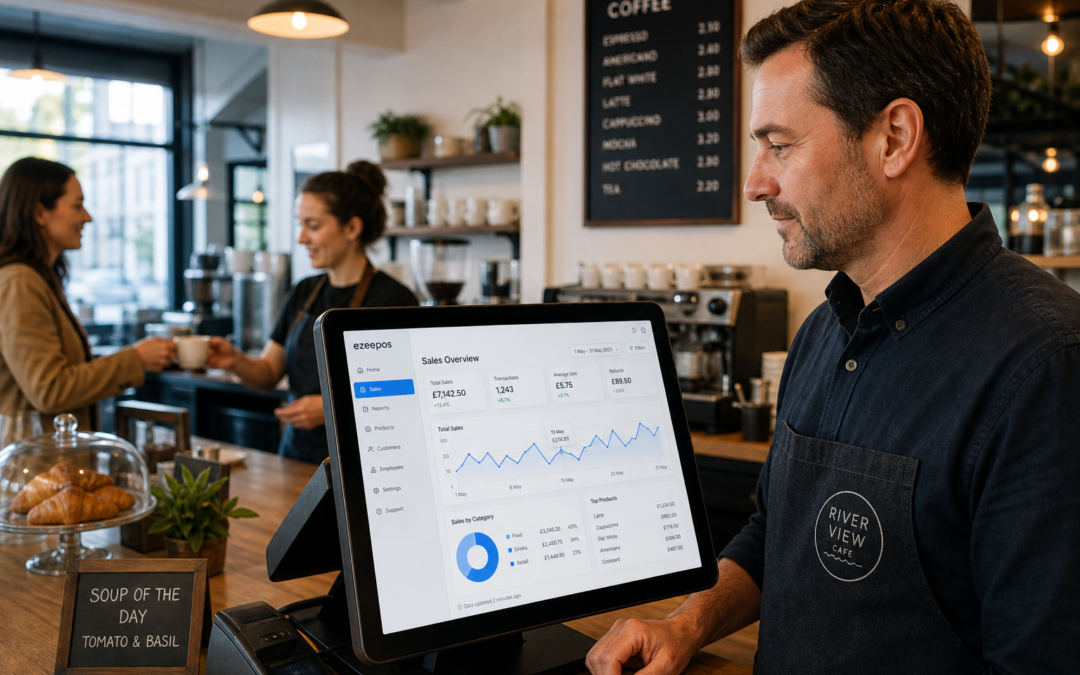
For many independent cafés, restaurants and takeaways, the busiest decisions are not always the biggest ones. They are often the everyday choices: what to prep, when to bring in more staff, which menu items are proving popular and where service is slowing down.
That is where better reporting can make a real difference. With the right eZeePOS setup, sales information from the till becomes something practical rather than something that sits in a spreadsheet and gets checked occasionally. For UK hospitality businesses, that means clearer decisions, less guesswork and a better grip on day-to-day trading.
Why reporting matters in hospitality
In a busy hospitality business, sales patterns can change quickly. A café may be busy before work on weekdays but quieter after lunch. A restaurant might sell well on Fridays but need a completely different staffing plan midweek. A takeaway may see a sudden rush at the same time every evening.
Good reporting gives owners a clearer view of those patterns. Rather than relying on memory or general impressions, they can look at real till data and see what is happening across the day, week or month.
That can support better decisions around:
- staff planning
- menu changes
- busy period preparation
- promotions and specials
- opening hours
Turning till data into something useful
Reporting is most helpful when it is easy to read and tied to the way the business actually works. A chart filled with numbers is not always useful on its own. What matters is whether the information helps someone make a decision.
For example, a café owner might notice that breakfast sales are strong but hot drinks dip after 11am. That could suggest a change to the menu board, a new promotion or a different staffing pattern. A restaurant might see that certain dishes are consistently popular on weekends, which could help with prep planning. A takeaway may find that some orders are regularly delayed during a short evening rush, prompting a review of how the counter is managed.
The value is not in having data for its own sake. It is in making the data work for the business.
What to look for in EPOS reporting
Not every reporting feature needs to be complicated. In many cases, the most useful reports are the ones that are easy to access and understand quickly.
Sales summaries by day and time
These help show when the business is busiest and when trade is slower. That can be useful for deciding staffing levels, prep timing and opening patterns.
Popular items and menu trends
Knowing which products or dishes sell well can help teams plan stock, refine menus and focus attention on the items customers already want.
Performance over different periods
Comparing this week with last week, or this month with the same period last year, can help identify whether trade is growing, flat or affected by seasonal changes.
Clear reports for owners and managers
Many independent businesses want reporting that is straightforward enough to use in daily life. That means less time spent searching for information and more time acting on it.
How hospitality businesses can use reporting day to day
Reporting is often at its most valuable when it becomes part of a routine rather than something checked only at month end. A short review each day or week can reveal patterns before they turn into bigger problems.
Here are a few practical ways hospitality businesses can use reporting:
- check which sessions are busiest and plan staff accordingly
- spot menu items that are selling well or slowing down
- review whether takeaway trade is rising or falling at peak times
- compare weekends and weekdays to understand trading habits
- use past performance to prepare for holidays, events or seasonal demand
For a small team, even a little extra visibility can make service feel steadier and more organised.
Reporting and better decision-making
One of the biggest benefits of reporting is that it helps business owners make decisions with more confidence. That can matter when margins are tight and time is limited.
Instead of guessing whether a lunch deal is working, owners can look at the numbers. Instead of assuming a quieter Tuesday is normal, they can check the data over several weeks. Instead of relying solely on staff feedback, they can use the till records to confirm what is happening.
This does not replace experience. It supports it. Many independent hospitality businesses already know their customers well. Reporting simply gives that knowledge a stronger foundation.
Making reporting part of a simple EPOS setup
The best reporting tools are often the ones that fit naturally into a wider EPOS system. When sales data is captured through the till, it becomes easier to review what is happening without extra manual steps.
For businesses using modern touchscreen tills or Android-based POS terminals, reporting can be even more convenient because the team can access information from a system that already supports the daily flow of service. The important point is not the device itself, but how clearly the information is presented and how easy it is to use during a busy trading day.
eZeePOS is designed as a practical UK EPOS option for hospitality businesses that want a clearer view of day-to-day performance without making the till system harder to run.
Reporting, payments and service flow
Some businesses also like to look at how reporting connects with card payments and service speed. For example, if a café or takeaway is considering payment integration options, it may be helpful to discuss providers such as Teya or Dojo Payments with YCR Distribution as part of the wider setup conversation.
That does not mean every business needs the same approach. It simply means reporting, checkout flow and payment handling can all be considered together so the system supports the way the business actually trades.
Why this matters for independent businesses
Independent cafés, restaurants and takeaways often do not have large back-office teams or time for complicated admin. They need information that helps them act quickly and stay organised.
Better reporting can help owners:
- spot what is working sooner
- prepare for busy periods more effectively
- reduce unnecessary guesswork
- understand customer buying patterns
- make calmer decisions based on real figures
That kind of visibility can be especially useful when trading conditions change, footfall shifts or the business is growing.
A simple way to stay informed
If you are looking for a UK EPOS system that helps make routine decisions easier, reporting is one of the features worth taking seriously. It is not about adding complexity. It is about making the numbers behind the business easier to use.
Whether you run a café, restaurant or takeaway, www.ezeepos.co.uk offers a practical place to explore how EPOS reporting can support clearer daily management.
Contact YCR Distribution at sales@ezeepos.co.uk or call 01924 438238.
Recent Comments