
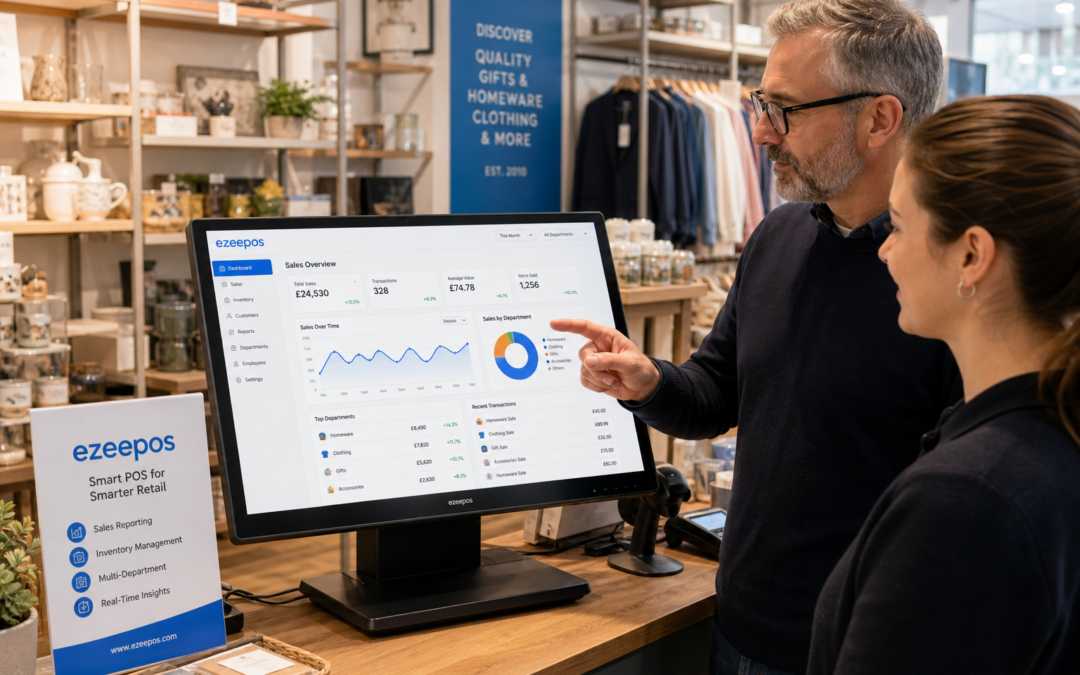
Multi-department retail can be rewarding, but it also brings more moving parts than a single-format shop. A business that sells clothing, gifts, homeware, stationery or seasonal items needs a clearer picture of performance across each department, not just a total sales figure at the end of the day.
That is where reporting matters. With the right EPOS setup, retailers can use sales data to understand what is selling, when customers are shopping and which areas of the store deserve more attention. An EPOS system such as eZeePOS can help turn everyday till activity into practical information that supports better decisions.
Why reporting is so useful in multi-department retail
In a mixed retail environment, one department may perform strongly while another needs more focus. A gift shop, for example, might trade well on weekends but slow down during weekdays. A clothing department may sell best after seasonal changes, while stationery or homeware might bring in steadier year-round demand.
Without proper reporting, it is easy to rely on instinct alone. That can work for a while, but decisions based only on memory or rough estimates often miss useful patterns. A good EPOS reporting tool gives owners a more accurate view of what is happening across the business.
What better reporting can help you see
- Which departments or product ranges are performing best
- Which lines are moving slowly and may need more attention
- How sales vary by day of the week or time of day
- Which periods are busiest for staffing and customer service
- How seasonal changes affect different parts of the business
Turning sales data into practical action
Reports are only useful if they help you act on what you see. For multi-department retailers, the aim is not to collect more numbers for their own sake. It is to make sensible day-to-day changes that improve trading.
For example, if one department is consistently outperforming the rest, you might review display space, ticketing, product placement or staff attention. If another department has strong sales on specific days, you can schedule labour more effectively or plan promotions around those peaks. If a product range is not shifting, you can decide whether to reprice it, move it, bundle it or reduce future orders.
Clear reporting can also support better stock ordering decisions, but the real value is broader than stock alone. It can help with layout, staffing, promotions and understanding customer behaviour across the store.
Useful report types for mixed retail businesses
Not every report needs to be complicated. Often the most useful insights come from a small number of simple, clear views that are easy to check each day or week.
Daily and weekly sales summaries
These help retailers see what happened quickly, without having to piece together figures from different places. Over time, they also make it easier to spot regular trading patterns.
Department and category reports
For businesses with more than one product area, department-level reporting can be especially valuable. It shows which sections are pulling their weight and which may need a rethink.
Time-based reporting
Knowing when customers usually shop can be just as important as knowing what they buy. Time-based reports help with rota planning, break scheduling and deciding when to bring extra staff to the till.
Top sellers and slower movers
These reports help identify what customers are choosing most often and what may need more visibility. That can lead to better merchandising and smarter promotional choices.
Helping managers and staff stay on the same page
In a busy retail environment, reporting is not just for owners. Managers and supervisors can use the same information to make consistent decisions throughout the week. That can reduce confusion and create a more joined-up approach across departments.
For example, if reports show that one area is building more demand, staff can be briefed to direct customers there more effectively. If another department has been quiet, the team can focus on displays, signage or product knowledge to improve response.
This is especially useful in stores where different departments may be managed by different people. Shared reporting keeps everyone working from the same information rather than making decisions in isolation.
How EPOS reporting supports better planning
Good reporting is not just about looking back. It also helps businesses plan ahead. If you know which months, weeks or times of day are strongest, you can prepare more confidently for busy periods. That may mean adjusting staff levels, refreshing displays earlier or making sure the right products are given prominence at the right time.
For independent retailers, this can make a real difference. There is often little room for wasted effort, so small improvements in planning can have a noticeable impact on service and sales. EPOS reporting gives you the information to make those improvements with more confidence.
Why simple, clear reporting works best
Many retailers do not need complicated systems or lengthy reports. They need information that is easy to read and practical to use. A clear dashboard, straightforward sales summaries and department reports are often more valuable than data that is difficult to interpret.
That is one reason businesses look for a retail EPOS system that keeps reporting simple but effective. When the information is easy to access, it is more likely to be used. And when it is used regularly, it becomes part of better day-to-day management rather than something checked only occasionally.
Bringing reporting into your daily routine
The best results usually come when reporting becomes part of the normal rhythm of the business. Some retailers review key figures at the start of the day, others check weekly counts or compare department performance at the end of each trading period. The format matters less than the habit of using the information consistently.
Over time, that routine can support better decisions across staffing, displays, promotions and product focus. It also gives business owners a stronger foundation when planning for seasonal changes or reviewing how the shop is performing overall.
If you want an EPOS solution that helps you understand your retail business more clearly, take a look at www.ezeepos.co.uk. eZeePOS is designed to help UK retailers manage day-to-day trading with practical reporting tools and a straightforward setup.
Contact YCR Distribution at sales@ezeepos.co.uk or call 01924 438238.
Recent Comments