
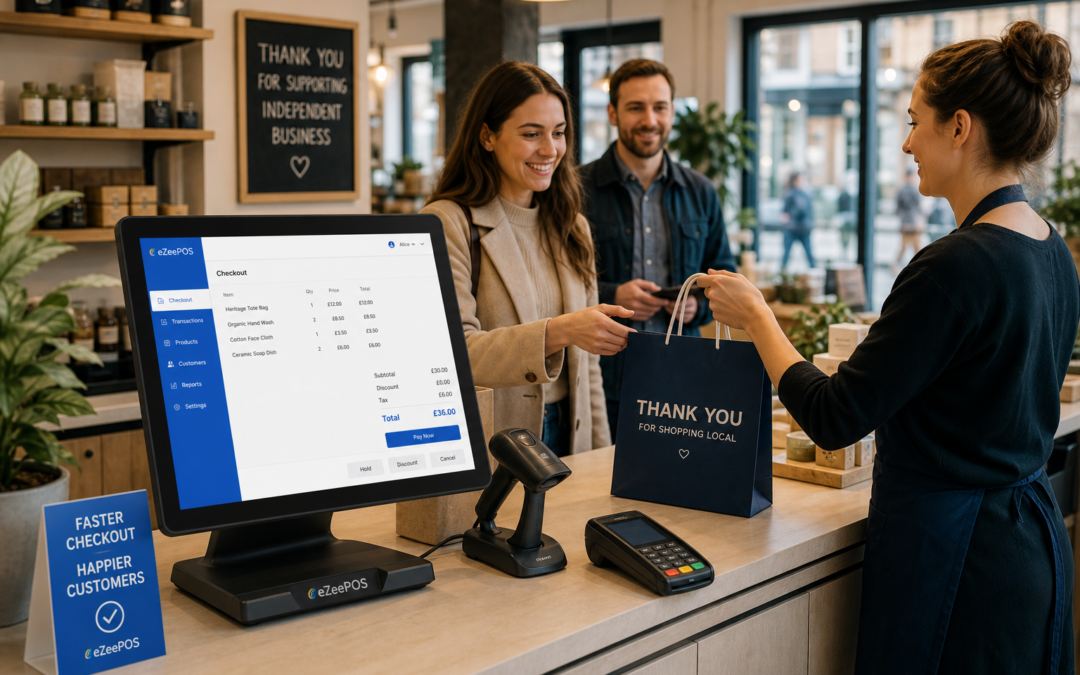
Long queues are more than a minor inconvenience. In a busy shop, they can slow down sales, frustrate customers and make the whole store feel harder to manage. For independent retailers, the challenge is often not about adding more complexity at the till, but about making the checkout process quicker, clearer and easier for staff to use.
At eZeePOS, the focus is on practical EPOS tools that help UK retailers keep the queue moving without turning the till into a problem area. From faster item lookup to smarter checkout layouts, small changes can make a noticeable difference in day-to-day service.
Why checkout queues build up in the first place
Queues usually grow for a few predictable reasons. Staff may be searching for products manually, dealing with unclear pricing, handling age checks or waiting for slow approval steps. In some shops, the till setup itself makes the process harder than it needs to be. If staff have to click through several screens or ask for help every time a customer wants a simple transaction, even a short queue can quickly become a long one.
The good news is that many of these delays can be reduced with the right EPOS setup. The aim is not to rush customers, but to remove friction so staff can serve more smoothly during busy periods.
Make the till easier for staff to use
Simple menus and clear item groups
One of the quickest ways to improve checkout speed is to organise the till in a way that matches how the shop actually sells. Clear item groups, sensible button layouts and well-labelled menus reduce hesitation and make training easier for new starters. In a busy convenience store, gift shop or farm shop, staff should be able to find common products quickly without searching through cluttered screens.
Faster product lookup
When a customer asks for an item and the barcode is missing, damaged or not available, staff need a quick way to find it. Good product lookup tools help teams search by name, category or common code, so the sale can continue without delay. In practical terms, that means fewer interruptions at the till and a better experience for the person in the queue.
Reduce unnecessary steps
Sometimes checkout delays come from too many clicks rather than too much trade. A good EPOS system should support a straightforward workflow for common sales, refunds and discounts. Staff should not need to think too hard about the software when the shop is already busy.
Use EPOS reporting to plan for busy periods
Reducing queues is not only about what happens at the till. It also helps to know when queues are most likely to form in the first place. EPOS reporting can show trading patterns by hour, day or season, making it easier to schedule staff where they are needed most.
For example, a local shop may find that Fridays after school, lunchtimes or Sunday mornings are the busiest times. When that information is visible in reports, managers can plan rotas more accurately and make sure the right people are on the till at the right time.
Businesses that review this data regularly are often better placed to avoid bottlenecks before they develop. For more on this kind of practical decision-making, see eZeePOS reporting options.
Use more than one till point where it makes sense
If one checkout is regularly overloaded, it may be worth looking at how the counter is set up. Some shops benefit from a second till point, while others need a more flexible touchscreen setup that can be moved or adjusted depending on the shift. The key is to make sure the checkout area supports how the business actually trades.
In smaller shops, that might mean using a compact counter layout with a touchscreen POS terminal and a simple workflow. In larger retail spaces, it may mean positioning the till in a place that allows staff to serve steadily without blocking the entrance or queuing area.
Touchscreen tills can speed up routine sales
Touchscreen tills are popular in retail because they are easy to learn and quick to use. Clear visual menus, fast item selection and a modern interface can reduce the time spent on each transaction. That does not just help during the busiest hours; it also makes daily service feel smoother and more professional.
Keep payment handling straightforward
Even when the sale itself is quick, payment handling can slow the line down if staff have to switch between systems or enter amounts manually. A joined-up checkout process reduces the chance of mistakes and helps transactions move through more efficiently. For businesses exploring this area, eZeePOS can also support conversations around payment integration options, including providers such as Teya and Dojo Payments, where relevant to the business setup.
The practical benefit is simple: the fewer manual steps involved at the till, the less likely it is that a queue will stall while staff correct an error or repeat an entry.
Help staff handle pressure during peak trading
A busy shop is easier to run when staff are confident with the till system. Good EPOS training should cover the everyday tasks that matter most: scanning items, finding products, applying discounts correctly and processing common customer requests without slowing service.
When staff know where things are and how the system behaves, they are less likely to hesitate. That confidence matters especially during seasonal trading peaks, school holidays and weekend rushes, when small delays can quickly build up.
Simple processes support better customer service
Many checkout issues are not caused by the customer flow itself, but by uncertainty at the till. A clear process helps staff stay calm and polite even when the shop is busy. That tends to improve the customer experience as well as the queue length.
Practical steps shops can take now
- Review the till layout and remove unnecessary steps from common sales
- Group frequently sold items so they are easy to find
- Use EPOS reports to identify peak queue times
- Make sure staff know how to handle refunds, discounts and searches quickly
- Consider whether the checkout area needs a better physical layout
- Keep payment processes simple and easy to follow
These changes do not all require a major system replacement. In many cases, they are about using EPOS more effectively so the shop can serve customers more smoothly.
A better checkout experience starts with the right setup
Reducing queues is not just about speed for speed’s sake. It is about creating a better shopping experience, making staff jobs easier and helping the business handle busy periods with more confidence. A well-planned EPOS setup can support all of that without adding unnecessary complexity.
If you are looking at ways to improve checkout flow in your retail business, eZeePOS offers a practical UK-focused solution for independent shops and growing retailers. Contact YCR Distribution at sales@ezeepos.co.uk or call 01924 438238. You can also learn more at www.ezeepos.co.uk.
Recent Comments