
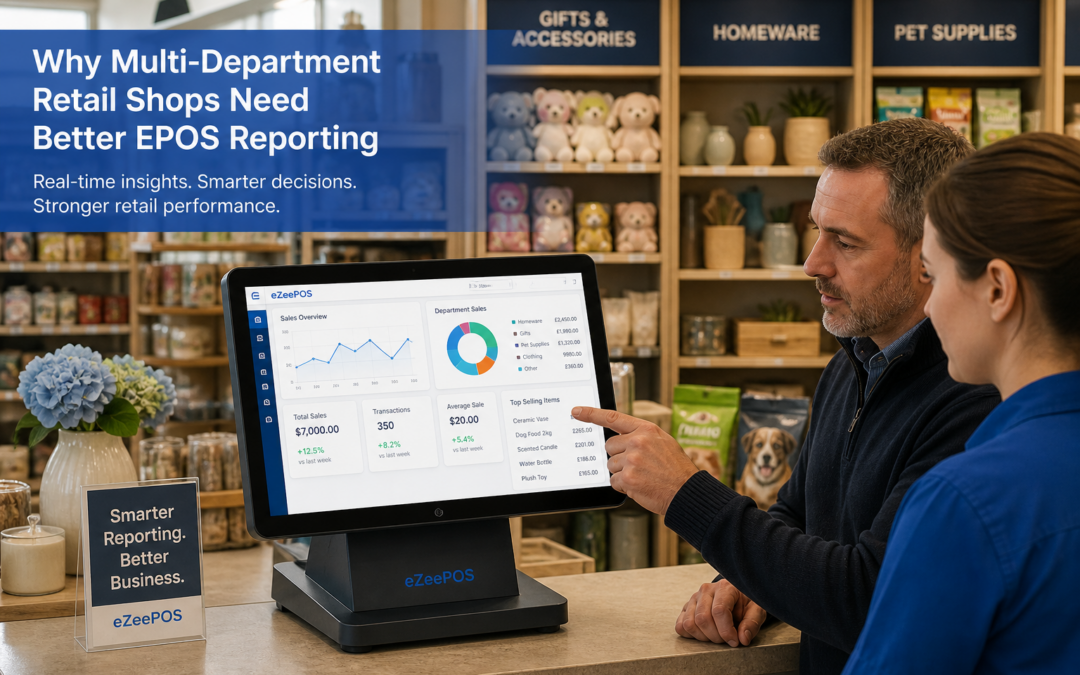
Multi-department retail shops can be rewarding to run, but they also create more complexity than a single-product store. When you are handling different areas under one roof, such as groceries, gifts, homeware, clothing, pet supplies or seasonal ranges, a simple total for the day does not tell you very much. That is where better reporting in eZeePOS can make a real difference.
Why one total is not enough
In a multi-department shop, different areas often trade in very different ways. One department may be strong in the morning, while another performs better later in the day. Some categories may bring in steady repeat purchases, while others depend on weekends, weather or seasonal footfall. Without clear reporting, it is hard to see which parts of the business are carrying their weight.
That lack of detail can lead to guesswork. You might overstock one area, underinvest in another, or miss a useful pattern simply because the figures are all grouped together. Good EPOS reporting breaks those totals down into something more useful.
What multi-department reporting should show
A helpful EPOS system should turn everyday sales activity into reports that are easy to understand and quick to act on. For a multi-department shop, that often means seeing each department separately, rather than treating the business as one block of sales.
Sales by department
Department-level reporting gives you a clearer view of which sections are doing well and which need attention. This can help shop owners make more informed decisions about layout, staffing, promotions and range planning. If your gift section is outperforming expectations while another area is slowing down, you can respond sooner.
Busy periods by area
Not every department follows the same pattern. A card and gift section may peak around lunchtime or after work, while another department may see the strongest sales at weekends. Reporting that shows patterns by time of day can help you plan staffing and service around real demand rather than assumptions.
Product performance within each section
It is not just about departments as a whole. Within each area, certain products may consistently outperform others. One shelf line in homeware may sell strongly all year, while another only moves in a specific season. With clearer EPOS reports, you can see what deserves more space, what needs reviewing and what may not be worth reordering as often.
How better reporting helps day-to-day management
For many independent retailers, the value of reporting is not in complicated dashboards. It is in practical decisions that make the shop easier to run.
Improving stock planning
While stock control should never be the only reason to look at reporting, it does matter in a multi-department shop. If one area consistently sells faster than others, you can plan replenishment more accurately. That helps reduce empty shelves and avoids tying up cash in lines that are not moving.
Making staffing more efficient
If your reports show that certain departments are busiest at particular times, you can plan staff more effectively. That may mean putting the right person on the right counter, or making sure there is enough cover where customer questions are most common. In a busy shop, those small changes can make service feel smoother.
Supporting promotions and seasonal ranges
Multi-department shops often rely on seasonal trading, changing displays and short-term promotions. Reporting can show whether a seasonal setup is actually working. If a promoted category is not performing, you will know early enough to adjust the display, change the offer or move stock elsewhere.
Why clearer reporting matters more in independent retail
Larger chains often have separate systems, dedicated managers or central reporting teams. Independent retailers usually need a more straightforward view that can be checked quickly by the owner or shop manager. That is why the reporting needs to be practical, readable and relevant to the way the shop actually works.
With the right EPOS setup, reporting does not have to be time-consuming. It can be part of the normal daily routine, helping you look at sales by department, see what has been busy and spot anything unusual before it turns into a wider issue.
Using reports to guide better decisions
Better reporting is most useful when it leads to action. In a multi-department retail shop, that might mean:
- giving more space to areas that consistently perform well
- reviewing departments that are underperforming
- changing staffing levels around busy times
- adjusting promotions based on real sales patterns
- spotting seasonal trends earlier
These are practical changes, not technical ones. That is the strength of good EPOS reporting: it helps turn sales figures into decisions that improve the day-to-day running of the shop.
What to look for in an EPOS system
If your retail business has more than one department, it is worth choosing an EPOS system that can separate and present your data clearly. You do not need overly complicated software. You need reports that match the way your business is organised and give you useful information without creating more admin.
eZeePOS is designed with everyday UK retail use in mind, helping businesses keep track of sales in a way that is clear and manageable. For owners of multi-department shops, that can mean less guesswork and a better view of what is happening across the business.
Keeping the bigger picture in view
Good reporting does not just help you look backwards at what sold yesterday. It helps you understand the bigger picture across the whole shop. That makes it easier to support stronger departments, improve weaker ones and plan confidently for the weeks ahead.
If your business has outgrown basic till totals, it may be time to look at a more structured approach to EPOS reporting. The right setup can make a busy, mixed retail environment feel much more under control.
To learn more about practical retail EPOS options, visit www.ezeepos.co.uk. Contact YCR Distribution at sales@ezeepos.co.uk or call 01924 438238.
Recent Comments