
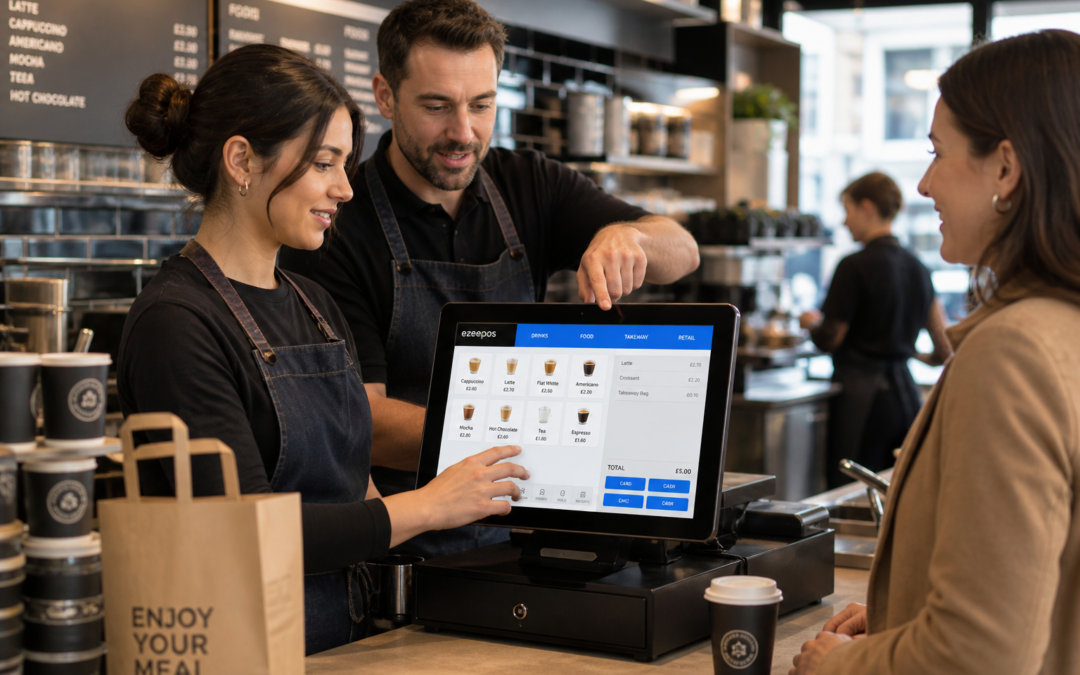
Why staff training is a real priority in hospitality
In busy cafes, restaurants and takeaways, good service depends on more than having enough people on the rota. Staff also need to know how to take orders clearly, process payments correctly, handle changes quickly and keep service moving when things get busy. That is why training is such an important part of day-to-day hospitality operations.
For many businesses, the challenge is not just teaching someone how to use the till. It is making sure they can work confidently during a rush, when customers are queueing and the pressure rises. A well-structured EPOS setup can help with that by making the till easier to learn, easier to use and easier to keep consistent across the team.
If you are reviewing your current system, eZeePOS offers practical EPOS software for UK hospitality businesses, including cafes, restaurants, takeaways and counter-service venues that need to keep service simple.
How EPOS supports better training
Training often goes more smoothly when the system itself is straightforward. Instead of relying on memory or handwritten notes, staff can follow the same clear process every time they take an order. That consistency matters when you have both new starters and experienced team members working together.
Clear menus and familiar layouts
A tidy touchscreen till layout can make a big difference to staff confidence. When products, meal deals, modifiers and payment actions are arranged logically, team members spend less time searching and more time serving. This is especially useful in takeaways and fast-moving cafes, where speed matters but accuracy matters just as much.
For example, a well-organised EPOS screen can help staff find popular items quickly, add notes where needed and complete the order without long pauses. That means less waiting for customers and less stress for the team.
Fewer mistakes during busy shifts
Training is not only about learning the system. It is also about reducing the kinds of mistakes that slow service down. A clear EPOS workflow can help staff avoid duplicate entries, missed notes and incorrect order details. That is particularly helpful when one person is taking orders and another is preparing food or drinks.
When the till system guides users through each step, there is less room for confusion. New staff can settle in faster, and managers do not need to spend as much time correcting avoidable errors.
What busy hospitality teams need from their till system
Different venues have different service patterns, but most busy hospitality businesses want the same basics: clear order entry, simple payment handling, easy corrections and reliable reporting after service. EPOS helps bring those parts together in one place.
Faster onboarding for new starters
In hospitality, staff turnover and seasonal hiring can make training an ongoing task. A simple EPOS system helps businesses bring new people up to speed without long delays. Instead of learning several different processes, staff can be trained on one clear approach for orders, payments and end-of-shift checks.
This can be especially useful for independent businesses that do not have time for lengthy formal training sessions. A practical till layout, combined with clear guidance from management, can make the learning curve much shorter.
Keeping service consistent across shifts
Customers expect the same standard whether they visit at breakfast, lunch or later in the day. EPOS can help support that consistency by making key tasks repeatable. Staff can follow the same process for table orders, takeaway orders, discounts, refunds and corrections.
That consistency is valuable for businesses with mixed experience levels on the team. A newer member of staff can serve more confidently when the system helps them do the right thing step by step.
Training for different hospitality settings
Staff training needs are not the same in every venue. A cafe, restaurant and takeaway each have their own pace and pressures, and the EPOS system should fit the way the business works.
Cafes
In cafes, quick service and order clarity are usually the priority. Staff should be able to take hot drinks, food orders and specials without slowing the queue. A good EPOS setup helps baristas and front-of-house staff stay organised even when several customers arrive at once.
Restaurants
Restaurants often need more detail, especially when taking table orders or managing menu changes. Training should cover how to handle customer requests clearly and how to keep communication between front-of-house and the kitchen as smooth as possible. A logical EPOS workflow can reduce the chance of missed items and awkward delays.
Takeaways
Takeaways can be fast-moving and highly repetitive, which means mistakes can build up quickly if the team is not confident with the system. Staff training should focus on speed, accuracy and handling common changes such as extras, notes and collection times. The easier the till is to use, the less likely staff are to lose time during peak periods.
Practical ways to make training more effective
Even the best EPOS system works better when it is paired with a sensible training routine. A few simple habits can make a noticeable difference:
- Keep the till layout consistent across shifts
- Train staff using real examples from your menu
- Show how to handle common customer requests
- Cover payment and correction steps from the start
- Review mistakes calmly so staff can learn from them
It also helps to train people in short sessions rather than trying to cover everything at once. This is often easier for busy hospitality businesses, where the team may need to learn while still serving customers.
How eZeePOS fits into a practical training process
For UK cafes, restaurants and takeaways, eZeePOS can support a simpler, more structured way of working at the till. The aim is not to make the system complicated; it is to help staff complete everyday tasks with less friction. When the EPOS setup is easy to understand, training becomes more manageable and day-to-day service becomes more consistent.
That can be especially useful for businesses that want to reduce pressure on supervisors, get new employees settled faster and keep service moving during busy periods. If your team spends too much time double-checking orders or asking how to do basic tasks, it may be worth reviewing whether the current till setup is helping or hindering training.
A better-trained team starts with clearer systems
Staff training will always matter in hospitality, but the right EPOS system can make it much easier to deliver. By keeping routines clear, reducing confusion and supporting faster onboarding, a practical till setup can help your team work with more confidence and less stress.
Whether you run a cafe, restaurant or takeaway, it is worth thinking about how your current system supports the people using it every day.
Contact YCR Distribution at sales@ezeepos.co.uk or call 01924 438238.
To learn more about practical EPOS software for hospitality businesses, visit www.ezeepos.co.uk.
Recent Comments