
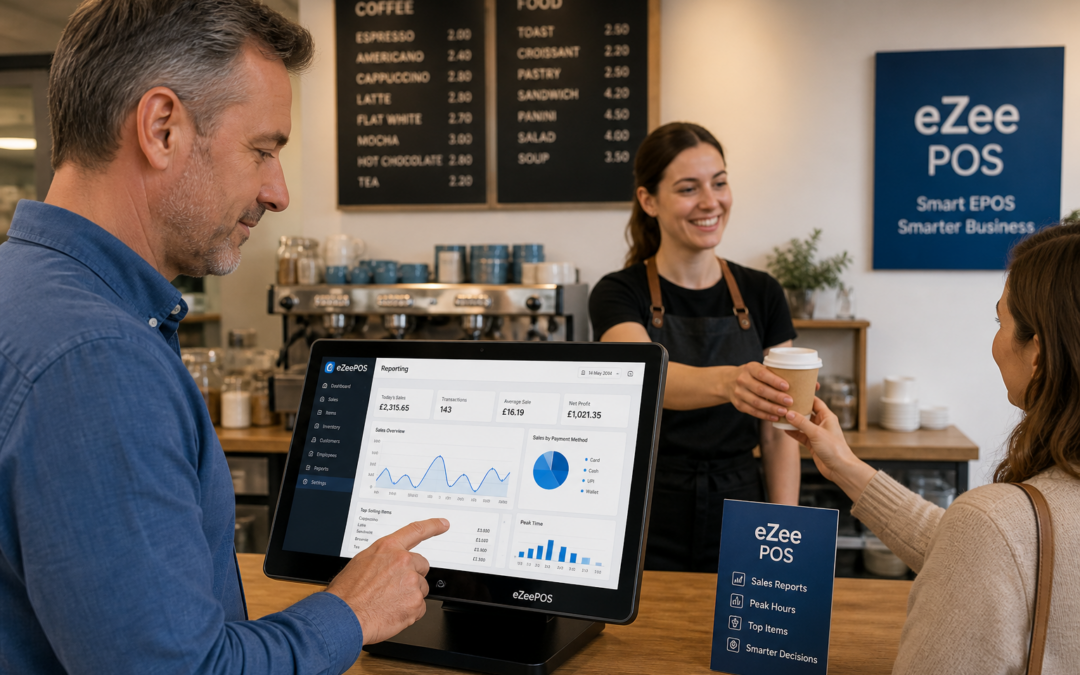
Why reporting matters in everyday trading
For many independent businesses, the biggest decisions are not made at board level. They are made on the shop floor, behind the counter or at the end of a busy service. That is where good EPOS reporting can be especially valuable. Instead of relying on guesswork, owners can see what is happening across the day and respond with more confidence.
If you are using eZeePOS, reporting can form part of a more organised way of running the business. It does not need to be complicated. The aim is simply to give you clearer information so you can make better choices about staffing, trading hours, promotions and service levels.
What EPOS reports can tell you
A modern till system can provide more than just totals at the end of the day. The right reports can help you understand patterns that are easy to miss when you are busy serving customers.
Sales by time and day
One of the most useful views is sales by time of day and by day of the week. This can show you when trade really starts to build, when it peaks and when it drops away. For a café, that might highlight a strong breakfast rush and a quieter mid-afternoon period. For a shop, it might show that Saturday lunchtime is consistently the busiest window.
Best-selling products and menu items
Reporting can also show which products or menu items are performing well. That helps with ordering, pricing and layout decisions. In retail, it may help you place popular items where customers can find them quickly. In hospitality, it can support menu planning and help you understand which dishes are creating the most demand.
Staff and till activity
Another practical use of reporting is understanding what is happening at the counter. You may want to review who was on which till, how many transactions were processed or how often refunds and voids were used. This does not have to be about micromanaging staff. It is more about spotting patterns, supporting training and keeping day-to-day operations tidy.
How reporting supports better decisions
Reporting is only useful if it helps you take action. The real value comes from turning figures into decisions that improve the business.
Planning staff rotas more accurately
If your reports show that trade is strongest at certain hours, you can plan rotas more effectively. That may help avoid overstaffing during quiet periods and under-staffing during the rush. For smaller businesses, that kind of planning can make a real difference to both service and wage control.
Improving opening hours
Some businesses continue opening at times that no longer make commercial sense. EPOS reporting can help you review whether early mornings, late evenings or certain weekdays are really worth keeping. Even a small adjustment to hours can improve efficiency if the data supports it.
Spotting seasonal changes
Many UK businesses have strong seasonal trading patterns. Garden centres, gift shops, cafés and hospitality venues often see clear changes across the year. Reports can make those shifts easier to plan for, whether that means changing stock presentation, adjusting staff cover or preparing for a busy holiday period.
Reporting for retail businesses
For independent retailers, reporting can be especially helpful when margins are tight and every decision matters. A shop owner might use reports to identify fast-moving lines, notice slow-moving categories or check whether certain promotions are actually increasing sales.
It can also be useful for understanding basket value. If customers are often buying only one item, there may be an opportunity to improve merchandising or suggest related products more effectively at the till. If customers are regularly spending more at weekends, that can help shape weekend staffing and promotions.
Reporting for cafés, restaurants and takeaways
In hospitality, reporting can support smoother service and calmer management. A café may want to see which drinks are popular at peak times, while a restaurant may be more focused on covers, average spend and service patterns across lunch and evening trade.
For takeaways and quick-service food businesses, reports can help identify the busiest order windows and the most popular items. That makes it easier to prepare for peaks, keep staff in the right places and understand what customers are choosing most often.
Where relevant, reports can also help with review meetings, shift handovers and end-of-day checks. Rather than relying on memory, managers can look at clear figures and make better calls the next day.
Making reports easy to use
The best reporting tools are the ones people actually use. If reports are awkward to find or difficult to understand, they often get ignored. That is why it helps to choose an EPOS system that presents information clearly, without making staff wade through unnecessary screens.
Simple headings, sensible filters and easy-to-read summaries matter. Busy owners do not usually want data for data’s sake. They want a quick view of what sold, when it sold and what they should do next.
Keep reviews regular
It is worth building a routine around reporting. Some businesses check key figures daily, while others review them weekly. A short regular review is often more useful than a long review done once in a while, because it helps you spot patterns before they become problems.
Use reports alongside staff knowledge
Numbers are important, but they work best alongside what your team already knows. Staff on the counter or floor can often explain why certain trends are happening. A strong EPOS setup gives you the facts; your team’s experience helps put those facts into context.
How eZeePOS can help
At eZeePOS, we focus on practical EPOS software for UK retail and hospitality businesses that want clearer day-to-day control. Good reporting should help you understand your business better, not add more admin. Whether you run a shop, café, restaurant or takeaway, the right setup can help you make more informed decisions with less effort.
Useful reports can support better staffing, stronger promotions, smoother service and more consistent trading. They are not just for accountants or head office teams. They are for the people making daily decisions at the till.
Next steps
If you want a more organised way to understand sales patterns, customer demand and daily performance, EPOS reporting is a good place to start. Explore more about eZeePOS at www.ezeepos.co.uk.
Contact YCR Distribution at sales@ezeepos.co.uk or call 01924 438238.
Recent Comments