
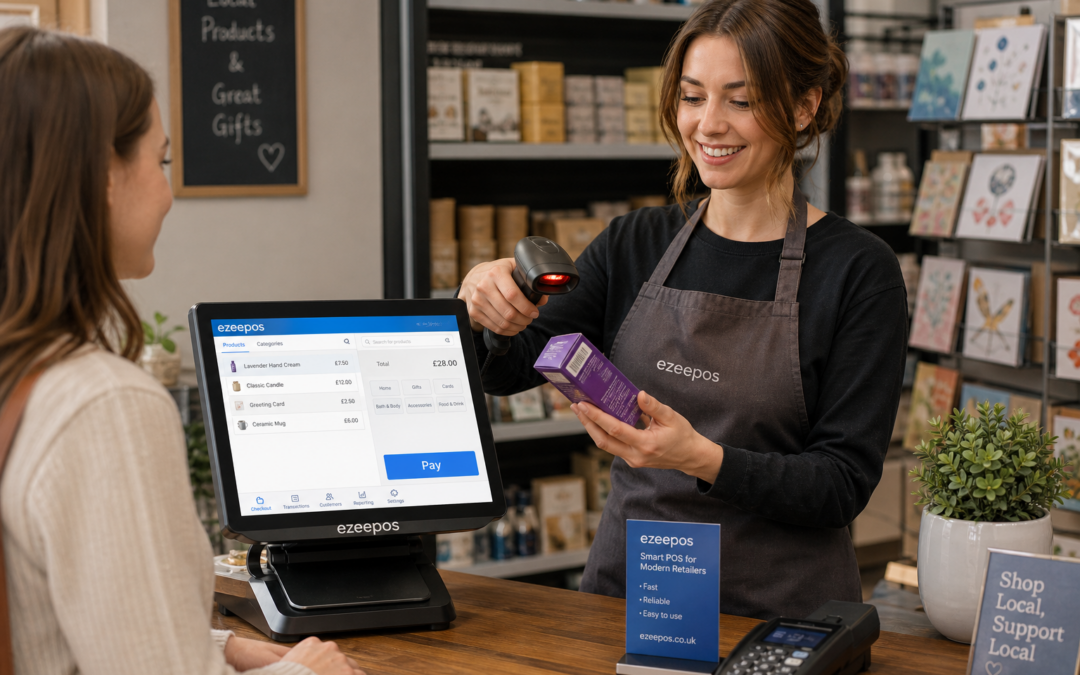
Barcode scanning is one of those retail tools that can seem ordinary until a busy queue forms at the till. For independent shops, convenience stores and multi-department retailers, a reliable scanning setup can save time, reduce input mistakes and make day-to-day trading much easier. If you are reviewing your checkout process, eZeePOS offers practical EPOS software for UK retail businesses that want a smoother, more organised way to sell.
At first glance, barcode scanning is simply about reading product codes. In practice, it does much more than that. It can help staff identify products quickly, apply the correct price, reduce typing at the counter and keep the sales process consistent, even when team members are new or working under pressure.
Why barcode scanning matters in everyday retail
When customers arrive at the till, they want quick, accurate service. Manually searching for every item slows things down and increases the chance of errors. Scanning a barcode gives staff a faster way to add products to the sale, particularly in shops with a broad range of SKUs or frequent price changes.
This is especially useful in:
- Convenience stores with frequent small transactions
- Gift shops with varied stock and seasonal lines
- Hardware stores with many product variations
- Pet shops with food, accessories and repeat purchases
- Fashion and clothing shops where items may differ by size or colour
For these businesses, a barcode scanner is not just a time-saver. It supports a better customer experience by making the checkout feel quicker and more professional.
How it helps reduce mistakes at the till
Typing product names or searching through long item lists can lead to errors, especially during busy periods. Scanning the barcode removes much of that risk. The correct item is added to the sale, the price is taken from the system and the cashier can move on without second-guessing the transaction.
Common problems barcode scanning can help avoid
- Wrong items being added to the sale
- Missed price updates
- Duplicate entries at busy tills
- Slower training for new staff
- Inconsistent pricing between team members
For retailers, those small improvements add up. Fewer mistakes mean fewer refunds, less time spent correcting the till and a more reliable checkout process overall.
Helping new staff work more confidently
One of the biggest advantages of barcode scanning is how easy it makes training. New starters do not need to memorise product codes or learn a complicated search process before they can serve customers. They can scan items, confirm totals and focus more on service.
This matters in small retail teams where employees may need to cover different duties. A simple scanning workflow helps staff feel more confident from the start, which can be particularly useful in seasonal trading periods or businesses with part-time employees.
Barcode scanning and product lookup
Some items cannot always be scanned straight away. Damaged labels, loose products or products without a visible code still need a back-up method. That is where good product lookup within the till system becomes useful. A well-organised product database means staff can find items quickly if a barcode is missing or unreadable.
In a practical retail setup, barcode scanning and product lookup work together. Scanning should handle most sales, while a clear lookup screen supports the exceptions without slowing the queue.
What to look for in a retail scanning setup
Not every shop needs the same scanning arrangement. A small counter-based store may only need a simple handheld scanner, while a larger shop may benefit from a scanner built into a touchscreen till area. The right choice depends on your layout, stock range and the way your staff serve customers.
Practical features worth considering
- Fast and reliable scanning response
- Compatibility with your EPOS workflow
- Comfortable handling for long shifts
- Suitable scanning for both small labels and clearer printed codes
- Easy connection to the till area and counter setup
If your business also sells products in different departments, barcode scanning can help keep the shopping experience consistent. Staff can move through sales more confidently, even when customers are mixing different categories of product in one transaction.
Barcode scanning in multi-department retail
For shops with several product types under one roof, scanning becomes even more valuable. A multi-department retailer may sell gifts, household items, accessories, packaged goods and small everyday essentials all from the same point of sale. Without a clear scanning process, the till can quickly become slow and cluttered.
With a good EPOS setup, staff can scan items from different ranges without changing process each time. That helps keep service smooth and makes it easier to handle mixed baskets at the checkout.
Why this should be part of a modern EPOS setup
Barcode scanning is not a separate extra for the sake of it. It is part of a better retail workflow. When linked to the rest of your EPOS system, it helps turn the checkout into a faster, more dependable part of the business rather than a bottleneck.
That is where eZeePOS can help. Designed for UK retail and hospitality businesses, it provides a practical foundation for day-to-day sales, clearer stock handling and easier counter operations. If you are upgrading from a basic till or standard cash register, barcode scanning is often one of the simplest improvements to make a real difference.
Used well, it can help a small shop feel more organised, reduce pressure on staff and improve the customer journey at the most important moment: when someone is ready to pay and leave.
Ready to improve your checkout process?
If your retail business is still relying on manual item entry or an outdated till process, barcode scanning could be a straightforward way to speed things up. For practical EPOS advice and solutions for UK retailers, visit www.ezeepos.co.uk.
Contact YCR Distribution at sales@ezeepos.co.uk or call 01924 438238.
Recent Comments