
Why garden centres need clearer day-to-day insight
Garden centres are not like standard shops. Sales can change quickly with the season, the weather, school holidays and even local events. One week you may be busy with bedding plants and compost, and the next you may see more interest in gifts, homeware or outdoor living products. That mix makes it harder to rely on instinct alone.
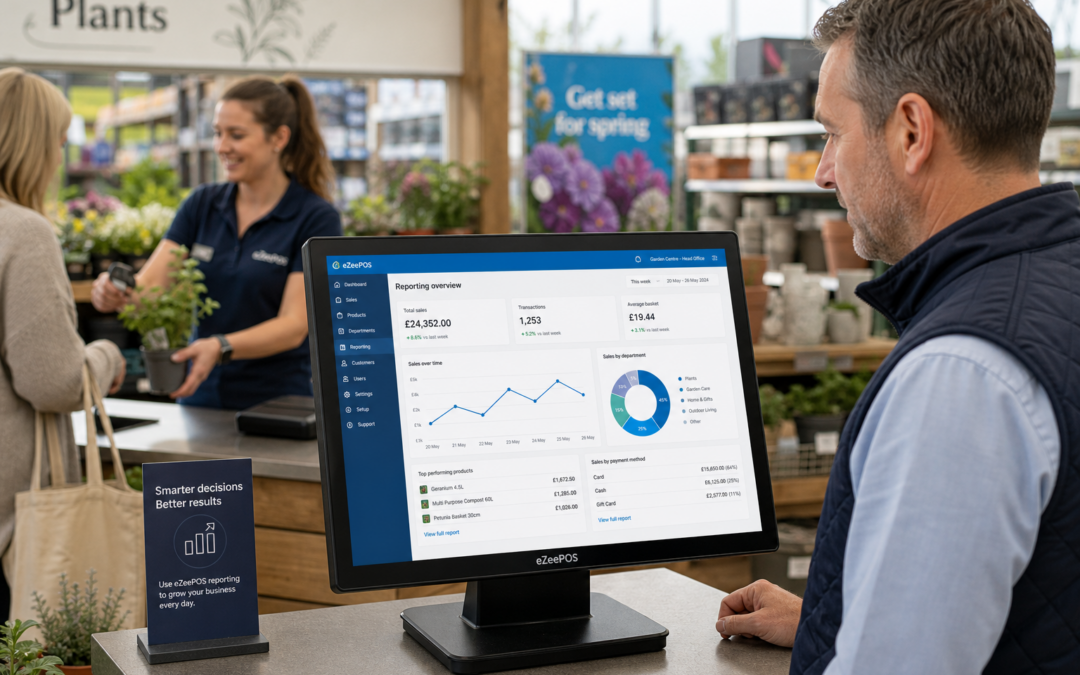
This is where eZeePOS can help. A good EPOS system does more than process transactions. It can give garden centre owners clearer reporting so they can understand what is happening on the shop floor, when trade is strongest and where the business may need a closer look.
For many independent garden centres, that means fewer assumptions and more confidence in everyday decisions.
What EPOS reporting can reveal
EPOS reporting turns daily takings into information that is easier to use. Instead of trying to piece together performance from paper records or separate spreadsheets, managers can review sales data in one place and spot patterns earlier.
Useful reporting for a garden centre may include:
- best-selling product lines
- busiest trading days and times
- department performance across the site
- seasonal changes in customer demand
- sales trends over weeks or months
This kind of information can be especially useful in a business where footfall and product demand are rarely the same from one month to the next.
See which departments are carrying the business
Garden centres often have several areas under one roof, from plants and compost to gifts, tools, furniture and café items. EPOS reporting can help owners see which departments are performing well and which need attention.
For example, you may find that the plant area performs strongly at weekends but slows during wet weekdays, while the gift shop section does better in the run-up to seasonal events. That insight can support better staffing decisions, smarter merchandising and a more balanced approach to the business overall.
Understand seasonal patterns more clearly
Seasonal trading is part of life in a garden centre. Spring may bring a rush for seeds, bedding plants and gardening essentials. Summer can increase demand for outdoor living products. Later in the year, customers may focus on gifts, decorations and indoor plants.
With better reporting, these shifts become easier to track. Rather than simply reacting to busy periods, owners can plan ahead using actual sales data. That can help with stock planning, staffing and promotional activity, but more importantly, it helps the business feel more under control.
How reporting supports staffing and service
Garden centres often need to balance tills, plant advice, café service and customer support across a site that may be quite large. If reporting shows which times are busiest, managers can schedule staff more effectively and reduce pressure on the team.
This is useful not only at the main checkout, but across the whole business. If Saturday afternoons are consistently busy, for instance, you may need more till cover, more floor staff available to help customers and better preparation in the café or seasonal areas.
Reduce guesswork around busy periods
When you know your busiest periods, it becomes easier to prepare. That could mean opening extra tills, assigning staff to problem areas or making sure popular products are ready for fast checkout. It may also help you avoid overstaffing during quiet periods, which is useful for managing costs in a business with many moving parts.
Good reporting helps garden centres make these decisions with evidence rather than instinct alone.
Using sales trends to improve buying decisions
While this article is not about stock control, reporting can still help the buying process in a practical way. If certain items sell well every spring, or if a product line performs strongly after a local event, that information can guide future purchasing.
It is much easier to plan for next year when you can see what actually happened this year. For a garden centre, that might mean understanding which categories deserve more attention, which products need an earlier seasonal push and which lines may not be worth repeating in the same volume.
EPOS reporting also makes it easier to back up decisions when several people are involved. If a manager, owner and buyer all need the same information, the data is already there in a clear format rather than spread across multiple records.
Keeping reports practical for busy owners
Some business owners worry that reporting will become too complicated or too time-consuming to use. In practice, the most useful reports are often the simplest ones: sales by day, sales by category, and performance across different trading periods.
The aim is not to create more admin. It is to give busy owners a clearer picture of the business so they can act quickly. That is especially important in a garden centre, where customer behaviour changes with the weather, the season and the time of year.
A well-set-up EPOS system can make these reports easier to access and easier to understand. That means less time spent digging through figures and more time running the business.
Why garden centres benefit from a modern EPOS setup
Garden centres need more than a simple till. They need a system that can support different departments, different schedules and a wide mix of products, while still keeping the checkout process straightforward for staff and customers.
Modern EPOS reporting supports that by giving owners a better overall view of the business. It helps with planning, improves visibility and makes day-to-day management feel less reliant on estimates.
If your garden centre is ready to move beyond basic till records and paper reports, eZeePOS offers a practical UK EPOS option for retail and hospitality businesses. You can learn more at www.ezeepos.co.uk.
Contact YCR Distribution at sales@ezeepos.co.uk or call 01924 438238.
Recent Comments