
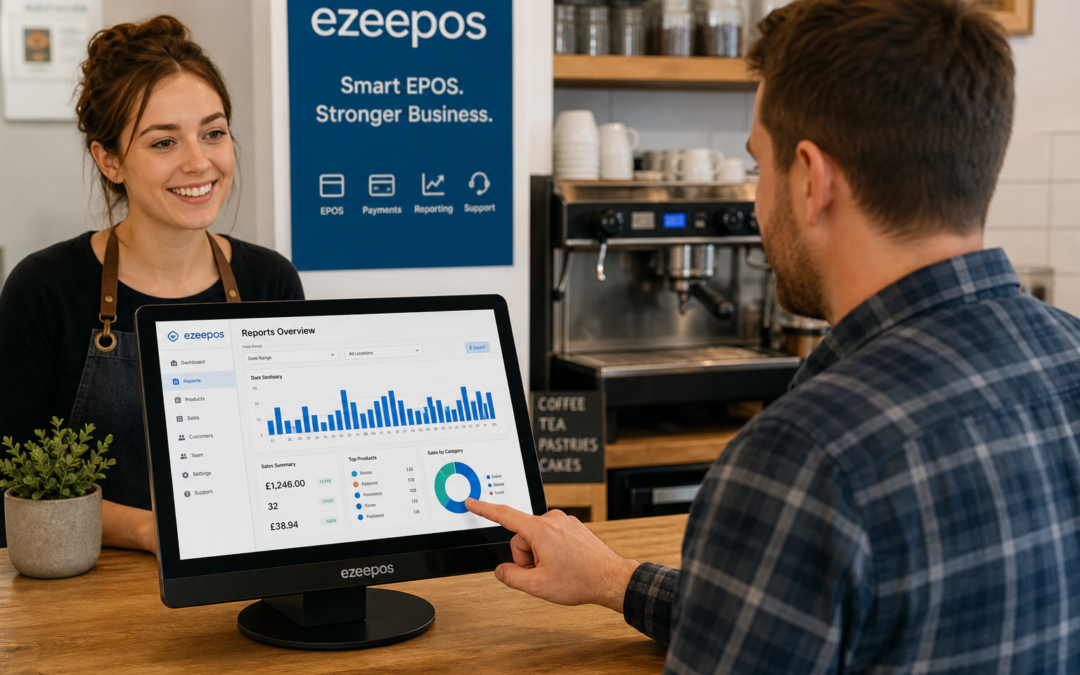
Good reporting is one of the most useful parts of a modern EPOS system. It helps business owners move beyond a simple end-of-day total and understand what is actually happening across the shop, cafe, restaurant or takeaway.
For independent UK businesses, that can make a real difference. Whether you are reviewing yesterday’s sales, checking which products performed best or seeing when your busiest trading hours fall, clear reports can help you make smarter decisions without adding more paperwork.
If you are looking for a practical UK EPOS option, eZeePOS from www.ezeepos.co.uk is designed to support day-to-day business management as well as the checkout itself.
Why reporting matters in everyday trading
Many small businesses rely on instinct, memory and handwritten notes to understand performance. That can work for a while, but it becomes harder to manage as trade grows or trading patterns become less predictable.
EPOS reporting helps bring more clarity to the day. Instead of guessing which hours were busiest or which items sold well, you can check the figures and act on them. That might mean adjusting staff cover, changing opening routines, reviewing offer performance or simply understanding where your strongest sales are coming from.
For busy retailers and hospitality businesses, that kind of information can support more confident decisions without needing a complicated back-office process.
What useful EPOS reports can show
A good reporting setup should give you a clear picture of the business in a way that is quick to read and practical to use. Depending on the system, useful reports may include:
- sales by day, week or month
- busiest trading times
- top-selling products or menu items
- performance by department, category or till
- refunds and voids
- staff sales activity
- payment summaries
These reports do not need to be complex to be valuable. In fact, the most useful reports are often the simplest ones, because they help you see what needs attention straight away.
Retail businesses: understanding what sells and when
For retailers, reporting can help answer some very practical questions. Which lines are moving quickly? Which categories are quieter than expected? Are there certain days when sales are stronger? Are promotions actually driving extra trade?
For a shop with a mixed product range, this can be especially helpful. A clothing store may want to see which sizes or styles are selling best. A gift shop may want to know which seasonal items are worth replenishing. A convenience store may want to see which everyday lines are consistently strong.
Rather than relying on assumptions, you can look at real sales patterns and use that information to plan the next week more effectively.
Hospitality businesses: keeping service and staffing in balance
In cafes, restaurants, bars and takeaways, reporting helps with more than sales totals. It can show the flow of trade across service periods, which is useful when planning staff rota levels, prep and opening hours.
For example, if a takeaway is busiest between 5 pm and 7 pm, that information can help with staff scheduling. If a cafe has strong mid-morning trade but slower afternoons, reports can help owners think about menu changes, offer timings or labour planning. If a restaurant sees strong weekend performance but quieter weekdays, reporting can help highlight where extra marketing might be needed.
These are practical decisions that affect service, not just back-office admin. Better reporting makes them easier to base on facts.
Why daily review is better than monthly guesswork
One of the biggest advantages of EPOS reporting is speed. You do not need to wait until the end of the month to understand what has been happening. Daily or weekly checks can reveal problems and opportunities sooner.
That might mean spotting:
- a product that is selling better than expected
- a quiet trading day that may need attention
- an unusually high number of refunds or voids
- staff performance patterns that need reviewing
- a promotional offer that is not working as planned
When information is available quickly, it becomes much easier to make small adjustments before they turn into bigger issues.
Turning reports into action
Reports are only useful if they lead to action. The best EPOS systems help business owners use the figures in a practical way, whether that means changing staffing, adjusting ranges or reviewing trading hours.
Here are a few simple ways businesses can use reporting day to day:
- compare sales against previous weeks to spot trends
- review busy periods and plan staffing more accurately
- check whether promotions are delivering the expected result
- identify slow-moving items or weak menu sections
- track performance across different departments or locations
For growing businesses, these small decisions can add up. Better reporting supports steadier operations and reduces the need to rely on guesswork.
What to look for in a reporting-friendly EPOS system
If reporting matters to your business, it is worth looking beyond the till function itself. A good EPOS system should make reports easy to access, easy to understand and useful enough to act on.
It also helps if the system suits the way you work. Some businesses need quick daily summaries, while others want more detailed breakdowns for stock, departments or staffing. For many independent businesses, the ideal setup is one that keeps things straightforward but still gives enough detail to support better decision-making.
That is where a system like eZeePOS can be a sensible fit. It is built for UK retail and hospitality businesses that want practical day-to-day control from their till system, without unnecessary complexity.
A simple way to stay in control
Better reporting is not about making business life more complicated. It is about making the important parts easier to see. When you understand what is selling, when trade is busiest and where your business is performing well, you can make clearer decisions with more confidence.
For small businesses trying to stay organised, that kind of clarity can be one of the most valuable EPOS features of all.
If you want to explore a practical reporting setup for your business, visit www.ezeepos.co.uk to learn more about eZeePOS.
Contact YCR Distribution at sales@ezeepos.co.uk or call 01924 438238.
Recent Comments