
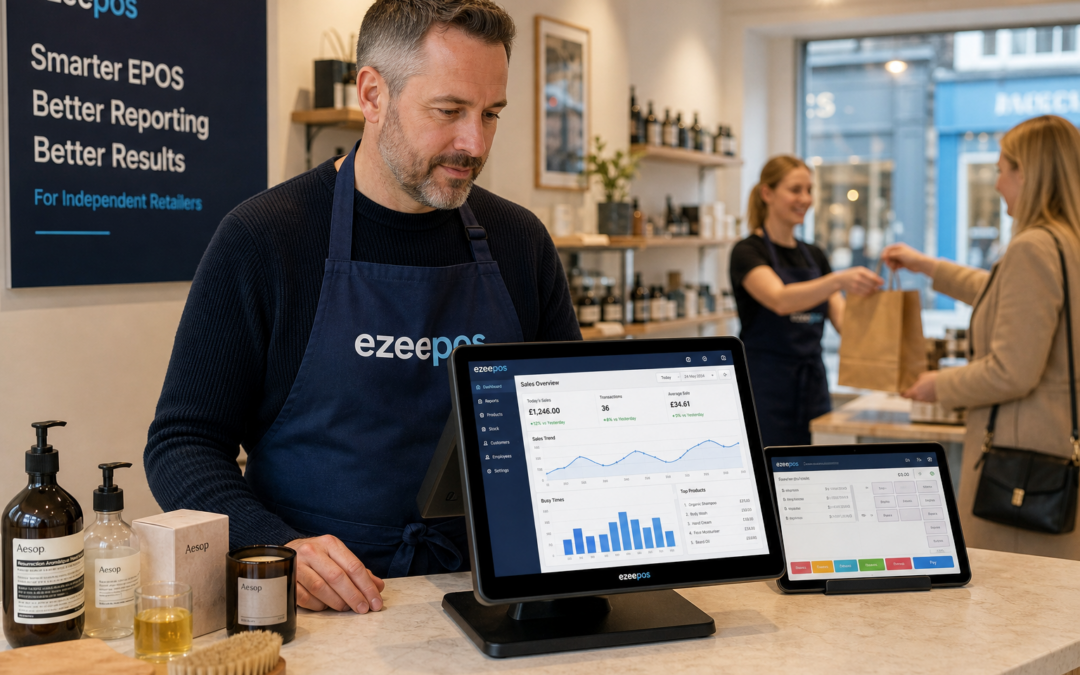
For many independent retailers, the challenge is not collecting data, but knowing what to do with it. A good EPOS reporting setup can help small shops turn everyday till activity into useful business insight. Instead of relying on instinct alone, owners can see what is selling, when customers are coming in and which small changes may improve trade.
At eZeePOS, reporting is part of a practical UK EPOS approach that helps retail and hospitality businesses stay organised. If you want to explore a modern system for your shop, you can start by visiting www.ezeepos.co.uk.
Why reporting matters in a small shop
Running a small shop means wearing a lot of hats. You may be serving customers, placing orders, updating prices and managing staff, often all in the same day. Reporting helps bring some structure to that busy routine.
Instead of waiting until the end of the month to review performance, reporting lets you check trading patterns more regularly. That can be especially helpful for convenience stores, gift shops, farm shops, fashion boutiques and other independent retailers where demand can change quickly.
With the right EPOS reports, you can answer practical questions such as:
- What time of day is the shop busiest?
- Which products sell best during the week?
- Are certain days stronger than others?
- How do sales compare across different periods?
Using sales figures to understand what customers want
One of the biggest benefits of EPOS reporting is clarity. It gives small business owners a more reliable view of sales patterns than memory or rough estimates alone. This makes it easier to see which lines are popular and which may need a closer look.
For example, a local gift shop may notice that some seasonal lines perform well only at weekends, while a convenience store may find that certain chilled drinks sell strongly during warmer afternoons. That kind of detail helps shape better decisions about merchandising, staffing and product range.
Spotting patterns without adding admin
Reporting should make life easier, not more complicated. A well-set-up EPOS system can present key information in a clear format, so busy owners do not need to spend hours digging through manual records. That is especially useful in small shops where time is limited and every task has to count.
When information is easy to access, it becomes much more likely to be used. That means decisions are made using real trading data rather than guesswork.
Knowing your busiest times helps with planning
Another practical benefit of reporting is understanding when your shop is busiest. This is useful for staffing, customer service and general planning. A counter that feels calm at 10am may become much busier at lunchtime or late afternoon, and reporting can help show those trends more clearly.
If you understand the busy periods, you can plan more effectively around them. That might mean making sure the right number of staff are on the till, preparing popular products in advance or arranging replenishment before the rush begins.
For small shops, that kind of preparation can make a noticeable difference to the customer experience. Shoppers are more likely to return when queues are shorter, service is smoother and the store feels well run.
Making daily decisions with more confidence
EPOS reporting is most useful when it supports everyday decisions. For a small retailer, this might mean deciding which products to reorder, which promotions worked well or which days need more staff on the shop floor.
It can also help owners compare different trading periods. For example, if sales were stronger this week than last, the report may help explain why. Was it due to better weather, a local event, a market day or a successful promotion? The answer is not always obvious, but the data can point you in the right direction.
That is why reporting is not just about looking back. It is about learning enough from yesterday’s trade to improve today’s decisions.
Useful reporting areas for independent retailers
- Daily and weekly sales totals
- Best-selling products or departments
- Peak trading times
- Discount and promotion performance
- Performance across staff shifts or days
Supporting better staff decisions too
Reporting can also help with staffing. Small shops often run with lean teams, so knowing when trade picks up can make rotas more effective. If sales data shows that footfall grows steadily on Friday afternoons, for example, it may be worth planning extra cover at that time.
For businesses with part-time staff, students or flexible rotas, this information is especially helpful. It allows owners to match labour more closely to demand without overstaffing quieter periods.
That is good for cost control, but it also helps with service quality. Customers notice when the shop is well staffed and the till is moving smoothly.
Reporting for retail businesses of different sizes
Although the benefits are clear for small shops, reporting is useful for growing businesses too. A business with more than one counter, more than one member of staff or more than one product category will usually benefit from a clearer view of day-to-day performance.
Even a simple dashboard can highlight trends that are easy to miss when you are focused on serving customers. Over time, those insights can feed into better pricing, better product choice and more reliable planning.
If you are comparing EPOS options, it is worth looking not only at the till itself, but also at how clearly it presents sales information. A practical reporting setup should be straightforward, readable and useful in real trading conditions.
How eZeePOS supports practical reporting
eZeePOS is designed as a practical EPOS and POS software option for UK independent businesses. For retailers, that means a system that can support everyday trading as well as the reporting needed to make informed decisions.
Whether you run a local convenience store, a gift shop or a mixed retail business, the aim is the same: reduce uncertainty and give you a clearer picture of how the shop is performing. If you want to learn more, visit ezeepos.co.uk to see how the system may fit your business.
Choosing reports that you will actually use
The best reporting tools are the ones that fit into real working habits. You do not need dozens of complex charts if you only need a few key answers. For many small shop owners, the most useful reports are the simplest ones: sales by day, best-selling items and peak trading times.
When reporting is clear and easy to access, it becomes part of normal business planning rather than an occasional extra task. That is where it can really add value.
Contact YCR Distribution at sales@ezeepos.co.uk or call 01924 438238.
Final thoughts
Small shops do not need complicated systems to make better decisions. They need the right information at the right time. EPOS reporting helps make that possible by turning sales data into something practical, useful and easy to act on.
For independent retailers that want to stay organised and make steadier day-to-day decisions, it is one of the most valuable features a modern EPOS system can offer.
Recent Comments