
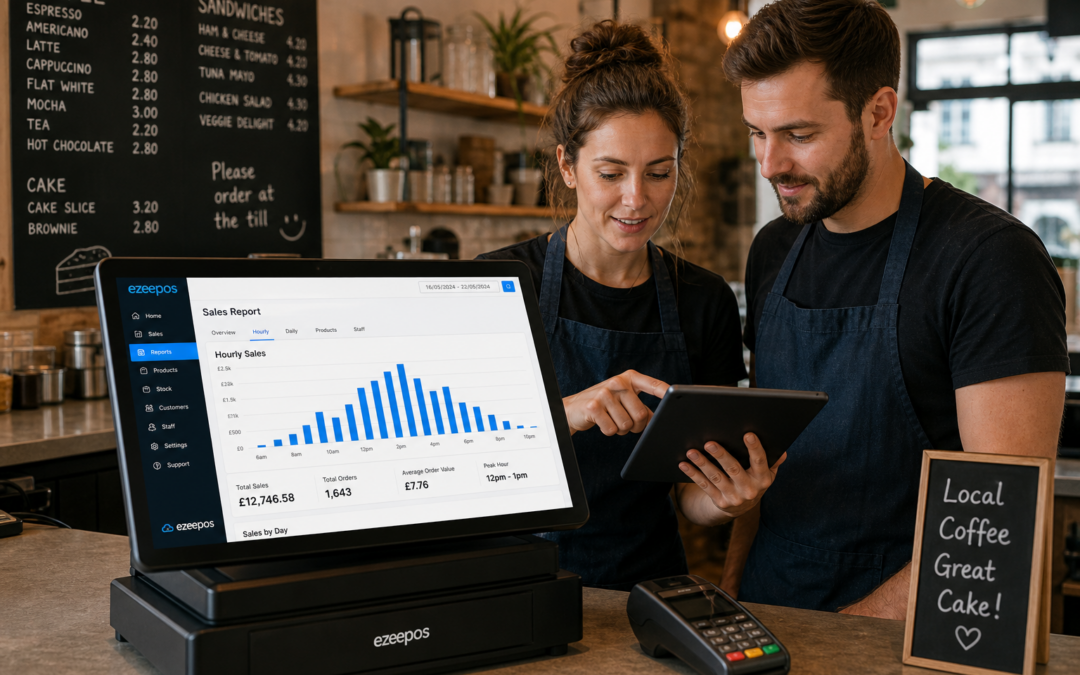
For many independent businesses, the hardest part of planning is not knowing exactly when trade will peak. A shop may feel busy on a Saturday morning, while a cafe may see a sudden rush at lunchtime or just before closing. Without a clear record, those patterns are easy to underestimate.
That is where good EPOS reports become genuinely useful. With a system such as eZeePOS, business owners can review sales at different times of day and build a clearer picture of when customers are most active. If you would like to see what a practical UK EPOS setup can do, you can explore www.ezeepos.co.uk for more information.
Why busy-time reporting matters
Understanding your busiest periods is about more than curiosity. It can affect staffing, customer service, till management and even how you organise the counter or kitchen. When you know when demand rises, you are in a better position to prepare for it.
There is a big difference between reacting to a rush and planning for one. Good EPOS reporting helps you see the shape of your trade across the day, week and season, rather than relying on memory alone.
Common questions busy-time reports can answer
- What time of day do customers usually visit?
- Which days of the week are strongest?
- Are there regular lunchtime, early evening or weekend spikes?
- Do certain products or menu items sell better at specific times?
- Are there quieter periods when tasks can be done more efficiently?
How EPOS reports help different types of business
Retail and hospitality businesses use this information in slightly different ways, but the principle is the same: reduce guesswork and use real trading data to make better decisions.
For retail shops
In a retail setting, busy-time data can show when staff need to be on the shop floor rather than behind the till. It can also help owners plan cover for after-school footfall, Saturday spikes or holiday trade. If you run a convenience store, gift shop, pet shop or fashion retailer, this can make a noticeable difference to how smoothly the day runs.
For cafes, restaurants and takeaways
In hospitality, the busiest periods often need more than extra hands at the till. You may need faster order taking, more kitchen coordination and better front-of-house organisation. A cafe might discover that a short breakfast rush is more important than the rest of the morning, while a takeaway may find that one or two evening windows account for a large share of sales.
What to look for in your reports
EPOS systems can present data in different ways, but the most helpful reports are usually easy to read and quick to check. You do not need a complicated dashboard to make useful decisions. You need clear information that supports day-to-day action.
Useful views for spotting trading patterns
- Hourly sales to identify peak windows
- Daily totals to compare weekdays and weekends
- Weekly trends to spot predictable changes
- Product or category reports to see what sells during busy periods
- Period comparisons to measure whether trade is growing or shifting
When those views are combined, it becomes easier to see not only when you are busiest, but why. That can help you decide whether the rush is driven by routine habits, local events, seasonal changes or product mix.
How this helps staffing and service
The practical value of busy-time reporting is often seen in staffing decisions. If your EPOS shows that trade rises sharply between 12pm and 2pm, you can schedule your strongest team members for that window instead of spreading cover too thinly across the whole day.
That can improve service in several ways:
- shorter queues at the till
- faster table service or order taking
- better customer experience during peak periods
- less pressure on staff when demand rises
- more time for quieter-period tasks such as restocking, cleaning or admin
For smaller businesses, even a simple change in rota planning can make a noticeable difference to how manageable the busiest hour feels.
Using reports to prepare for changing demand
One of the biggest advantages of EPOS reporting is that it helps you spot patterns early. A business may think trade is steady until reports show that one day of the week is now performing better than another, or that a seasonal lunch rush is growing month by month.
That insight is especially useful for businesses with changing footfall, such as garden centres, farm shops, cafes and seasonal retailers. Rather than waiting for a queue to build, you can use past data to prepare in advance.
Small adjustments that can help
- adding extra staff for known peak times
- preparing more best-selling lines before busy periods
- moving slower tasks to quieter windows
- adjusting opening routines or close-down routines
- reviewing whether your busiest periods match current staffing levels
Why simple reporting is often the most useful
It is easy to assume that more data automatically means better decisions, but that is not always true. Many owners simply want reports that are clear, reliable and easy to use. A practical EPOS setup should give you information without creating extra admin.
That is part of the appeal of systems like eZeePOS for UK retail and hospitality businesses. The aim is not to bury owners in graphs, but to give them useful figures they can apply quickly. Whether you run a busy counter, a cafe or a small independent shop, the right reporting tools should save time rather than take it away.
Turning sales data into day-to-day decisions
Busy-time reporting is most effective when it becomes part of your regular routine. A quick review at the end of the day or week can reveal useful trends, especially if you compare it with staffing levels, promotions or local events.
Over time, this can help you make decisions with more confidence. You may learn that certain times need extra cover, that specific days require different preparation, or that your busiest hours are not the same as your most profitable ones. That kind of knowledge is valuable for any independent business trying to stay organised and serve customers well.
For many UK retailers and hospitality venues, EPOS reporting is one of the simplest ways to move from guesswork to evidence-based planning.
To learn more about practical EPOS software for your business, visit www.ezeepos.co.uk.
Contact YCR Distribution at sales@ezeepos.co.uk or call 01924 438238.
Recent Comments