
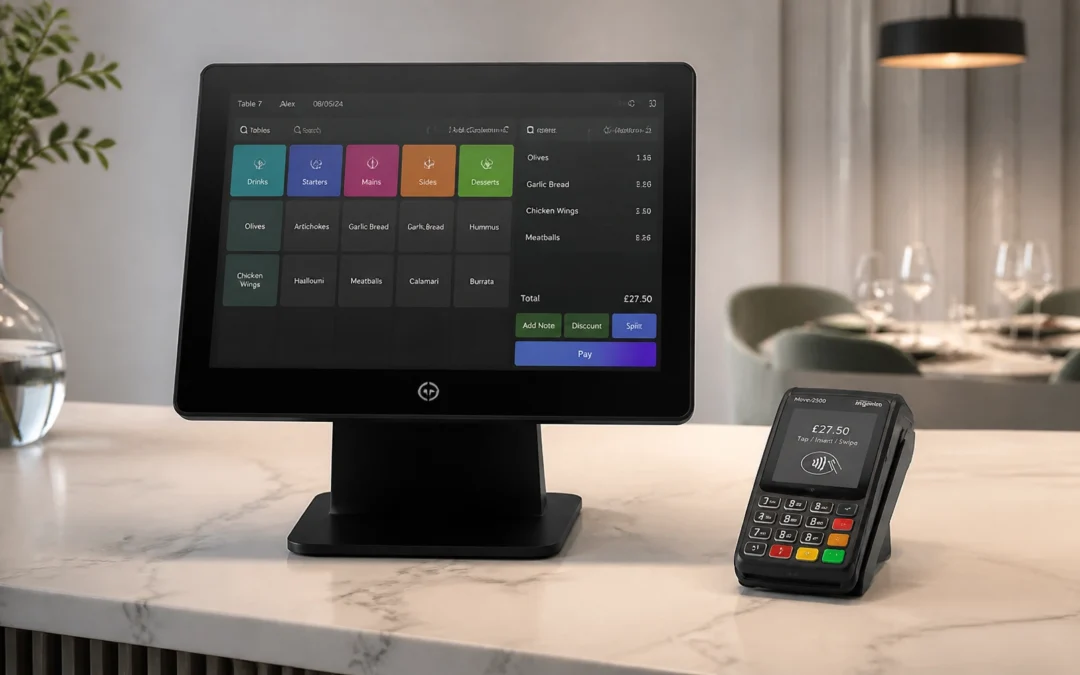
Selecting an Electronic Point of Sale (EPOS) system for a UK hospitality business is not a software subscription decision; it is an infrastructural investment that dictates your speed of service, data integrity, and operational resilience. Whether you operate an independent café in Leeds, a multi-site pub estate across the Midlands, or a fast-paced takeaway in London, your till system is the nerve center of your enterprise.
Too many operators buy an EPOS on headline monthly pricing or slick marketing claims, only to discover during a Friday night rush that their hardware freezes, stock sync fails, or card reconciliation takes hours. This guide cuts through the noise, compares leading UK options, and outlines the rigorous evaluation framework you need to protect your margins and scale your venue.
1. Diagnose Your Venue Type and Service Model
Before looking at feature lists or pricing tiers, you must define your exact operational profile. Generic point of sale software does not exist. A system built for retail will collapse under the demands of a high-volume restaurant, and a quick-service takeaway platform will frustrate a fine-dining floor team.
- Cafés and Coffee Shops: Your metrics are throughput speed, morning queue velocity, and customer loyalty integration. You need lightning-fast item entry, contactless payment processing, and intuitive modifiers for milk choices and syrups.
- Restaurants and Bistros: Your primary challenges are table management, course firing, and split billing. A rigid flat-rate terminal will cause chaos when a table of eight asks for separate, itemized bills.
- Pubs and Bars: You require wet-led stock control, open tab management, and rapid age-verification prompting. Speed of service under heavy footfall is non-negotiable.
- Takeaways and Dark Kitchens: Integration with online ordering aggregators, automated kitchen ticket dispatch, and delivery driver tracking are essential.

2. Separate "Must-Haves" from "Nice-to-Haves"
When demoing systems, vendors will dazzle you with hundreds of tertiary features. Focus ruthlessly on core functionality. Write down your non-negotiable operational requirements before speaking to any salesperson.
Core Hospitality Features
- Table & Floor Plan Management: Real-time visual tracking of table status (seated, ordering, paying, turning) to optimize seating turnaround.
- Course & Modifier Handling: The ability to fire starters, mains, and desserts separately, apply cooking notes (e.g., medium rare, gluten allergy), and enforce mandatory prompts for missing choices.
- Kitchen Display Systems (KDS) & Printers: Elimination of paper ticket clutter with intelligent routing of orders to prep stations based on item category.
- Offline Mode: Guaranteed transaction processing and order taking even when local broadband drops mid-service.
Pro Tip (The Offline Test): During any software demonstration, explicitly ask the vendor: "Walk me through exactly what happens when my internet router loses connection on a busy Saturday afternoon." If they hesitate or admit the system locks up, walk away immediately. Real-world hospitality demands robust offline resilience.
3. Total Cost of Ownership: Beyond the Monthly Subscription
Evaluating an EPOS solely on its headline monthly software fee is a critical mistake. True cost of ownership (TCO) comprises multiple moving parts that directly impact your bottom line.
| Cost Component | What to Watch For | Hidden Risks |
|---|---|---|
| Software Licensing | Monthly fees ranging from £25 to £100+ per terminal per month. | Tiered feature gating; forcing you onto expensive enterprise plans just to access basic stock alerts or multi-site reporting. |
| Card Processing Fees | In-person transaction rates typically between 1.4% and 1.9%, plus authorization fees. | Long-term merchant acquiring lock-ins, PCI non-compliance penalties, and sudden rate hikes after introductory periods. |
| Hardware & Peripherals | Upfront or leased costs for touchscreens, cash drawers, receipt printers, and handheld ordering pads. | Proprietary hardware traps where you cannot source replacement parts independently. |
| Setup & Support | Onboarding fees, menu building, staff training, and ongoing technical support SLAs. | Paying extra for emergency weekend phone support when your system goes down during Sunday lunch. |
4. UK Hospitality EPOS Systems Compared
To help you build a viable shortlist, let's examine how major solutions stack up for UK operators based on independent performance, pricing models, and service suitability.
| System | Target UK Venue | Typical Monthly Cost | Primary Strength | Potential Limitation |
|---|---|---|---|---|
| eZeepos | Independent & multi-site hospitality (cafés, pubs, restaurants, takeaways) | Competitive modular pricing | Built specifically for UK hospitality with accredited local partners, robust inventory sync, and dedicated UK support. | Best suited for hospitality and food service rather than general retail-only enterprises. |
| Square for Restaurants | Small to mid-sized cafés and casual dining | Free entry tier; Plus plan ~£69/mo | Exceptionally user-friendly, transparent 1.75% card processing, quick self-onboarding. | Lacks deep enterprise multi-site pub estate management features. |
| Lightspeed Restaurant | Ambitious independents and multi-site groups | From ~£89/mo | Advanced inventory control, comprehensive multi-site analytics, and strong scalability. | Higher starting cost and steeper configuration learning curve for small operators. |
| Epos Now | General SMEs across hospitality and retail | From ~£25/mo | Flexible application marketplace with numerous third-party integrations. | Interface and stock depth can feel standard rather than specialized for complex restaurant workflows. |
| Toast | Dedicated restaurant operators | From ~£80/mo | Restaurant-grade rugged hardware, integrated kitchen workflows, and profitability reporting. | Tailored heavily toward full-service restaurants; may be excessive for a small daytime café. |

5. Stock Control, Margins, and Real-Time Reconciliation
In hospitality, prime cost control dictates survival. If your EPOS does not talk directly to your inventory in real time, you are operating blind.
When ingredients are deducted dynamically with every dish sold (recipe-level stock management), you gain immediate visibility over your Cost of Goods Sold (COGS) and gross profit margins. Look for systems that feature automated low-stock alerts, supplier purchase order generation, and variance tracking. Without these tools, inventory shrinkage and food waste will quietly erode your profitability.
6. My Take: What I See Operators Get Wrong

My Take: After observing countless hospitality tech rollouts, I have seen operators spend weeks agonizing over a £10 monthly difference in software fees, only to choose a system with terrible customer support. When your terminal crashes at 7:30 PM on a Friday, saving £120 a year is completely irrelevant if your support queue is a voicemail box in another time zone.
My firm recommendation is to prioritize local installation, accredited setup support, and responsive UK-based telephone assistance above all else. Technology is only as good as the human partnership backing it up. Insist on working with providers who understand the unique regulatory and operational pressures of the British hospitality landscape.
Frequently Asked Questions
What is the average cost of a hospitality EPOS system in the UK?
Software subscriptions typically range from £25 to £100+ per month per terminal. However, you must factor in hardware investments (touchscreens, printers, cash drawers), installation services, and card processing fees (usually 1.4% to 1.9% per transaction) to calculate your true total cost of ownership.
Can EPOS systems continue working if the internet drops?
Yes, premium hospitality EPOS systems feature an offline mode. This allows your floor and bar staff to continue taking orders and processing transactions locally, with data securely syncing back to the cloud as soon as internet connectivity is restored. Always verify this capability during your system demo.
How important is kitchen display system (KDS) integration?
For busy restaurants, bars, and takeaways, KDS integration is transformative. It replaces traditional paper kitchen tickets with digital screens that organize orders by prep time, reduce miscommunication between front-of-house and kitchen staff, and provide management with invaluable speed-of-service analytics.
How do I switch my existing EPOS provider without disrupting service?
Switching requires careful data migration: specifically exporting your product catalog, modifier groups, and customer database. Work with a provider that offers dedicated onboarding support, professional menu building assistance, and staff training to ensure a seamless transition over a scheduled overnight or closed day.
Ready to Transform Your Hospitality Operations?
Choosing the right EPOS doesn't have to be overwhelming. Whether you are opening your first independent coffee shop or scaling a multi-site restaurant group, eZeepos delivers enterprise-grade power combined with the simplicity and reliability your team needs.
Get in touch with our UK team today to discuss your venue requirements or arrange a personalized demonstration:
- Phone: 01924 438238
- Email: sales@ezeepos.co.uk
- Website: www.ezeepos.co.uk
Recent Comments