
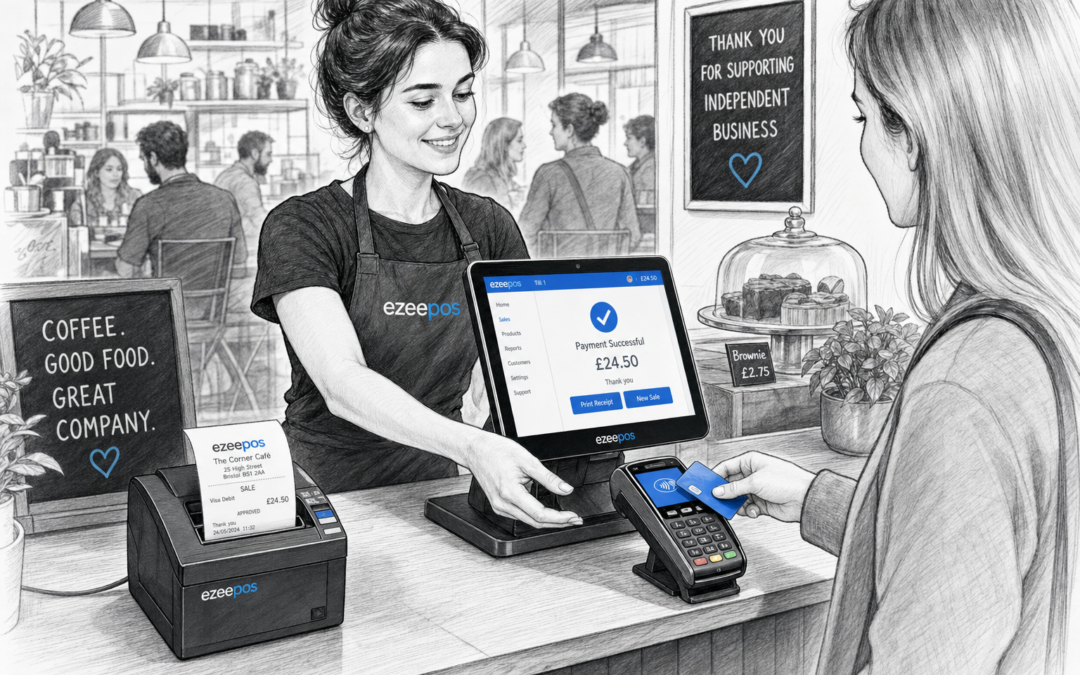
Busy counters leave little room for delays. In a shop, cafe, bar or takeaway, even a small holdup at payment time can affect queues, customer satisfaction and staff confidence. That is why many businesses are looking at integrated card payments as part of a simpler, more efficient EPOS setup.
For independent UK businesses, eZeePOS offers a practical way to connect sales, till activity and payment processes in one place. If you want to explore the wider system, start at www.ezeepos.co.uk and see how a modern till setup can support day-to-day trading without adding unnecessary complexity.
Why payment speed matters at the counter
When service is busy, every extra step matters. If staff have to key in amounts manually, switch between systems or re-check figures before taking payment, the checkout slows down. That can create a bottleneck at the counter, especially during lunch rushes, weekend peaks or seasonal trading periods.
Integrated card payments can help keep things moving by linking the sale and the card transaction more closely. Instead of entering the total in two separate places, staff can move from order to payment with fewer steps. That is useful in retail, but it is especially helpful in hospitality, where customers may be waiting to order, pay and move on quickly.
Less manual entry, fewer avoidable mistakes
Manual payment entry can lead to small errors that take time to fix. A mistyped amount, an extra zero or a missed confirmation can all create confusion at a busy till. By reducing the amount of re-keying needed, integrated payments can help make payment handling more accurate and less stressful for staff.
This is not just about speed. It is also about keeping the flow of service consistent. When the payment process is straightforward, staff can focus more on the customer and less on checking whether the amount has been entered correctly.
How integrated payments support different business types
Different businesses benefit in slightly different ways, but the overall goal is the same: make the end of the sale simpler.
Retail shops
In retail, integrated payments can help staff finish each sale more cleanly, particularly when handling multiple items, discounts or product lookups. That means shorter queues and a smoother checkout experience for customers buying everyday essentials, gifts, clothing or mixed stock ranges.
Cafes, restaurants and takeaways
In hospitality, speed and accuracy are essential during busy periods. A linked payment setup can help staff move from order taking to checkout without unnecessary steps. That is useful at counter service points, on tablets around the venue and at takeaway counters where quick turnaround matters.
Bars and pubs
Bars often need to process many smaller transactions across a short period of time. Integrated card payments can help reduce interruptions, keep the queue under control and make it easier for staff to move customers through the bar efficiently.
Payment integration options to discuss
Some businesses want a payment setup that works closely with their EPOS software and card terminal provider. If you are reviewing options, it may be worth discussing payment integration choices such as Teya and Dojo Payments with YCR Distribution. The right fit will depend on your setup, your service style and the way your business wants to handle transactions.
It is always sensible to treat payment integrations as a practical business decision rather than a technical one. The main question is simple: will the setup help staff work faster, reduce manual steps and keep the till operation more organised during busy trading?
What to look for in a better payment setup
If you are comparing payment options, it helps to think about the whole checkout process rather than the terminal alone. A good payment setup should support the way your team actually works every day.
- Can staff move quickly from sale to payment?
- Does the setup reduce manual entry at the till?
- Will it help keep queues shorter at busy times?
- Does it match the pace of your retail or hospitality service?
- Can it be understood easily by new staff?
These questions matter because a payment system should make life easier, not add another layer of work. For smaller businesses especially, that simplicity can make a real difference to daily service.
Why this fits a modern EPOS setup
A modern EPOS system is most valuable when the pieces work well together. Good software, the right hardware and a sensible payment setup can help shops, cafes and takeaways stay organised without overcomplicating the counter. That is where eZeePOS can be useful: it gives businesses a practical platform for handling day-to-day sales in a more joined-up way.
For businesses using touchscreen tills or Android-based POS terminals, the benefit is often in the flow of service. Staff can complete transactions more confidently, customers are served more quickly and management has a clearer picture of what is happening at the till.
Useful for growing businesses as well as established ones
Integrated payments are not only for large operators. They can be just as helpful for independent shops, cafes, pubs and takeaways that want to make the counter work more efficiently. If your business is growing, any improvement that saves time and reduces avoidable errors can help support that next stage.
Final thoughts
Integrated card payments are not about adding complexity. Used well, they help remove it. By reducing manual payment entry, improving checkout speed and making service smoother during busy periods, they can be a sensible upgrade for many UK retailers and hospitality businesses.
If you are reviewing your current till setup and want to see how eZeePOS could support a better payment flow, visit www.ezeepos.co.uk for more information.
Contact YCR Distribution at sales@ezeepos.co.uk or call 01924 438238.
Recent Comments