
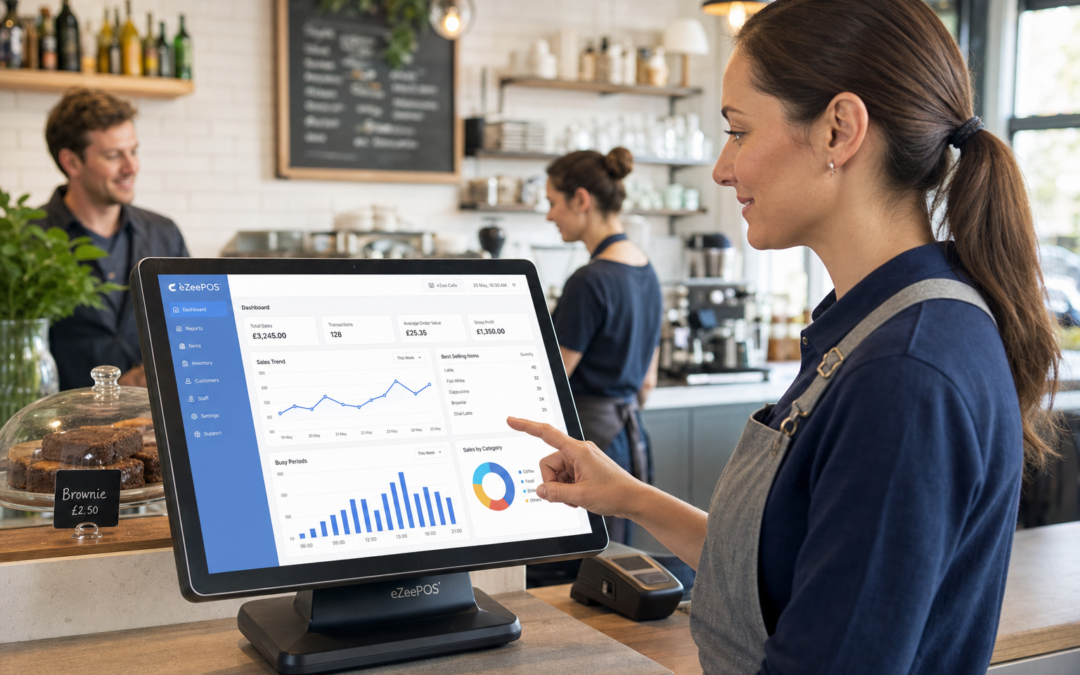
For many independent businesses, the busiest decisions are made in the middle of trading rather than at a desk after closing time. That is where clear, accessible reporting becomes valuable. With eZeePOS, retailers, cafes, restaurants, bars and takeaways can review sales information in a way that is practical, easy to understand and useful for day-to-day management.
Good reports do not need to be complicated. The most helpful ones usually answer simple business questions: What is selling well? When are the busiest trading periods? Which products or menu items are underperforming? Are staffing levels matching demand? When these answers are easy to find, owners can make better choices without relying purely on instinct.
Why reporting matters for independent businesses
Independent businesses often work with limited time and tight margins. A strong EPOS reporting setup can help reduce uncertainty by turning everyday transactions into useful information. Instead of waiting until the end of the week or month to understand performance, owners can check sales patterns more regularly and respond sooner.
This is especially helpful for businesses that deal with changing customer habits. A shop might see different trading patterns at weekends. A cafe may have a strong breakfast rush but quieter afternoons. A takeaway might need to understand which days bring the most orders. Reporting makes these patterns easier to see at a glance.
Turning daily sales into useful insight
One of the main benefits of EPOS reporting is that it shows more than just total takings. It can help business owners break sales down by product, time period, staff member, or department depending on how the system is set up. That makes it easier to spot what is driving revenue and where there may be room to improve.
- Identify your best-selling products or menu items
- See which times of day are busiest
- Review daily, weekly or monthly performance
- Compare different locations or departments
- Spot quieter periods that may need more attention
For a retailer, that might mean spotting a product category that consistently performs well but is not customer-facing enough. For a hospitality business, it could mean recognising that certain meal deals, drinks or sides are helping increase average spend.
What good EPOS reporting should help you see
Not every business needs the same reports, but the most useful EPOS systems usually provide a clear overview of the figures that matter most. The aim is not to drown owners in data. It is to make reporting quick enough that it becomes part of normal business management.
Sales trends and busy periods
Understanding trading patterns is one of the quickest ways to improve daily planning. If you know when your business is busiest, you can schedule staff more effectively, prepare stock more sensibly and reduce pressure on the team during the rush.
For example, a convenience store may notice a regular late-afternoon spike in certain products. A restaurant may see the busiest cover numbers on Friday and Saturday evenings. A bar might find that a specific event night consistently performs well. These are the kinds of details that help owners plan ahead rather than react late.
Product and category performance
Reporting can also show which products are contributing most to sales. That is valuable whether you run a gift shop, a clothing store, a cafe or a takeaway. A strong product report may reveal items that are popular but low-margin, or it may highlight slower-selling stock that needs a different pricing or display approach.
In hospitality, category performance can be particularly helpful. Drinks, sides, desserts and add-ons often make a bigger difference to profitability than owners realise. Clear reporting helps businesses understand where average basket value can be improved without creating extra work for staff.
Staff and shift awareness
Reporting is not just about products. It can also help managers understand how trading changes across shifts and staff rotas. That makes it easier to match labour costs to demand and identify patterns that may affect service speed.
For example, if your busiest periods are consistently under-staffed, the reports will show that through longer queues, slower table service or fewer completed transactions. If certain shifts regularly outperform others, there may be lessons to learn from how they are run.
How reporting supports better day-to-day decisions
The biggest benefit of EPOS reporting is not the report itself, but what you do with it. When the information is easy to access, owners can make small changes that build into stronger results over time.
Planning stock and ordering more carefully
Even when stock control is not the main focus, sales reports still help with ordering decisions. If a product or menu item sells strongly every weekend, you are less likely to run out if the trend is visible in advance. If another item is slow-moving, you may decide to order less or promote it differently.
Improving promotions and offers
Sales reports can show whether a promotion is working. A discount might create extra sales volume, but not always enough margin to justify repeating it. On the other hand, a well-targeted offer may increase basket size or help move specific lines. Reporting allows owners to test ideas properly rather than guessing.
Reducing wastage and wasted effort
When business owners can see what is and is not selling, they can make calmer decisions around buying, staffing and opening hours. That can reduce waste, prevent overstretching the team and improve the overall customer experience.
Reporting for retail and hospitality businesses
Retail and hospitality businesses use reports in slightly different ways, but the principle is the same: know what is happening, then act on it sensibly. In retail, reporting may be used to review product categories, seasonal demand and checkout trends. In hospitality, it may be used to monitor service periods, popular items and sales by time of day.
For businesses using touchscreen tills, modern POS software can make these reports easier to access from the counter or back office. That is useful for independent owners who need practical answers quickly, without spending too much time on admin.
Why eZeePOS can help
eZeePOS is designed as a straightforward UK EPOS option for businesses that want clearer control over daily trading. The aim is to make reporting accessible enough that it becomes part of regular management rather than an occasional task. Whether you run a small shop on a high street or a busy hospitality venue, being able to review useful sales information in one place can save time and improve confidence.
If you are reviewing your current setup, it is worth thinking about whether your reports are actually helping you make decisions. The best EPOS systems do not just record transactions; they help owners understand the business behind the transactions.
To learn more about eZeePOS and how it supports independent UK businesses, visit www.ezeepos.co.uk.
Contact YCR Distribution at sales@ezeepos.co.uk or call 01924 438238.
Recent Comments