

Staff training process for restaurants: a practical guide
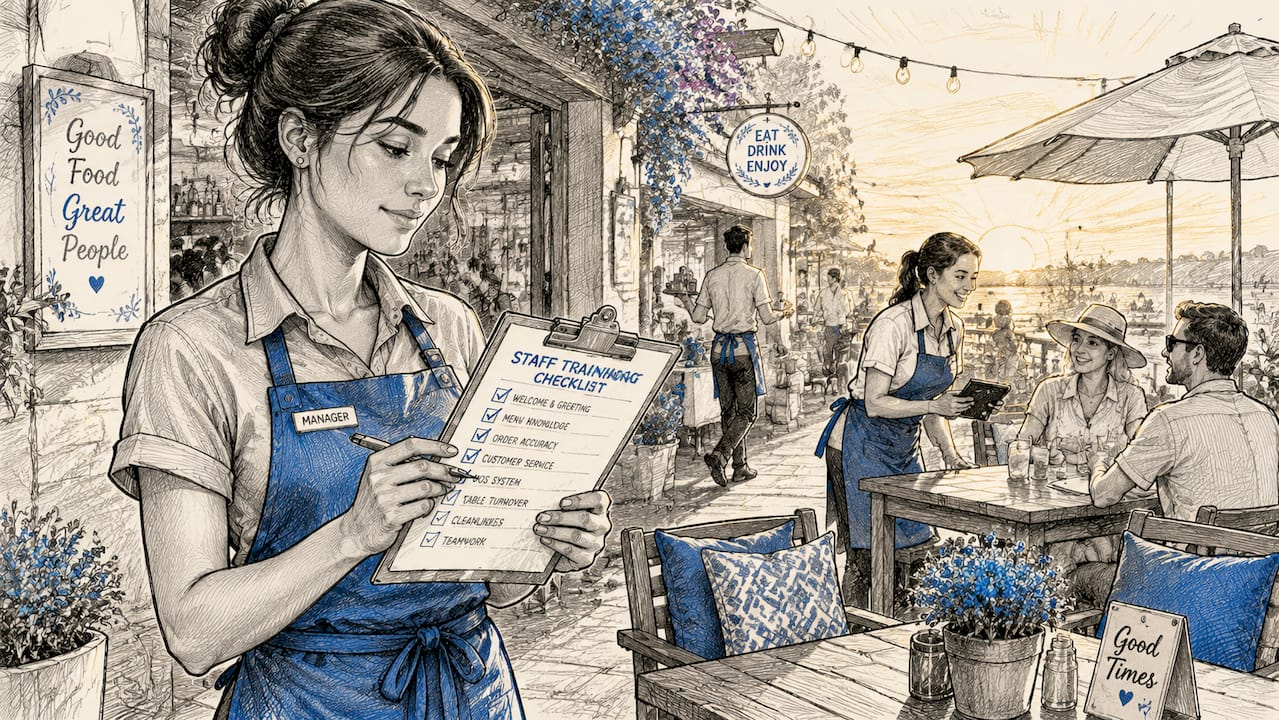
The staff training process for restaurants is a systematic onboarding and development programme that prepares new employees to meet your venue’s service standards quickly and consistently. In hospitality, the cost of getting this wrong is immediate. Restaurants lose 73% of new servers within the first three months when training is inadequate. That figure reflects a process failure, not a people failure. A structured restaurant employee onboarding programme, built around documentation, pacing, and progressive skill-building, is the single most effective way to protect your team and your service quality.
What are the essential stages of the staff training process for restaurants?
Effective restaurant staff training follows a clear sequence. Skipping stages or compressing the timeline creates gaps that show up on the floor, in complaints, and in your monthly turnover figures.
Experts recommend a 5–7 day structured onboarding averaging 25–35 hours, combining shadowing, role-play, and hands-on practice. That combination matters because each method builds a different type of competence. Shadowing builds contextual awareness. Role-play builds confidence. Hands-on practice builds muscle memory.
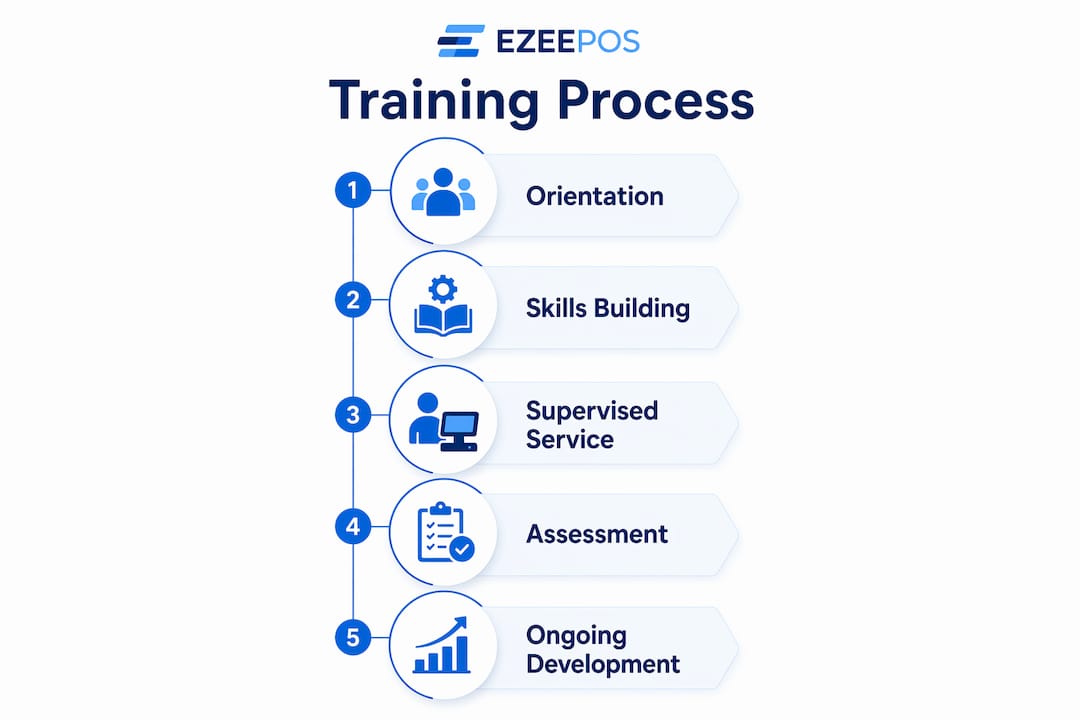
The four core phases of any effective programme are:
- Orientation. Cover your venue’s culture, values, team structure, and house rules. Keep policy content short. New hires absorb culture better than compliance documents on day one.
- Role-specific skills. Teach menu knowledge, food safety standards aligned with the FDA Food Code or UK Food Standards Agency guidelines, POS operation, and service sequences.
- Supervised practice. Place the trainee on the floor with a designated mentor. They observe, assist, and gradually take the lead on tables or counter interactions.
- Assessment and sign-off. Use role-play scenarios and a written or verbal check to confirm the trainee meets your standards before they work independently.
A well-run restaurant training checklist ties these phases together. It gives trainers a consistent framework and gives new hires a clear picture of what they are working towards.
Pro Tip: Assign one dedicated trainer per new hire for the first three days. Rotating trainers during early onboarding is one of the fastest ways to create inconsistency.
Comprehensive training correlates with 28% higher sales and 35% fewer complaints within 60 days. Those outcomes are not accidental. They are the direct result of staff who know the menu, understand the service flow, and feel confident enough to upsell and handle problems calmly.
Which tools and documentation make training consistent?
Onboarding is primarily a process problem, not a people problem. Inconsistency in service quality almost always traces back to undocumented training systems where managers rely on verbal instructions that vary shift to shift.
The core documentation set for any restaurant employee onboarding programme includes:
- New hire welcome packet. A welcome packet reduces Day 1 nerves by giving new staff their schedule, key contacts, parking information, and a brief team introduction before they set foot on the floor. Keep it separate from the employee handbook. The handbook is a reference document. The welcome packet is a human connection.
- Training checklist. A comprehensive checklist covers orientation, menu knowledge, food safety, POS training, shadowing, supervised practice, and assessments. Every trainer works from the same list, so every new hire receives the same standard.
- Trainer scripts. These are short, structured guides that tell trainers exactly what to cover in each session. They prevent experienced staff from skipping steps they consider obvious.
- Digital menu resources. Digital menu platforms give trainees a fast, visual way to learn dishes, allergens, and modifiers without relying on a printed menu that may be out of date.
| Document | Primary purpose | Who uses it |
|---|---|---|
| Welcome packet | Reduce Day 1 anxiety and set expectations | New hire |
| Training checklist | Ensure consistent coverage of all topics | Trainer and new hire |
| Trainer script | Standardise delivery across all trainers | Trainer |
| Digital menu guide | Build menu knowledge quickly and accurately | New hire |
Pro Tip: Store all training documents in a shared cloud folder. When you update the menu or change a policy, every trainer is working from the current version automatically.
How do you implement training day by day?
A day-by-day structure prevents the most common mistake in new employee training for restaurants: front-loading too much information. Front-loading causes burnout and early turnover. Spreading content over multiple days allows staff to absorb, practise, and consolidate before moving on.
Day 1: orientation and systems setup
Focus on culture, not compliance. Walk the new hire through the venue, introduce the team, and cover the basics of their role. Set up their POS login and show them the layout of the system. Keep the policy review to 20 minutes maximum.
Days 2–4: skills and knowledge building
This is the core learning phase. Cover:
- Full menu knowledge including allergens, preparation methods, and popular modifiers
- Food safety standards and personal hygiene requirements
- POS order entry, payment processing, and common error recovery
- Table management or counter service sequences depending on the role
- Shadowing a senior team member through full service periods
Pacing matters here. Cover one or two topics per session rather than running through everything in a single day.
Days 5–6: supervised live service
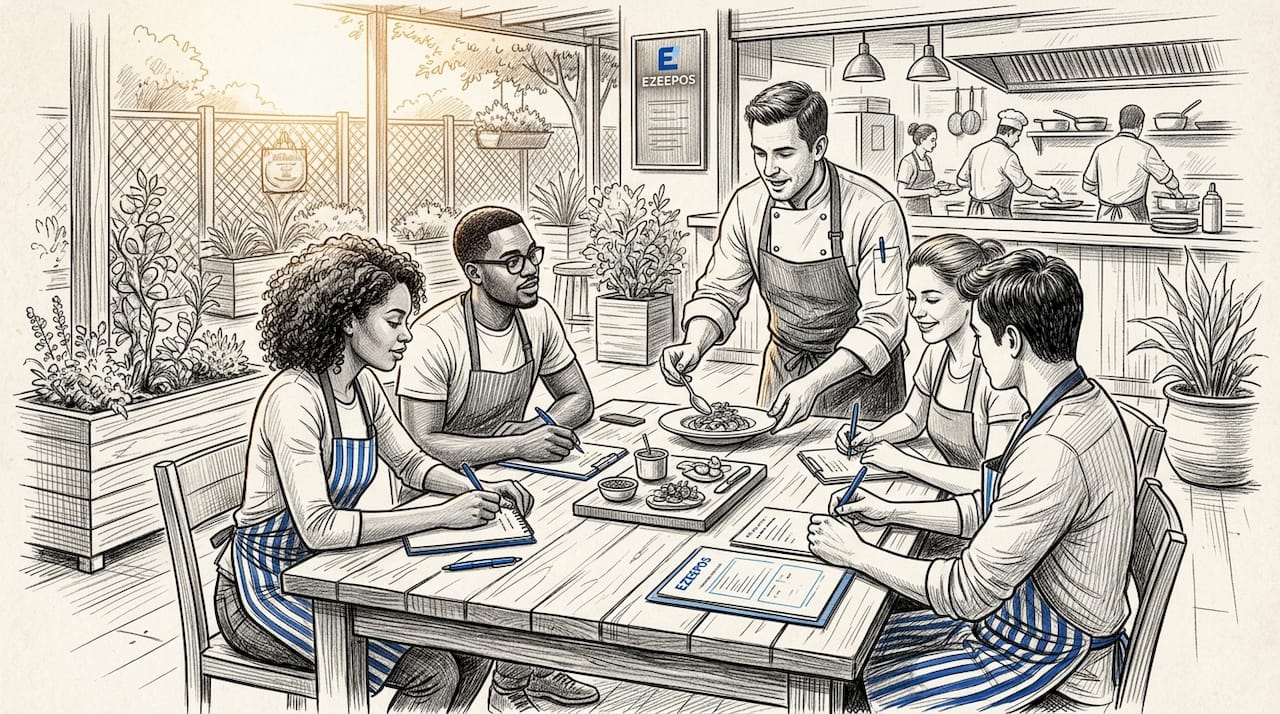
The trainee takes the lead on tables or counter interactions with a mentor nearby. Day 5 should feel supported. Day 6 introduces controlled pressure, with the trainee handling a real service period with minimal intervention. Post-shift debriefs after each session identify gaps and reinforce what went well.
Day 7: assessment and sign-off
Run a role-play scenario covering a difficult customer interaction, an upsell opportunity, and a food safety question. Review the training checklist together. If the trainee meets the standard, sign them off. If not, schedule a targeted catch-up session rather than extending the full programme.
Pro Tip: Build the Day 7 assessment around real situations from your venue, not generic scripts. A trainee who can handle your busiest Saturday scenario is genuinely ready.
| Day | Focus | Key activity |
|---|---|---|
| 1 | Orientation | Venue tour, team intro, systems setup |
| 2–4 | Skills building | Menu, food safety, POS, shadowing |
| 5–6 | Live practice | Supervised service, post-shift debrief |
| 7 | Assessment | Role-play, checklist review, sign-off |
What challenges arise in restaurant staff training?
Even well-designed training programmes run into predictable problems. Knowing them in advance lets you build in solutions from the start.
Information overload is the most common issue in training programmes for waitstaff. Covering too much in a single session leaves new hires unable to retain or apply what they have learned. The fix is simple: limit each session to two or three clear learning objectives.
Habit drift is subtler and more damaging long-term. Relying on veteran staff memory during training causes gradual erosion of service standards. A senior server who skips allergen checks because they “always know the regulars” will pass that shortcut on to every trainee they mentor. Standardised trainer scripts and daily checklists are the direct solution.
Inconsistent delivery happens when multiple trainers cover the same new hire without coordination. Each trainer has their own priorities and habits. Without a shared checklist and script, the new hire receives a fragmented picture of your standards.
- Schedule part-time staff training across shorter, more frequent sessions rather than compressing it into fewer long days.
- Collect feedback from new hires at the end of their first week. Ask what was unclear, what felt rushed, and what they wish they had known earlier.
- Review and update your training materials every quarter. Menus change, policies change, and your training documents should reflect that.
Pro Tip: Run a short trainer calibration session every three months. Bring your trainers together, walk through the checklist, and make sure everyone is delivering the same content the same way.
How does ongoing staff development extend beyond onboarding?
Restaurant staff development does not end at day seven. The sign-off is the beginning of a longer process, not the finish line.
Assign every new team member a mentor for their first 30 days post-certification. The mentor is not a supervisor. They are a peer who answers questions, flags issues, and provides informal feedback without the pressure of a formal review. This approach is particularly effective for reducing early turnover in fast-paced venues.
Ongoing development activities that produce measurable results include:
- Monthly refresher sessions covering one topic in depth, such as upselling techniques, allergen updates, or new menu items
- Quarterly feedback surveys asking staff what they find difficult and what support would help
- Career path conversations at the three-month and six-month mark, linking performance to progression opportunities
- Linking training outcomes to operational metrics such as average spend per cover, complaint rates, and table turn times
Staff who see a clear path forward stay longer. That connection between training, performance, and progression is one of the most underused tools in hospitality staff management.
Key takeaways
A structured, documented, and progressively paced staff training programme is the most reliable way to reduce turnover, raise service standards, and build a confident team.
| Point | Details |
|---|---|
| Structure prevents turnover | Restaurants lose 73% of new servers within three months without adequate training. |
| Spread training over 5–7 days | Front-loading information causes burnout; pacing aids retention and builds muscle memory. |
| Documentation beats verbal instruction | Trainer scripts and checklists prevent habit drift and ensure consistent delivery. |
| Assessment confirms readiness | Day 7 role-play and checklist sign-off confirm the trainee meets your actual service standards. |
| Development continues post-onboarding | Mentoring, refresher sessions, and career conversations reduce attrition after certification. |
What I have learned from watching training programmes succeed and fail
The most common mistake I see is treating the training process as a one-time event rather than a system. Managers put effort into the first week, then assume the job is done. Six weeks later, standards have slipped and they cannot work out why.
The second mistake is trusting experienced staff to train without any structure. Veterans are valuable, but their instincts are personal. What works for someone who has been on the floor for three years is not always what a new hire needs to hear on day two. Documentation removes that variable. It does not replace the trainer’s personality or judgement. It gives them a foundation to work from.
The third thing I have noticed is that the venues with the lowest turnover are not necessarily the ones with the most elaborate training programmes. They are the ones that are consistent. A simple, well-documented, seven-day process delivered the same way every time beats an impressive-looking programme that varies depending on who is running it that week.
If you take one thing from this: write it down. Every step, every standard, every expectation. The moment your training lives only in someone’s head, it is already degrading.
— John
How Ezeepos supports your restaurant’s training and operations
A well-trained team needs systems that match their skills. When staff learn to take orders, process payments, and manage tables, the tools they use should be intuitive from day one.
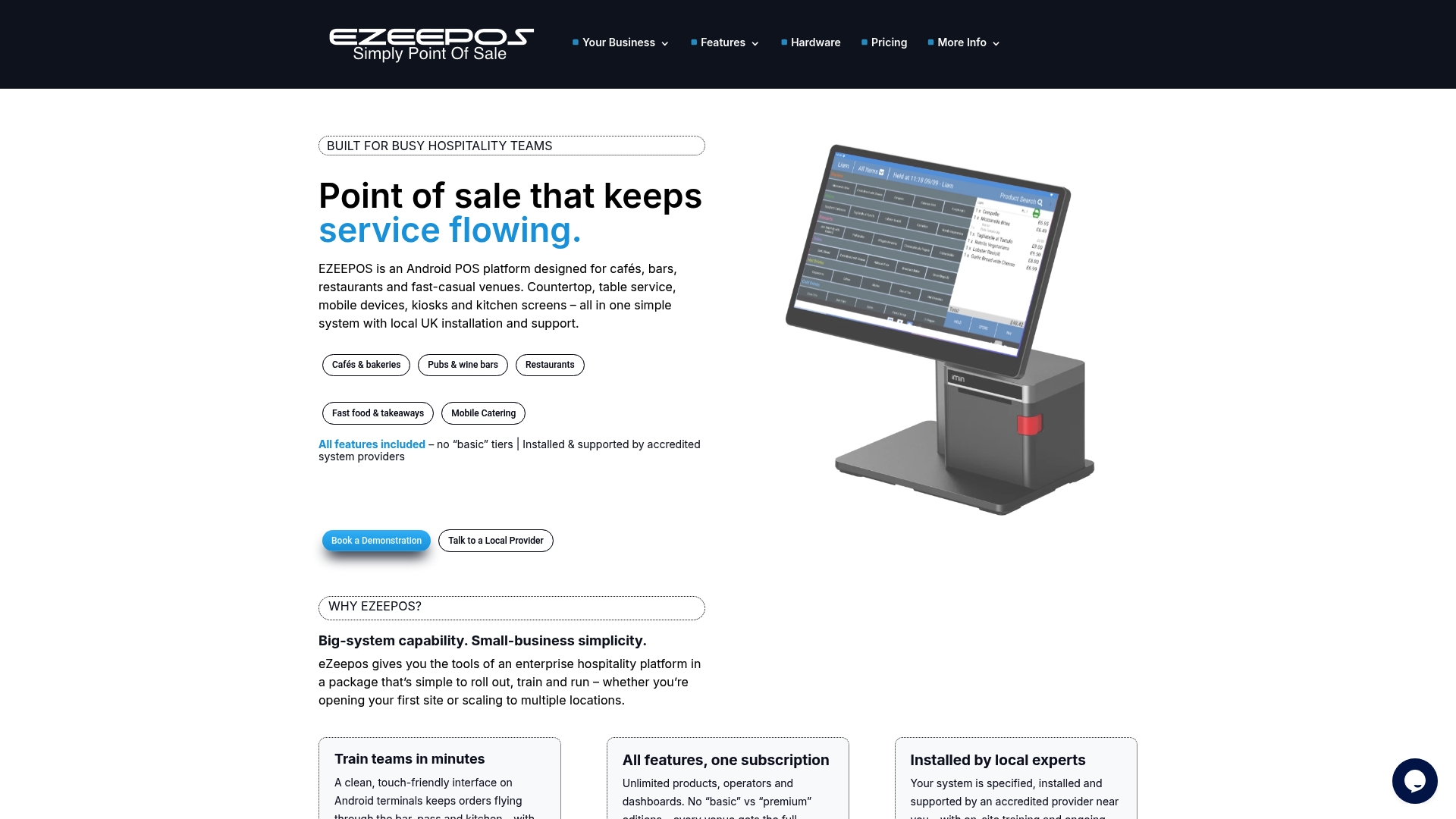
Ezeepos is an Android-based hospitality POS platform built for restaurants, cafés, bars, and fast-casual venues across the UK. Its interface is designed to be learned quickly, which means new hires spend less time on POS training and more time building service confidence. Features like kitchen order screens, table management, and cloud-based back-office reporting give your whole team a clear picture of what is happening at any moment. Ezeepos also offers local UK installation and ongoing human support, so when your team has questions, they get real answers. Find out more about how unified POS systems can support your venue’s day-to-day operations.
FAQ
How long should restaurant staff training take?
A structured restaurant employee onboarding programme runs 5–7 days, averaging 25–35 hours. This timeframe balances thorough skill-building with the practical need to get new staff on the floor.
What should a restaurant training checklist include?
A complete checklist covers orientation, menu knowledge, food safety, POS training, shadowing, supervised live service, and a final assessment. Every trainer should work from the same checklist to ensure consistent delivery.
Why do so many new restaurant staff leave within the first three months?
Inadequate training is the primary cause. Restaurants that invest properly in structured onboarding see significantly higher 90-day retention rates, with proper training investment saving thousands in recruitment costs per hire.
How do you prevent inconsistent training across different trainers?
Standardised trainer scripts and daily checklists prevent habit drift. When every trainer follows the same documented process, new hires receive the same standard regardless of who is running the session.
When should ongoing staff development begin after initial training?
Ongoing development starts immediately after the day seven sign-off. Assigning a peer mentor for the first 30 days post-certification, combined with monthly refresher sessions, maintains standards and supports long-term retention.
Recent Comments