

POS security in hospitality: your 2026 guide

POS security in hospitality is the practice of protecting payment processing systems and associated guest data from cyber threats, fraud, and theft through a combination of technical controls and operational procedures. The industry term for this discipline is payment security, and it sits at the intersection of PCI DSS 4.0 compliance, encryption, tokenisation, and staff behaviour. For venue operators running cafés, bars, hotels, or restaurants, the stakes are high. A single breach can expose thousands of card records, trigger regulatory fines, and permanently damage guest trust.
What are the main technical controls for POS security in hospitality?
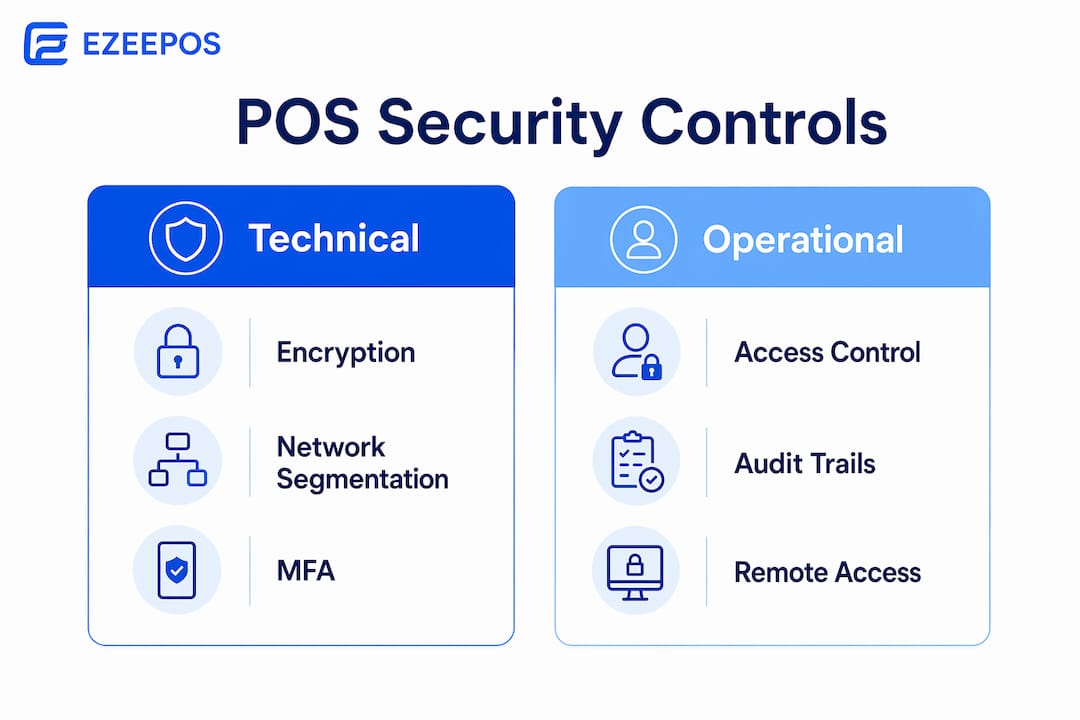
Strong hospitality payment security starts with the right technical architecture. No single measure is sufficient on its own. POS security architecture requires encryption, tokenisation, network segmentation, MFA, and monitoring working together to resist active attacks.
Encryption and tokenisation
Encryption protects cardholder data the moment it is captured at the terminal and throughout transmission. Tokenisation goes a step further by replacing the actual card number with a surrogate value, so your venue systems never store sensitive data at all. Point-to-point encryption (P2PE) is particularly valuable in multi-lane environments such as hotel front desks or busy bar counters. P2PE reduces compliance scope and limits the damage if any part of the network is compromised.
Network segmentation and access controls
Network segmentation isolates POS terminals from general-purpose networks, including guest Wi-Fi. This limits the paths an attacker can use to move from one compromised device to the rest of your infrastructure. Role-based access controls and unique user logins remove shared credentials entirely. Every team member should have their own login tied to their role, so every transaction is traceable to a specific individual.

Multi-factor authentication
Multi-factor authentication (MFA) is no longer optional. PCI DSS 4.0 mandates phishing-resistant MFA for all access to systems that handle cardholder data, banning SMS one-time passwords in favour of FIDO2/WebAuthn standards. In a typical hotel, between 15 and 30 personnel access sensitive card data daily. Every one of those access points requires MFA implementation.
Pro Tip: Deploy hardware security keys such as YubiKey for admin-level POS access. They satisfy FIDO2/WebAuthn requirements and are far harder to phish than any app-based code.
| Control | What it does | PCI DSS 4.0 requirement |
|---|---|---|
| Encryption (P2PE) | Protects data at point of capture | Requirement 4.2 |
| Tokenisation | Removes card data from venue systems | Supports SAQ A path |
| MFA (FIDO2/WebAuthn) | Blocks unauthorised system access | Requirement 8.4.2 |
| Network segmentation | Isolates POS from guest networks | Requirement 1.3 |
| Role-based access | Creates individual audit trails | Requirement 7.2 |
What POS system vulnerabilities do hospitality operators most often overlook?
The most damaging breaches in hospitality rarely exploit exotic zero-day flaws. They exploit predictable operational failures that operators have left unaddressed for years.
-
Shared logins and weak manager PINs. Shared logins are the industry’s most common POS security failure. When five staff members share one login, no audit trail exists. Fraud becomes almost impossible to attribute, and internal theft goes undetected.
-
Unmanaged remote access tools. Remote desktop tools left open with default credentials are a primary attack vector. Attackers scan for exposed remote access ports constantly. MFA and time-limited access sessions are the minimum acceptable controls.
-
Misconfigured developer and testing features. Critical vulnerabilities in 2025 and 2026 exposed internal test API tools and weak REST API authentication due to improper configuration. Exposures like CVE-2025-52024 remained undetected for over four years in some cases. That is four years of potential data exposure from a configuration mistake.
-
Back-office PCs on guest networks. Back-office PCs used for POS management are common ransomware entry points when they are not hardened and isolated. These machines must be treated like vaults: restricted internet access, full disk encryption, and no connection to guest Wi-Fi.
-
Irregular patching. Known vulnerabilities with published CVE identifiers are actively exploited. A patching routine that runs monthly at minimum closes the window of exposure before attackers can act.
Pro Tip: Audit your remote access tools quarterly. Disable any that are not actively in use, and require MFA plus a time-limited session window for every connection that remains.
How does PCI DSS 4.0 change POS security requirements for hospitality?
PCI DSS 4.0 represents the most significant update to payment security standards in over a decade. For hospitality operators, several requirements carry direct and immediate implications.
Requirement 8.4.2 mandates phishing-resistant MFA for all personnel accessing cardholder data environments. SMS one-time passwords no longer satisfy this requirement. Venues must implement FIDO2/WebAuthn-compliant authentication across every relevant access point.
Requirement 6.4.3 addresses client-side security on booking and payment pages. Third-party scripts such as analytics tools or live chat widgets can be exploited by attackers to perform Magecart-style attacks, silently harvesting card data as guests type. Content Security Policy (CSP) and Subresource Integrity (SRI) are now required controls to prevent this. CSP restricts which scripts can run on a page. SRI verifies that a loaded script has not been tampered with.
The most efficient compliance path for smaller venues is the SAQ A route. Avoiding electronic storage of cardholder data through tokenisation and iframe-hosted payment checkouts keeps venues out of higher-scrutiny audit scopes. Transition to SAQ A compliance typically takes 90 days and costs £1,500–£3,000 annually to maintain. That is a manageable figure compared to the cost of a breach investigation.
Virtual credit card (VCC) data, commonly used in OTA bookings, requires its own handling controls. VCC numbers must never be stored in plain text on POS or property management systems. Tokenise or process and discard immediately.
PCI compliance is a shifting baseline, not a one-time certification. Venues that treat it as an annual checkbox exercise consistently fall behind the threat curve.
What practical steps build and maintain strong POS security?
Operators who want to secure hospitality transactions need a clear, repeatable set of actions. The following steps address the most common failure points directly.
- Eliminate shared logins immediately. Create unique user accounts for every team member. Tie each account to their employment role and deactivate it the moment they leave. Unique user IDs improve audit trails and reduce abuse risk significantly.
- Enforce separate manager credentials with MFA. Manager-level functions such as voids, refunds, and discounts must require a distinct login and a second authentication factor. Never allow a generic manager PIN shared across shifts.
- Harden back-office PCs. Restrict internet access to approved update and management sites only. Enable full disk encryption. Apply a screen lock after two minutes of inactivity. Keep these machines off every guest-facing network. A compromised back-office PC can spread ransomware to every POS terminal on the same network segment.
- Segment POS devices on a dedicated network. Use firewall rules to prevent POS terminals from communicating with anything outside their required payment processing endpoints. Guest Wi-Fi, staff personal devices, and POS systems must never share a network segment.
- Choose POS software with built-in security features. Look for systems that offer integrated tokenisation, encrypted payment processing, and secure payment integration out of the box. Bolting security onto an insecure system is always more expensive and less reliable.
- Maintain a device inventory and patch on a schedule. Every POS terminal, tablet, and back-office machine should appear in a central inventory with its software version and last patch date. Review and update monthly.
- Build an incident response plan. Define who to call, what to isolate, and how to notify guests if a breach occurs. Venues without a plan lose critical hours during an active incident. Understanding why data security matters in POS systems is the first step toward building that plan.
Key takeaways
Effective POS security in hospitality requires layered technical controls, strict access management, and continuous PCI DSS 4.0 compliance to protect guest payment data.
| Point | Details |
|---|---|
| Eliminate shared logins | Assign unique user accounts to every team member and deactivate them on departure. |
| Enforce phishing-resistant MFA | Use FIDO2/WebAuthn for all cardholder data system access, as required by PCI DSS 4.0. |
| Harden back-office PCs | Isolate management machines from guest networks and enable full disk encryption. |
| Tokenise and avoid data storage | Use tokenisation and iframe-hosted payments to achieve SAQ A compliance and reduce audit scope. |
| Patch and monitor continuously | Maintain a device inventory and apply patches monthly to close known vulnerability windows. |
What I have learned from watching venues get this wrong
The pattern I see most often is not sophisticated. A venue invests in decent POS hardware, sets up a shared manager PIN on day one, and never revisits it. Two years later, a member of staff leaves under difficult circumstances, and nobody changes the credentials. The audit trail is useless because every transaction looks identical. That is not a technology failure. It is a process failure that technology could have prevented.
Back-office PCs are the other recurring problem. Operators treat them as general-purpose computers, browsing supplier websites, checking personal email, and occasionally downloading files. The moment one of those machines is compromised, every POS terminal on the same network is at risk. I have seen venues lose entire trading days to ransomware that entered through exactly this route.
My honest view on PCI DSS 4.0 is that the new requirements around MFA and client-side script controls are genuinely protective, not just bureaucratic. The FIDO2/WebAuthn mandate in particular closes a real attack vector that SMS codes left wide open. Venues that treat compliance as a continuous improvement process, rather than an annual form-filling exercise, are the ones that avoid the expensive incidents.
The practical advice I give every operator is this: start with access controls, because they cost almost nothing to fix and deliver the fastest reduction in risk. Then work outward to network architecture, patching, and monitoring. A unified POS platform that handles tokenisation, role-based access, and secure payment integration in one system makes every subsequent step easier.
— John
Ezeepos: POS security built for UK hospitality venues
Ezeepos is a POS platform built specifically for UK hospitality venues, from independent cafés to multi-site restaurant groups. Its Android-based system integrates payment processing, role-based staff management, and cloud-based back-office reporting in a single platform, removing the need to patch together separate tools that create security gaps.
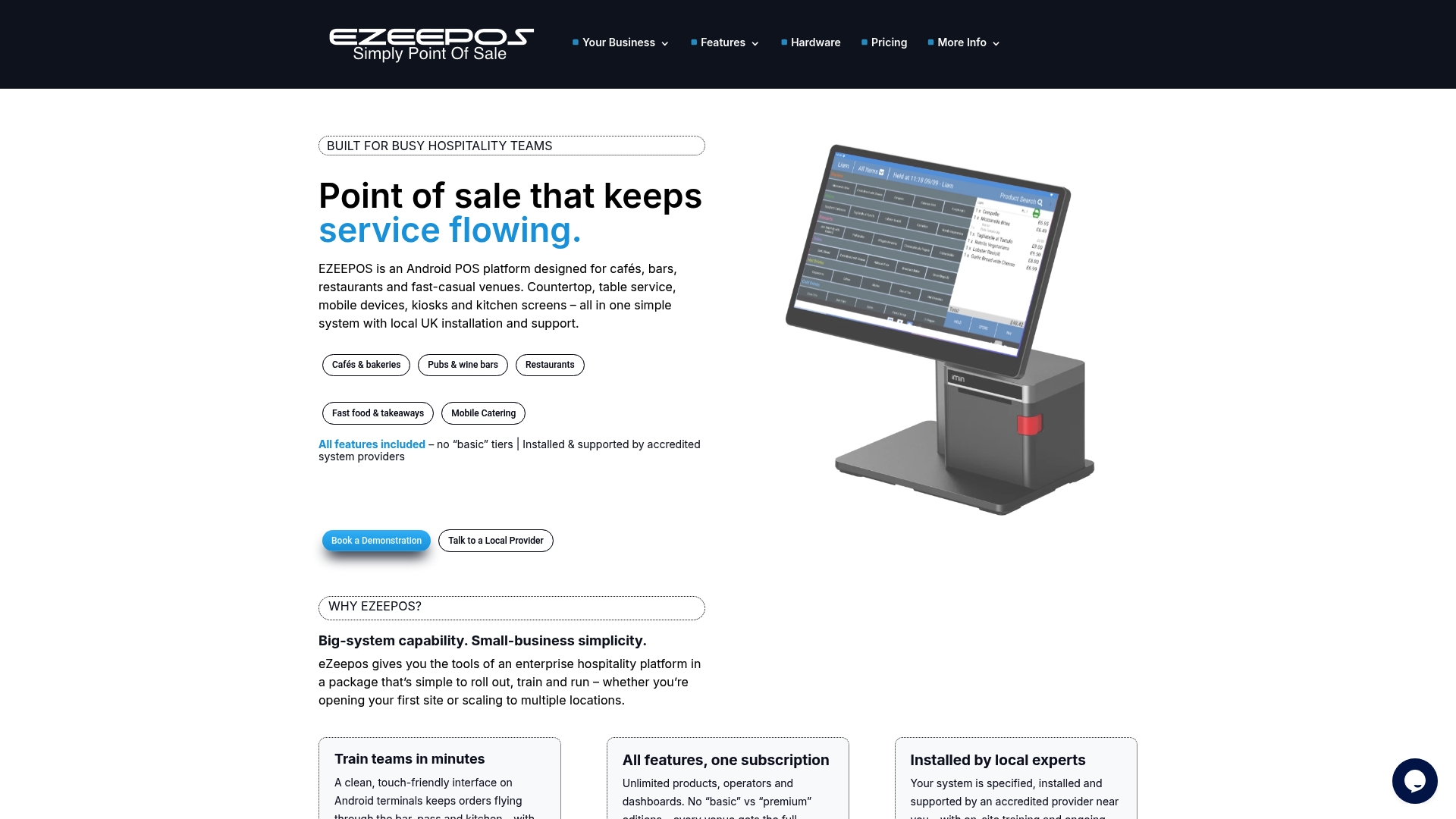
Ezeepos supports integration with payment providers that offer tokenisation and encrypted processing, helping venues work towards SAQ A compliance without rebuilding their entire setup. Local UK installation and ongoing support from accredited providers mean you are not managing security configuration alone. Visit Ezeepos to see how the platform supports secure, compliant hospitality operations, or explore how a unified POS platform simplifies both security and day-to-day management.
FAQ
What is POS security in hospitality?
POS security in hospitality is the set of technical and operational controls that protect payment processing systems and guest card data from theft, fraud, and cyberattacks. It includes encryption, tokenisation, MFA, network segmentation, and PCI DSS compliance.
What does PCI DSS 4.0 require for hospitality POS systems?
PCI DSS 4.0 requires phishing-resistant MFA using FIDO2/WebAuthn for all access to cardholder data systems, bans SMS one-time passwords, and mandates client-side script controls such as CSP and SRI on booking and payment pages.
How do shared logins create a security risk in hospitality?
Shared logins destroy the audit trail, making it impossible to attribute transactions or identify fraud to a specific individual. Assigning unique user IDs to every team member is the fastest and most impactful single improvement a venue can make.
What is the SAQ A compliance path and who qualifies?
SAQ A is a simplified PCI DSS audit path available to venues that do not store cardholder data electronically, using tokenisation and iframe-hosted payment checkouts instead. Transitioning to SAQ A typically takes 90 days and costs £1,500–£3,000 annually to maintain.
Why are back-office PCs a major POS security risk?
Back-office PCs used for POS management are common ransomware entry points when connected to guest networks or used for general internet browsing. A compromised back-office machine can spread malware to every POS terminal on the same network segment.
Recent Comments