
Mobile payments security explained for hospitality
Mobile payments security is defined as a multi-layered framework combining end-to-end encryption, tokenisation, and multi-factor authentication to protect card data, user identity, and transaction integrity at every stage of a payment. For hospitality businesses, where high transaction volumes and staff turnover create real exposure, understanding this framework is not optional. Platforms like Apple Pay and Google Pay are built on these principles, and the venues that understand how the layers work are the ones best placed to protect their customers and their reputation.
What is defining mobile payments security in practice?
Mobile payments security, known in the industry as mobile transaction protection, is the combination of technologies and policies that stop payment data being intercepted, stolen, or misused. The goal is not to make fraud impossible. The goal is to make fraud too difficult and too low in value to be worth attempting. That distinction matters enormously for hospitality managers, because it shifts the focus from perfection to continuous, layered defence.
Three technologies form the core of any secure mobile payment system. Tokenisation replaces a customer’s real card number with a mathematically useless token that means nothing to a merchant or an attacker. Encryption keeps all data unreadable as it travels from the customer’s device to the payment processor. Multi-factor authentication, whether a fingerprint, Face ID, or a PIN, confirms the person initiating the transaction is who they claim to be.
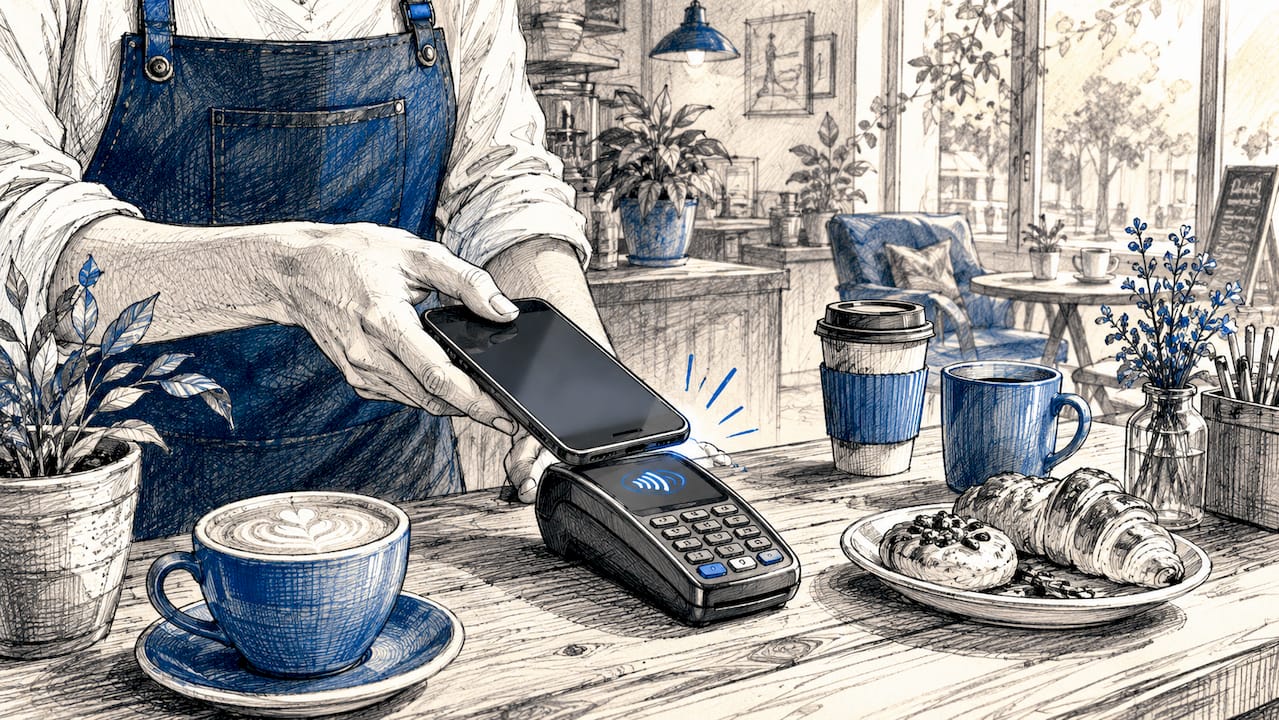
Apple Pay and Google Pay both apply these three layers by default. A customer paying at your bar with their iPhone never transmits their actual card number to your till. That single fact removes one of the most common breach scenarios entirely.
What are the core components of mobile payment security?
The technical layers behind mobile transaction protection work together rather than independently. Understanding each one helps you ask the right questions when choosing payment providers or POS hardware.
- End-to-end encryption converts payment data into ciphertext the moment a customer taps their device. Only the payment processor holds the key to decrypt it. No one in between, including your staff or your network, can read the data.
- Tokenisation means that even if an attacker intercepts a transaction, they receive a token with no reusable value. The real card number never leaves the card network’s secure environment.
- Biometric authentication in mobile wallets requires a fingerprint or facial scan before every transaction. This is a stronger control than a signature or a contactless tap with no verification at all.
- Hardware-backed security is the layer most managers overlook. Device-bound cryptographic keys stored in secure enclaves or hardware keystores protect transaction signing even if the device’s operating system is compromised. Software-only protections fail the moment the OS is breached. Hardware keystores do not.
Pro Tip: Never rely on a single security layer. If tokenisation is your only control and a staff member is socially engineered into sharing credentials, the entire system is exposed. Layer encryption, tokenisation, biometrics, and device policy together.
The combination of these components is what makes mobile POS systems in hospitality genuinely more secure than older card-processing methods, provided they are configured and maintained correctly.
Mobile payments vs traditional cards: which is safer for venues?
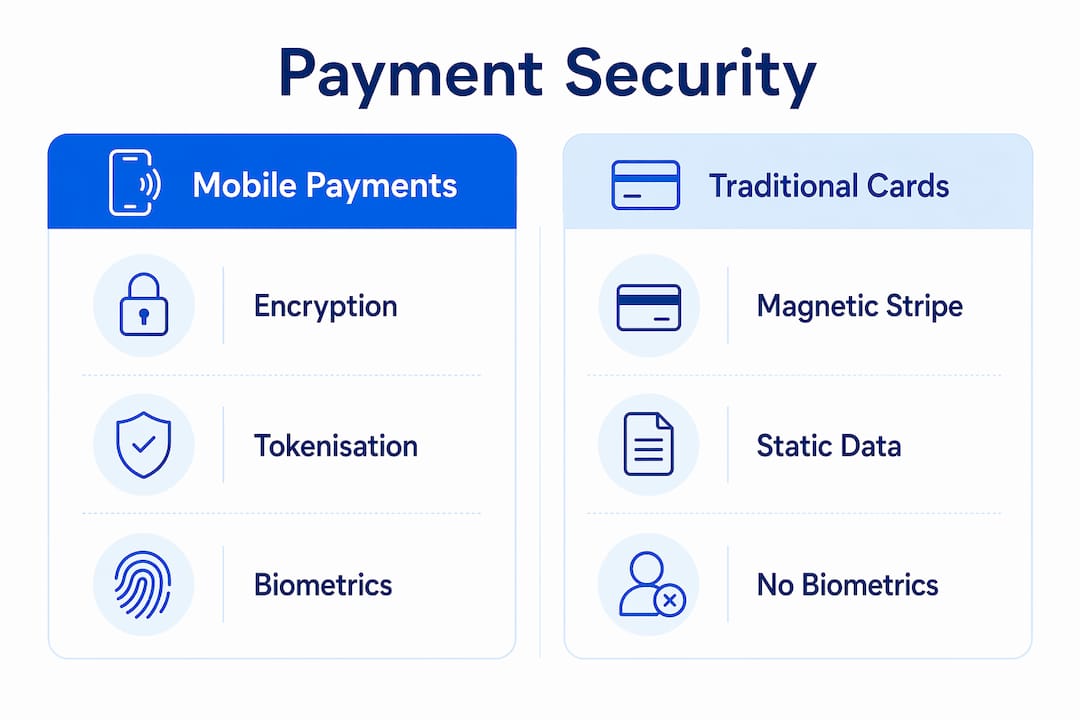
The comparison between mobile wallets and physical card payments is not close. Mobile wallets mandate biometric authentication for every transaction and never transmit real card numbers to merchants. Physical contactless cards allow small unauthenticated payments and do expose card data during the transaction process.
| Security Feature | Mobile Payments (Apple Pay / Google Pay) | Traditional Contactless Card |
|---|---|---|
| Real card number transmitted | Never | Yes, in some implementations |
| Authentication required | Biometric or PIN every time | None for low-value taps |
| Fraud risk if device lost | Low (biometric lock prevents use) | High (card can be tapped immediately) |
| Tokenisation applied | Yes, by default | Rarely, depends on issuer |
| Merchant data exposure | Minimal | Higher |
Magnetic stripe cards carry the highest risk of all. Stripe data can be cloned with inexpensive hardware, and cloned cards are used in card-present fraud. Mobile wallets eliminate this attack vector entirely because there is no stripe data to steal.
For a busy restaurant or bar, the practical implication is clear. Encouraging customers to pay via mobile wallet reduces your venue’s exposure to card-present fraud without adding any friction to the payment experience. Many customers already prefer it.
What threats and vulnerabilities should hospitality businesses know about?
Technical safeguards are only as strong as the humans operating around them. Social engineering, including phishing and smishing, remains the most powerful threat vector in mobile payment security. Attackers do not need to break encryption if they can trick a staff member into handing over their credentials directly.
The threats hospitality managers face most often fall into three categories.
- Social engineering attacks: Fake login pages, fraudulent one-time passcode requests, and smishing messages targeting staff phones. A convincing text message claiming to be from your payment provider can bypass every technical control you have in place.
- Mobile skimming: Malicious overlays and compromised apps target the checkout process, capturing card data before encryption is applied. This is particularly relevant if staff use personal devices for any part of the payment workflow.
- Compromised operating systems: A device running an outdated OS or carrying sideloaded apps is a vulnerability waiting to be exploited. Personal devices or sideloaded apps on POS tablets create malware entry points that undermine every other security measure you have invested in.
Staff training is not a nice-to-have. It is the control that closes the gap between your technical defences and the human behaviour that attackers target. A team that can recognise a fake OTP prompt or a suspicious login request is worth more than any single piece of security software.
Pro Tip: Segment your network so that payment processing runs on a separate connection from your guest Wi-Fi. Isolating payment traffic shrinks the blast radius of any network-level attack significantly.
What are the best practices for securing mobile payments in hospitality?
Compliance and good practice are not the same thing, but they overlap considerably. Hospitality businesses processing card payments must meet PCI DSS and Strong Customer Authentication requirements. SCA, introduced under the EU’s PSD2 directive and adopted in the UK, requires that authentication codes are cryptographically bound to the specific transaction amount and payee. That binding prevents man-in-the-middle attacks from altering payment details after authorisation.
Here is a practical checklist for hospitality venue managers.
- Achieve and maintain PCI DSS compliance. This is a legal and reputational baseline, not a ceiling. Work with your payment provider to confirm your scope and complete the relevant self-assessment questionnaire.
- Use platform security tools. Android SafetyNet and Apple’s Secure Enclave provide hardware-level assurance that your payment app is running in an uncompromised environment. Confirm your POS provider uses these tools.
- Isolate your payment network. Run payment processing on a dedicated network segment, completely separate from guest Wi-Fi and staff personal device access.
- Deploy approved, locked-down POS hardware only. Policies enforcing exclusive use of approved devices reduce malware risk and prevent unauthorised access. No personal phones, no sideloaded apps.
- Train staff regularly. Cover phishing recognition, device hygiene, and the correct response to suspicious payment requests. Repeat this training at least twice a year.
Compliance builds customer trust as much as it satisfies regulators. A guest who knows your venue takes data protection seriously is more likely to return. You can explore the range of contactless payment options available to UK hospitality venues to understand which methods align best with these standards.
How do you implement and maintain secure mobile payment systems?
Choosing the right provider is the first decision, and it carries the most weight. Your payment app provider should follow strict security protocols, hold PCI DSS certification, and be able to demonstrate how they apply tokenisation and encryption within their platform.
- Update devices and software consistently. Unpatched vulnerabilities are the most common entry point for attackers. Set automatic updates on all POS devices and review your update policy quarterly.
- Enforce multi-factor authentication for staff access. Every team member accessing the back office or payment dashboard should authenticate with at least two factors. A password alone is not sufficient.
- Monitor transactions in real time. Set up alerts for unusual transaction patterns, such as multiple failed attempts or high-value transactions outside normal hours. Fast detection limits the damage of any breach.
- Build an incident response plan. Know exactly who to call, what to isolate, and what to communicate to customers if a breach occurs. A plan written in advance is executed far faster than one improvised under pressure.
For venues looking to bring payment security into a unified system, a step-by-step mobile payment setup guide can help managers move from policy to practice without gaps.
Pro Tip: Security culture compounds. Small, consistent improvements, such as a monthly five-minute briefing on a new threat type, lower your risk profile more reliably than a single annual training day.
The most effective mobile payment security combines strong encryption, tokenisation, multi-factor authentication, and staff training with continuous monitoring. No single element is sufficient on its own.
Key takeaways
Effective mobile payment security requires layered technical controls, strict device policies, and ongoing staff education working together as a single system.
| Point | Details |
|---|---|
| Layered security is non-negotiable | Encryption, tokenisation, and biometrics must work together; no single control is sufficient. |
| Mobile wallets outperform physical cards | Apple Pay and Google Pay never expose real card numbers to merchants, cutting breach risk significantly. |
| Social engineering is the biggest threat | Staff training on phishing and smishing closes the gap that technology alone cannot cover. |
| PCI DSS and SCA are the compliance baseline | Hospitality venues must meet both standards and use platform tools like Android SafetyNet to verify app integrity. |
| Device hygiene protects the whole system | Approved, locked-down POS devices with no personal or sideloaded apps prevent malware entry points. |
The part most venues get wrong
I have spoken with a lot of hospitality managers who believe their payment provider handles security so they do not need to think about it. That assumption is the most dangerous one in this space. Your provider handles the cryptographic layer. You are responsible for everything around it: the devices your staff use, the network your tills sit on, the training your team receives, and the policies you enforce.
The threat I see underestimated most consistently is social engineering. Managers invest in hardware and software, then leave a staff member with no training to handle a convincing phone call from someone claiming to be their bank. That call costs more than any hardware upgrade. The dynamic linking requirement in Strong Customer Authentication is a genuinely powerful control, but it only works if the human at the end of the chain does not hand over their credentials voluntarily.
My honest view is that the venues winning on payment security in 2026 are not the ones with the most sophisticated technology. They are the ones where the manager treats security as an operational habit rather than a project. Monthly briefings, quarterly device audits, and a clear incident response plan cost very little and deliver disproportionate protection. Start there before you invest in anything else.
— John
How Ezeepos supports secure payments for UK hospitality venues
Ezeepos builds its POS platform specifically for the demands of UK hospitality, where transaction volume is high and the cost of a security failure is immediate and visible. The system integrates with approved payment providers, supports secure card integration directly within the platform, and runs on locked-down Android hardware designed to meet the device hygiene standards described in this article.
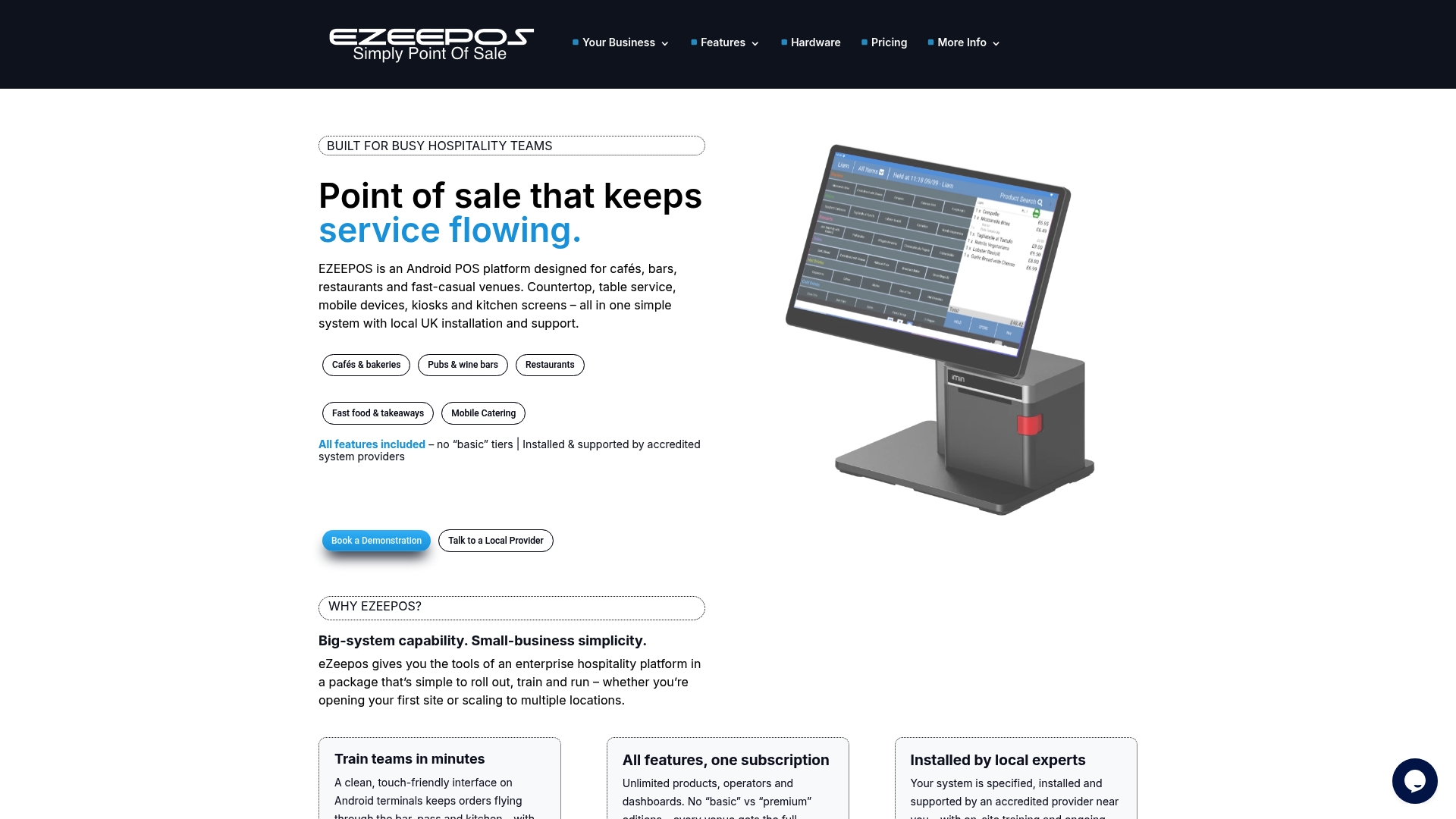
Cloud-based back-office access, staff management controls, and real-time reporting give venue managers the visibility they need to monitor transactions and respond quickly to anything unusual. If you are reviewing your payment security setup or considering a POS upgrade, the Ezeepos platform is built to support both compliance and operational confidence from day one.
FAQ
What does mobile payments security actually mean?
Mobile payments security is a framework of encryption, tokenisation, and authentication controls that protect customer payment data and transaction integrity. The industry term covers both the technical tools and the operational policies that keep payment systems safe.
Are mobile wallets safer than contactless cards?
Mobile wallets are significantly safer than physical contactless cards. They require biometric authentication for every transaction and never transmit real card numbers to merchants, removing two of the most common fraud vectors.
What is PCI DSS and does it apply to my venue?
PCI DSS is the Payment Card Industry Data Security Standard, and it applies to any business that processes, stores, or transmits card payment data. Hospitality venues accepting card or mobile payments must comply with the relevant tier of PCI DSS requirements.
How does tokenisation protect my customers?
Tokenisation replaces a customer’s real card number with a unique token that has no value outside the specific transaction. Even if an attacker intercepts the token, it cannot be used to make further payments or access the customer’s account.
What is the single biggest security risk for hospitality venues?
Social engineering, particularly phishing and smishing attacks targeting staff, is the most persistent and damaging threat. Technical controls cannot compensate for a team member who has not been trained to recognise and refuse fraudulent credential requests.
Recent Comments