

The role of POS in compliance for hospitality venues

A point of sale system is defined, in compliance terms, as the primary transaction-capture layer responsible for recording, securing, and reporting every financial event at the moment it occurs. The role of POS in compliance has shifted from passive receipt printer to active regulatory instrument. Modern hospitality venues face converging obligations: PCI DSS v4.0 payment security mandates, fiscal reporting laws, and EU accessibility requirements all converge at the till. Getting this wrong does not just mean a failed audit. It means fines, licence risk, and loss of consumer trust. This article explains exactly what your POS must do, why it matters, and how to act on it.
What compliance standards must a hospitality POS system meet?
POS compliance standards are not a single framework. They are a layered set of obligations that change by jurisdiction, payment method, and venue type.
Payment security: PCI DSS v4.0
PCI DSS v4.0 introduces expanded controls for any environment that touches cardholder data. These include multi-factor authentication, script security monitoring, and mandatory penetration testing. For a busy bar or restaurant, this means your POS must actively protect card data at every swipe, tap, and dip. A system that was compliant under PCI DSS v3.2.1 may now fall short without upgrades. Understanding POS data security is no longer optional for UK hospitality operators.
Fiscal reporting obligations
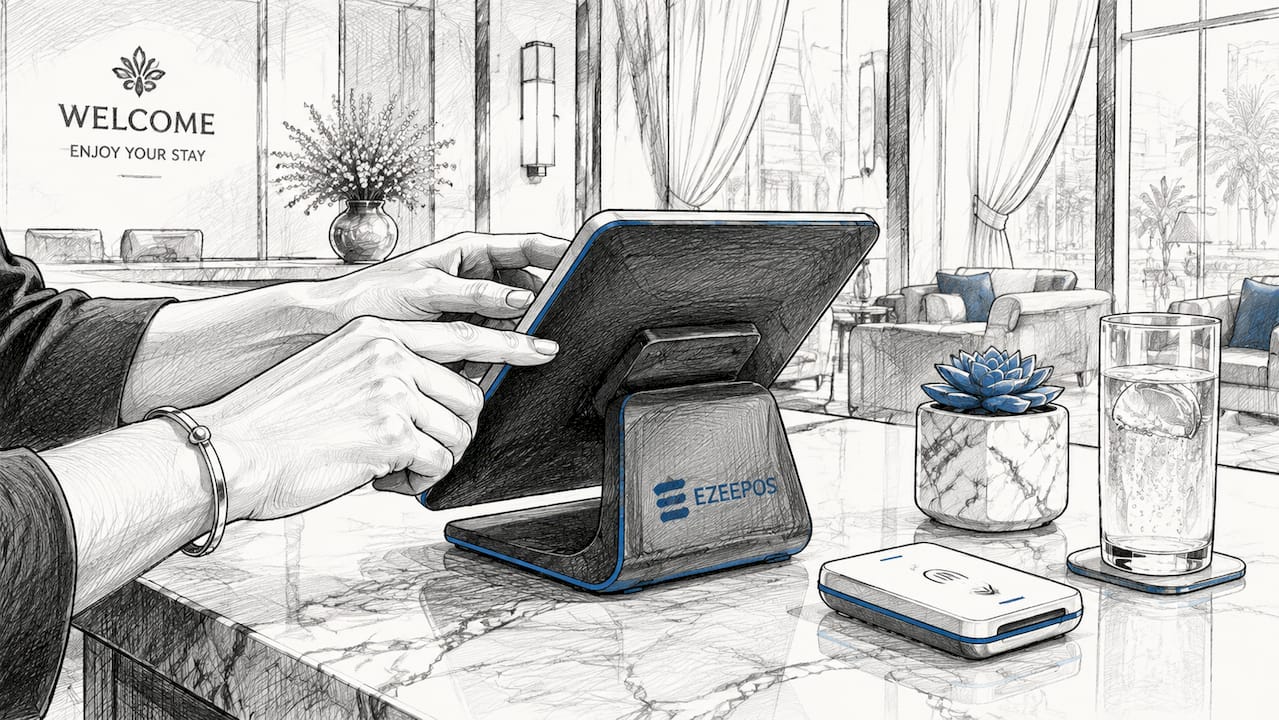
Germany’s example is instructive for any operator with European venues. Since january 2025, Germany’s Cash Register Security Ordinance requires all electronic cash register systems with technical security equipment to be reported to tax authorities. Existing systems had to be notified by july 2025, with new systems registered within one month of installation. This is tamper-evident technology embedded at the register level, not a back-office spreadsheet. The UK’s own Making Tax Digital programme follows a similar logic: real-time, structured data at source.
EU accessibility and identity requirements
EU regulations now require POS systems to execute compliance at the transaction moment. This includes accessible user interfaces for customers with disabilities, product-level information capture, and digital identity verification at checkout. Retail checkout has become a compliance layer in its own right.
Pro Tip: Build a compliance calendar specific to your jurisdiction. List every registration deadline, reporting cycle, and certification renewal date. Treat it the same way you treat your food hygiene renewal.
How does a POS system support audit readiness?
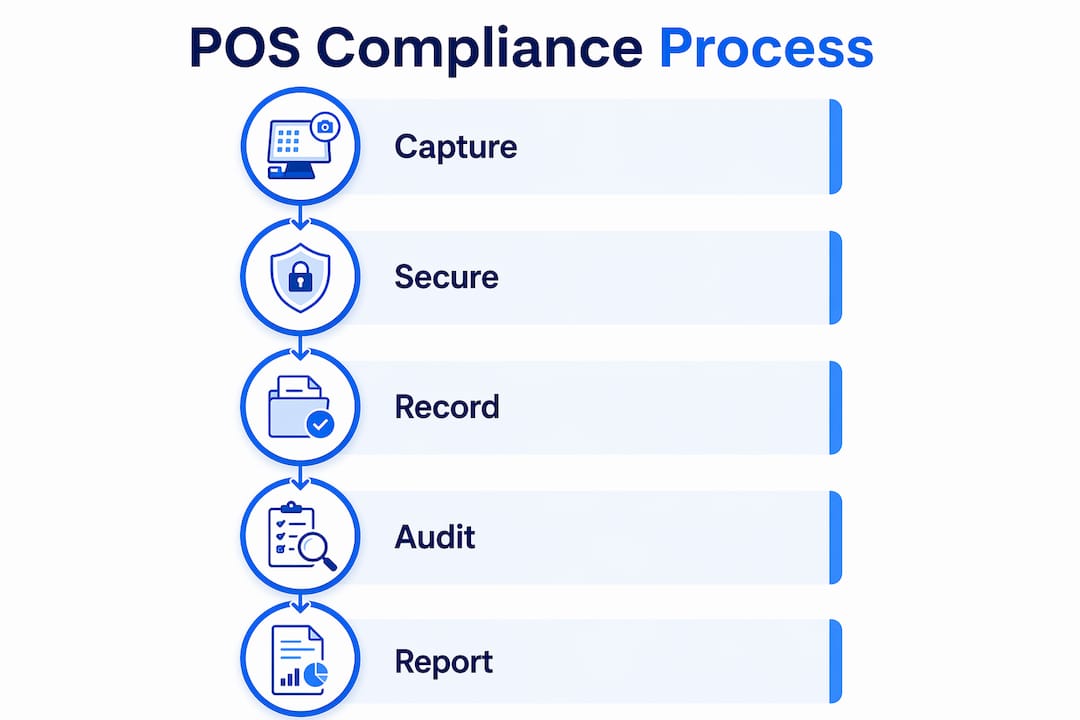
Audit readiness is the practical outcome of good POS compliance. Structured, time-stamped POS transaction data simplifies audits and reduces the scope of investigations by clarifying both financial and inventory records. That clarity is what separates a smooth HMRC review from a prolonged and costly one.
Here is how a well-configured POS creates an audit-ready environment:
- Time-stamp every event. Every sale, refund, discount, and void must carry a precise timestamp. This creates a chronological record that auditors can follow without ambiguity.
- Attribute actions to users. Each transaction event should be linked to a staff member’s login. This prevents disputes about who processed a refund or applied a discount.
- Record voids and discounts as discrete events. Systems must record voids and refunds as separate, time-stamped entries with user IDs. A deleted sale that leaves no trace is an audit red flag.
- Automate tax calculations. Manual VAT calculations introduce errors. A POS that calculates and records VAT per line item removes a significant source of discrepancy.
- Integrate inventory reporting. Stock movements tied to sales data give auditors a cross-reference point. Unexplained inventory shrinkage becomes visible and explainable. The role of POS in inventory control is directly linked to audit confidence.
The table below shows how each POS data type maps to a specific compliance function:
| POS Data Type | Compliance Function |
|---|---|
| Time-stamped sale records | Proves transaction occurred at a specific moment |
| User-attributed actions | Establishes accountability for every change |
| Void and refund logs | Prevents undocumented alterations to financial records |
| VAT per line item | Supports accurate tax reporting and HMRC review |
| Inventory movement data | Cross-references sales against stock for audit integrity |
Pro Tip: Run a monthly internal audit using your POS reports before any external review. If your own team cannot reconcile the data cleanly, an auditor will not be able to either.
Should compliance logic be separate from core POS software?
The answer is yes, and the industry is moving firmly in that direction. Compliance delivered through specialised modules allows POS vendors to maintain retail innovation velocity while managing rapidly changing regulations. When compliance logic lives inside the core POS codebase, every regulatory change requires a full software release cycle. That is slow, expensive, and risky.
The Aptos ONE Country Box approach illustrates this well. Aptos separates fiscal compliance into a dedicated module with its own testing, certification, and release schedule. The retail functions of the POS update independently. For a hospitality group operating across the UK and EU, this matters enormously. A new fiscal rule in Germany does not force a system-wide update that disrupts service in Manchester.
The practical benefits of this separation include:
- Faster regulatory response. Compliance modules can be updated and certified without touching the core POS.
- Cleaner testing. Dedicated compliance layers are tested against regulatory requirements in isolation, reducing the risk of a retail update breaking a fiscal function.
- International scalability. Isolating compliance logic to external modules makes it far easier to adapt to multiple jurisdictions without rebuilding the entire system.
- Reduced audit exposure. When compliance functions are clearly defined and separately maintained, auditors can review them without wading through unrelated retail code.
For hospitality venue managers, the practical question is straightforward: ask your POS provider how they handle regulatory updates. If the answer involves waiting for a major software release, that is a risk worth understanding before you sign a contract.
What steps can venues take to use POS for compliance?
Knowing that your POS should support compliance is one thing. Configuring it to actually do so is another. These five steps give you a concrete starting point.
- Select a POS with jurisdiction-specific fiscal features. Not every system supports Making Tax Digital, TSE reporting, or EU accessibility mandates out of the box. Verify this before purchase, not after installation.
- Implement PCI DSS controls at the hardware and software level. This means multi-factor authentication for staff logins, regular vulnerability scans, and ensuring your payment terminals are on the PCI-approved hardware list.
- Build and maintain a compliance calendar. Registration deadlines, reporting cycles, and certification renewals all have fixed dates. Fiscal compliance requires treating your POS as a compliance project with defined reporting calendars and mandatory registration processes.
- Train staff on data entry and audit importance. Regular staff training is a key practical action venues must adopt to maintain POS compliance and avoid audit risks. A cashier who does not understand why voids must be logged correctly is a compliance liability.
- Schedule regular system updates and audit log reviews. Software updates often contain compliance patches. Skipping them is not a time-saving measure. It is a regulatory risk. Review your audit logs monthly to catch anomalies before they become problems.
The compliance and efficiency benefits of a well-maintained POS compound over time. Venues that treat compliance as an ongoing process rather than a one-off setup consistently perform better in audits and inspections.
Key takeaways
A modern POS system is the compliance backbone of any hospitality venue, capturing real-time transaction data that satisfies payment security standards, fiscal reporting laws, and audit requirements simultaneously.
| Point | Details |
|---|---|
| POS as compliance hub | Every sale, refund, and void must be time-stamped and user-attributed at the moment it occurs. |
| PCI DSS v4.0 is mandatory | Multi-factor authentication and penetration testing now apply to all cardholder data environments. |
| Fiscal laws demand registration | Germany’s 2025 ordinance and UK’s Making Tax Digital both require structured, real-time POS reporting. |
| Separate compliance modules | Dedicated compliance layers update independently, reducing regulatory risk for multi-site operators. |
| Staff training closes the gap | Technology alone does not deliver compliance. Staff must understand why accurate data entry matters. |
Why the compliance conversation has changed entirely
I have spent years watching hospitality operators treat POS compliance as a box-ticking exercise. Buy the system, get it installed, assume it handles the regulatory side. That assumption is now genuinely dangerous.
What changed is the pace of regulation. PCI DSS v4.0, Making Tax Digital, EU checkout accessibility rules, Germany’s TSE mandates. These are not incremental tweaks. They represent a fundamental shift in what governments and payment networks expect from the point of sale. Compliance is no longer something you reconcile at month end. It happens at the transaction level, in real time, or it does not happen at all.
The most common mistake I see is operators choosing a POS purely on features and price, then discovering six months later that it cannot produce the structured reports their accountant or HMRC needs. The fix is always more expensive than getting it right at the start.
My honest advice: treat your POS selection as a compliance decision first and an operational decision second. Ask for a demonstration of the audit log. Ask how the vendor handles regulatory updates. Ask whether compliance functions are modular or baked into the core software. The answers will tell you more about long-term risk than any feature comparison sheet.
The venues that will handle the next wave of regulation well are the ones building compliance into their operational culture now. That means the right system, the right training, and the right habits at the till every single day.
— John
How Ezeepos helps hospitality venues stay compliant
Ezeepos builds POS systems specifically for UK hospitality venues, from cafés and bars to quick-service restaurants and mobile catering operations. Every Ezeepos system is designed with audit-ready reporting, secure payment handling, and structured transaction data built in from the start.
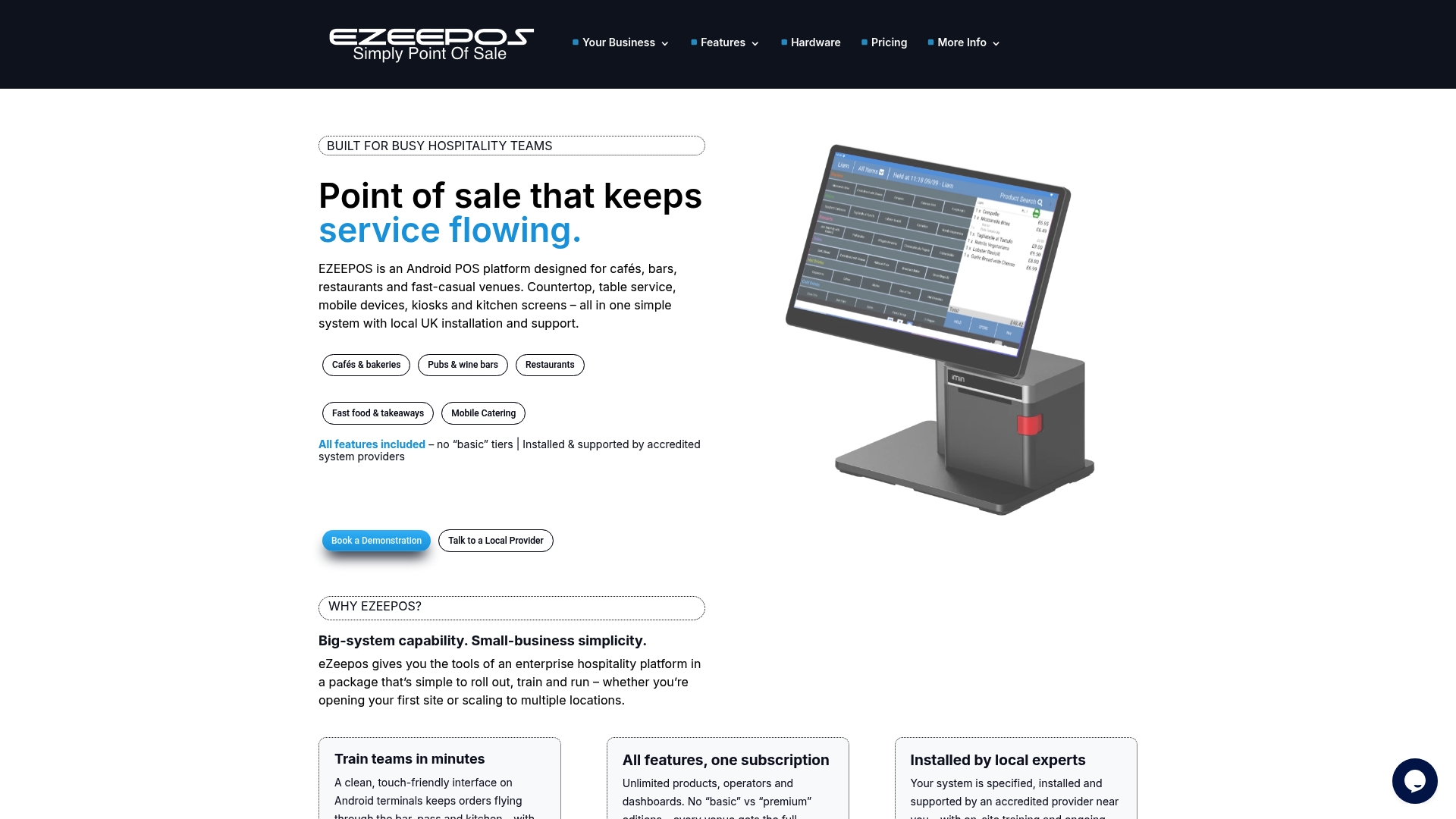
The platform integrates with payment providers that meet PCI DSS standards and supports the structured reporting that HMRC and external auditors expect. Local UK installation and ongoing human support mean you are not navigating compliance questions alone. If you run a café or hospitality venue and want a POS that works as hard on compliance as it does on service, explore Ezeepos café POS solutions and see how the right system protects your business from the ground up.
FAQ
What is the role of POS in compliance?
A POS system captures, records, and reports every transaction in real time, creating the audit trail and structured data that regulatory bodies require. It acts as the primary compliance layer for payment security, tax reporting, and operational integrity.
How does POS affect compliance in hospitality venues?
POS systems directly affect compliance by recording time-stamped sales, refunds, and voids with user attribution, which satisfies both HMRC audit requirements and PCI DSS payment security standards.
Can a POS system improve audit outcomes?
Yes. POS reporting with time-stamped logs reduces discrepancies and supports audit readiness by providing clear, consistent records that prevent post-hoc adjustments.
What is PCI DSS v4.0 and why does it matter for POS?
PCI DSS v4.0 is the current payment security standard requiring multi-factor authentication, script security, and penetration testing for any environment handling cardholder data. Non-compliance exposes venues to fines and card processing suspension.
How often should hospitality venues review their POS compliance settings?
Venues should review audit logs monthly, apply software updates as released, and conduct a full compliance review annually or whenever a new regulatory requirement comes into force in their jurisdiction.
Recent Comments