

Managing a busy café or restaurant in the United Kingdom means juggling everything from orders to inventory, often under tight time pressures. It matters because disconnected systems can lead to wasted ingredients and costly mistakes. This guide introduces integrated POS solutions that connect payment, stock, and staff functions, giving you real-time insights and simplifying team training so you can focus on delivering exceptional service.
Table of Contents
- What Is Integrated POS In Hospitality?
- Key Types And Integration Variations
- Core Functions Across Service Styles
- Impact On Team Training And Efficiency
- Inventory, Orders, And Real-Time Insights
- Risks, Costs, And Alternatives Compared
Key Takeaways
| Point | Details |
|---|---|
| Integrated POS Systems Enhance Efficiency | Modern integrated POS systems streamline operations by unifying order management, inventory tracking, and customer engagement tools. |
| Diverse Integration Types Offer Unique Benefits | Various integration strategies, such as CRM and accounting software, address specific operational needs and improve business intelligence. |
| Real-Time Insights Transform Inventory Management | Integrated POS systems provide dynamic inventory capabilities that reduce waste and enable proactive decision-making. |
| Investment in Training and Implementation Is Crucial | Choosing the right POS system involves evaluating costs, risks, and compatibility to ensure a smooth operational transition. |
What Is Integrated POS In Hospitality?
An integrated Point of Sale (POS) system represents a comprehensive technological solution designed to streamline multiple operational functions within hospitality venues. Unlike traditional standalone cash registers, these advanced systems connect various business processes into a unified digital platform, enabling seamless management across different operational domains.
Modern integrated POS systems offer a range of critical capabilities for UK hospitality businesses:
- Order management across multiple service channels
- Real-time inventory tracking
- Comprehensive financial reporting
- Detailed customer engagement tools
- Automated workflow processes
The core purpose of an integrated POS system is transforming fragmented business operations into a cohesive, efficient ecosystem. Modern hospitality technologies now enable restaurants and cafes to automate complex tasks, reduce human error, and generate actionable insights in real-time.
These systems go beyond simple transaction processing. They act as sophisticated business intelligence platforms, connecting payment processing, stock control, staff management, and customer relationship tracking into one intelligent network. By providing instantaneous data across different operational areas, integrated POS solutions help UK hospitality businesses make faster, more informed strategic decisions.
Pro tip: Prioritise POS systems that offer seamless integration across multiple business functions and provide user-friendly interfaces for staff training.
Key Types And Integration Variations
Hospitality businesses in the United Kingdom encounter multiple POS integration strategies, each designed to address specific operational needs and technological capabilities. Hospitality POS integration represents a sophisticated approach to connecting various digital platforms and business processes.
The primary types of POS integration variations include:
- Payment Channel Integration
- Connecting payment terminals
- Enabling contactless and digital transactions
- Customer Relationship Management (CRM) Integration
- Tracking customer preferences
- Managing loyalty programmes
- Inventory Management Integration
- Real-time stock tracking
- Automated reordering systems
- Accounting Software Integration
- Automated financial reporting
- Seamless transaction reconciliation
- Employee Management Integration
- Staff scheduling
- Performance tracking
- Payroll synchronisation
Each integration type serves a distinct purpose, transforming raw transactional data into strategic business intelligence. By connecting different systems, hospitality venues can create a more holistic, efficient operational environment that responds dynamically to business needs.
Successful POS integration requires careful planning, selecting compatible systems, and understanding specific business objectives. Venues must assess their unique requirements, technological infrastructure, and long-term growth strategies to implement the most effective integration approach.

Here is a comparison of main POS integration types and their business value:
| Integration Type | Key Benefit | Strategic Business Value |
|---|---|---|
| Payment Channel | Supports contactless payments | Faster transactions, higher spend |
| CRM Integration | Tracks preferences, loyalty | Boosts retention and repeat visits |
| Inventory Management | Real-time stock data | Reduces waste, prevents shortages |
| Accounting Integration | Automated reporting, reconciliation | Accurate finances, time saved |
| Employee Management | Scheduling, performance insight | Improves staff efficiency |
Pro tip: Conduct a comprehensive audit of your current systems before selecting a POS integration strategy to ensure maximum compatibility and minimal disruption.
Core Functions Across Service Styles
Modern Point of Sale (POS) systems are engineered to be highly adaptable, supporting diverse service styles prevalent in the UK hospitality sector. These sophisticated platforms deliver consistent core functionality across multiple operational contexts, ensuring seamless performance whether in a bustling city centre café or a sophisticated restaurant.
Core POS functions remain consistent across different service environments:
- Order Processing
- Table service digital ordering
- Counter-based transaction management
- Self-service kiosk transactions
- Payment Handling
- Multiple payment method support
- Split billing capabilities
- Digital and cash transaction processing
- Inventory Management
- Real-time stock tracking
- Automated ingredient consumption monitoring
- Low stock alerts and reporting
- Staff Management
- User role configuration
- Performance tracking
- Time and attendance monitoring
Each service style – whether table service, quick-service, or mobile catering – requires nuanced technological adaptation. POS systems must flexibly accommodate different operational rhythms while maintaining core transactional integrity and data consistency.
The technological sophistication of modern POS platforms allows hospitality businesses to standardise core functions while providing customisable interfaces tailored to specific service models. This approach ensures operational efficiency without sacrificing the unique character of individual venues.
Pro tip: Select a POS system with modular design that allows seamless configuration across different service styles without requiring complete system replacement.
Impact On Team Training And Efficiency
Integrated Point of Sale (POS) systems dramatically transform team training and operational efficiency in UK hospitality venues, creating streamlined learning experiences that reduce onboarding time and minimise human error. Modern technological platforms enable faster skill acquisition and more intuitive workplace performance.
Key training and efficiency improvements include:
- Simplified User Interfaces
- Intuitive menu navigation
- Consistent screen layouts
- Reduced cognitive load during training
- Standardised Operational Processes
- Uniform transaction handling
- Predictable workflow sequences
- Minimised training variability
- Real-Time Performance Tracking
- Individual staff performance metrics
- Immediate feedback mechanisms
- Targeted skill development opportunities
- Automated Learning Modules
- Interactive training simulations
- Step-by-step system guidance
- Role-specific skill development
By implementing technologically advanced POS systems, hospitality businesses can transform traditional training approaches. The sophisticated design allows new staff members to quickly understand complex operational requirements while maintaining high standards of service delivery.
The integration of comprehensive training tools within POS platforms enables managers to create personalised learning experiences that adapt to individual staff capabilities. This approach not only accelerates skill development but also increases overall team confidence and operational competence.
Pro tip: Invest in POS systems with built-in training modules and performance tracking to create a continuous learning environment for your hospitality team.
Inventory, Orders, And Real-Time Insights
Integrated Point of Sale (POS) systems transform inventory management from a static, time-consuming process into a dynamic, real-time strategic operation for UK hospitality businesses. Disconnected inventory systems create significant operational challenges, leading to stock inaccuracies and unnecessary waste.
Key real-time inventory management capabilities include:
- Automated Stock Tracking
- Instant ingredient level monitoring
- Automatic reorder point notifications
- Precise consumption tracking
- Supplier Management
- Digital purchase order generation
- Price and availability comparisons
- Seamless supplier communication
- Cost Control Mechanisms
- Detailed margin analysis
- Price fluctuation alerts
- Waste reduction insights
- Predictive Ordering
- Demand forecasting
- Seasonal trend analysis
- Inventory optimisation recommendations
Modern POS platforms go beyond simple transaction recording, providing sophisticated insights that enable proactive business management. By centralising data from multiple sources, these systems create a comprehensive view of operational performance, allowing managers to make informed decisions quickly and efficiently.
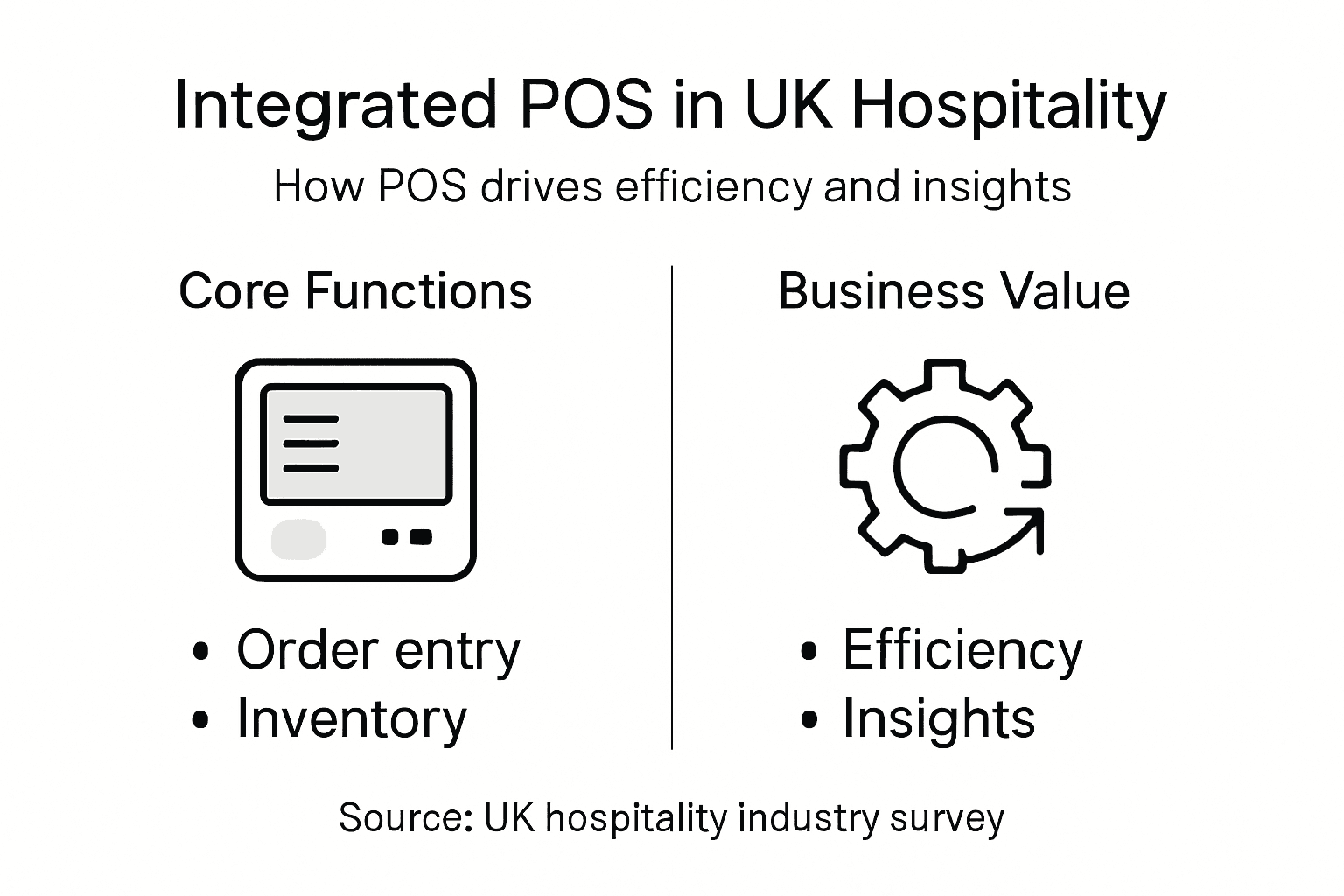
The integration of inventory management directly within POS systems eliminates traditional information silos, creating a holistic approach to hospitality operations. This technological advancement enables venues to respond rapidly to changing market conditions, customer preferences, and supply chain dynamics.
Pro tip: Implement a POS system with robust inventory tracking that provides granular, real-time insights into your ingredient usage and cost structures.
Risks, Costs, And Alternatives Compared
Implementing an integrated Point of Sale (POS) system represents a significant strategic investment for UK hospitality businesses, requiring careful evaluation of potential risks, implementation costs, and alternative technological approaches. Understanding the comprehensive financial and operational implications is crucial for making an informed decision.
Key considerations across different POS system options include:
- Cloud-Based Systems
- Lower upfront infrastructure costs
- Flexible monthly subscriptions
- Remote access capabilities
- On-Premises Solutions
- Higher initial investment
- Complete data control
- No ongoing subscription fees
- Hybrid POS Platforms
- Combination of cloud and local storage
- Balanced cost structure
- Enhanced security features
- Legacy System Alternatives
- Traditional cash register approaches
- Minimal technological investment
- Limited scalability and insights
The financial landscape of POS implementation varies significantly, with costs ranging from £1,500 to £15,000 depending on venue size, complexity, and technological requirements. Small cafés might invest £2,000-£5,000, while large restaurant groups could spend £10,000-£25,000 for comprehensive, multi-site integrated solutions.
Risks associated with POS system selection extend beyond financial considerations. Businesses must evaluate data security, system compatibility, staff training requirements, and potential operational disruptions during implementation. Choosing the wrong system can lead to significant productivity losses and customer service challenges.
Below is a summary of costs and risks for major POS system types in UK hospitality:
| POS System Type | Typical Upfront Cost | Key Risks Identified |
|---|---|---|
| Cloud-Based | £1,500 – £8,000 | Data privacy, reliance on web |
| On-Premises | £4,000 – £15,000 | Hardware maintenance, inflexibility |
| Hybrid | £3,000 – £12,000 | Complexity, dual management |
| Legacy Registers | £500 – £2,000 | Limited features, poor insights |
Pro tip: Request detailed implementation quotes from multiple providers, including hidden costs like staff training, data migration, and potential system customisation.
Unlock Seamless Hospitality Operations with Integrated POS Solutions
Managing the complexities of UK hospitality requires a POS system that merges order management, inventory control, and staff efficiency into one easy platform. If you have felt the frustration of disconnected systems causing delays and errors, the integrated POS solution from EZEEPos is tailored to resolve these exact challenges. Designed specifically for cafés, bars, restaurants, and mobile catering, it offers complete operational control without complicating your workflow.
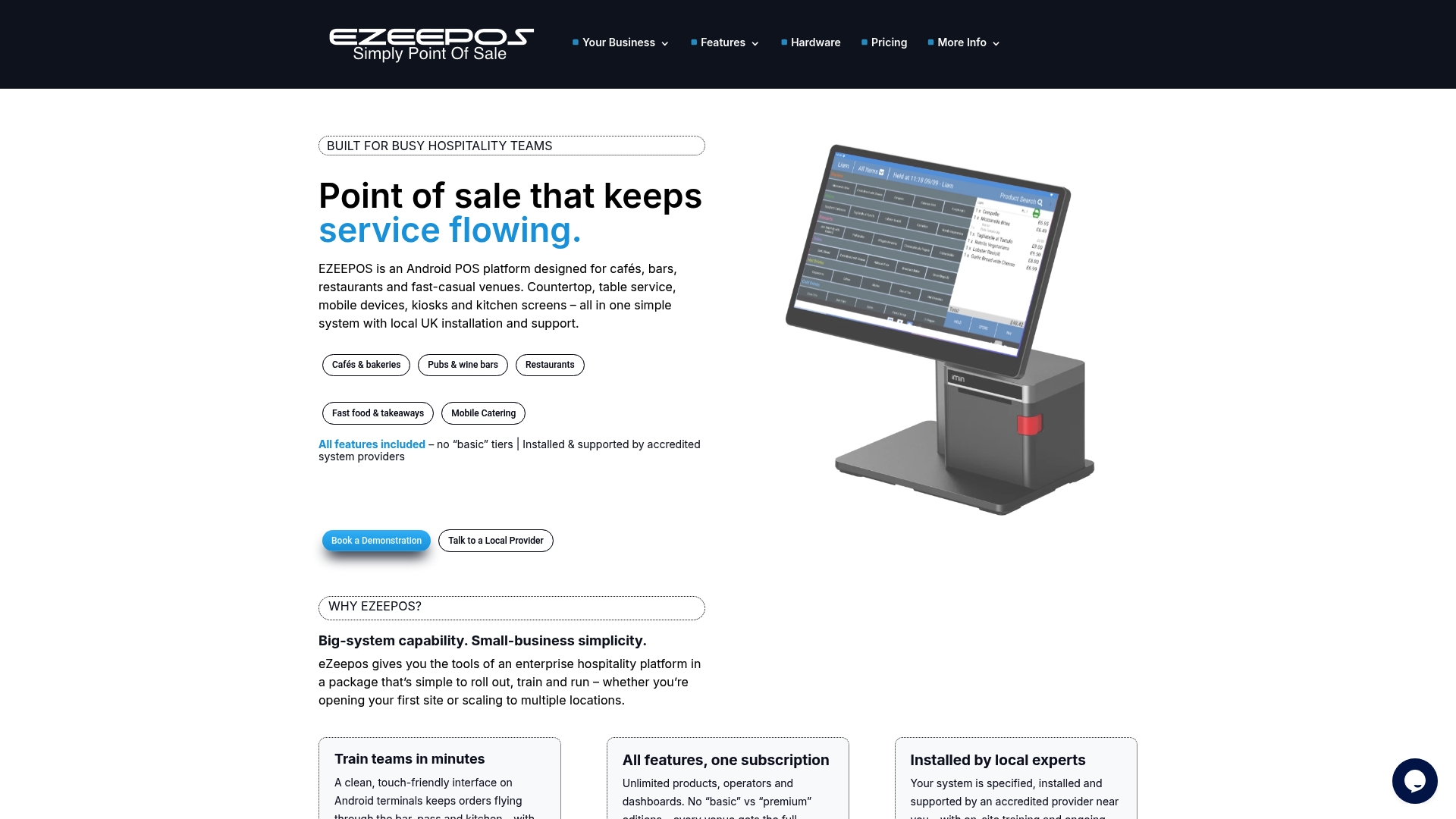
Discover the power of an Android-based POS system that supports multiple service styles including table ordering, self-service kiosks, and mobile catering with real-time insights to boost productivity. Visit Retail – EZEEPos Solution to explore hardware options and see how integrated payment processing via EFT Terminals – EZEEPos Solution can speed up transactions. Ready to take the next step? Get local UK installation and ongoing human support when you choose EZEEPos for your hospitality business today.
Frequently Asked Questions
What is an integrated POS system in hospitality?
An integrated POS system is a comprehensive technological solution that unifies various operational functions within hospitality venues, allowing for seamless management of order processing, inventory tracking, financial reporting, and customer engagement.
How does an integrated POS system improve operational efficiency?
An integrated POS system streamlines workflows by connecting different business processes, reducing human error, and providing real-time data insights, which lead to faster decision-making and improved service delivery in hospitality environments.
What are the key features of modern integrated POS systems?
Key features include order management, real-time inventory tracking, financial reporting, customer engagement tools, and automated workflows, all designed to enhance the operational capabilities of hospitality businesses.
What types of integrations can be made with a POS system?
A POS system can integrate with various platforms, including payment channels, CRM systems, inventory management tools, accounting software, and employee management systems, allowing for efficient data flow and improved business intelligence.
Recent Comments