
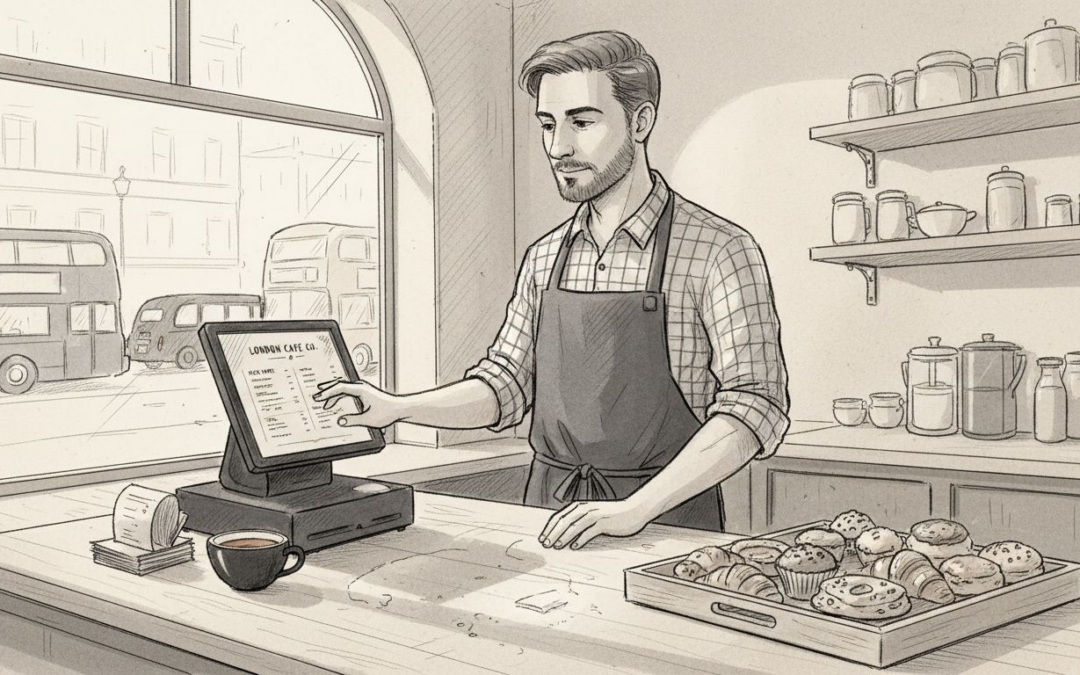
Choosing the right point of sale system for your hospitality business can feel overwhelming. Whether you run a busy UK restaurant, manage a pub, or serve customers at food festivals, the technology you use shapes every customer interaction and operational decision. The wrong setup can slow down transactions, confuse staff, and drive customers away. If you want reliable payments, smoother service, and control over your business data, making an informed choice is crucial.
This guide will give you clear, actionable insights into the most effective POS systems used in British hospitality. Discover how each option tackles common challenges like space limits, internet problems, and complex payment needs. You’ll get practical tips, avoid costly mistakes, and find the best fit for your unique service environment.
Table of Contents
- 1. Countertop Pos Systems For Traditional Service
- 2. Tablet Pos Systems For Flexible Operations
- 3. Self-Service Kiosk Pos For Fast Ordering
- 4. Mobile Pos Solutions For Catering And Events
- 5. Kitchen Display Systems For Order Management
- 6. Cloud-Based Pos For Easy Back Office Access
- 7. Integrated Pos For Payments And Staff Control
Quick Summary
| Takeaway | Explanation |
|---|---|
| 1. Choose suitable POS for your venue | Selecting the right type of POS system enhances operational efficiency and improves customer experiences in various hospitality environments. |
| 2. Prioritise integration capabilities | Ensure that the POS system integrates smoothly with existing workflows and other critical business management tools to maximise utility. |
| 3. Invest in robust hardware | Opt for durable devices, especially in high-volume settings, to ensure reliability and longevity during operation. |
| 4. Embrace self-service technologies | Implementing self-service kiosks can significantly reduce wait times and labour costs while enhancing order accuracy and customer satisfaction. |
| 5. Utilise cloud-based solutions for flexibility | Cloud POS systems provide remote access to business data, allowing for informed decision-making and easy management from any location. |
1. Countertop POS Systems for Traditional Service
Countertop POS systems represent the foundational technology for traditional restaurant and café service in the United Kingdom. These robust, fixed-location terminals serve as the central hub for managing transactions, orders, and operational workflows in high-volume hospitality venues.
Unlike mobile solutions, these systems provide a dedicated space for processing payments and tracking restaurant activities. They feature integrated touchscreens, payment processing hardware, and support for multiple transaction types. Payment processing capabilities ensure swift and accurate transactions across different service environments.
Key features of countertop POS systems include:
- Integrated barcode scanners for precise item tracking
- Receipt printers for immediate customer documentation
- Support for multiple payment methods (EMV chip, contactless, magnetic stripe)
- Built-in inventory management tools
- Employee scheduling functionality
- Analytics and reporting capabilities
Countertop POS systems transform traditional service by centralising transaction management and operational control.
These systems excel in environments with consistent, high-volume service like pubs, cafés, and quick-service restaurants. Their fixed configuration means enhanced durability and reliability compared to mobile alternatives. Restaurant owners benefit from streamlined operations and reduced transaction processing times.
Designed for compact counter spaces, these all-in-one solutions integrate seamlessly into existing service workflows. They provide comprehensive business management features without requiring significant workspace investments.
Pro tip: When selecting a countertop POS system, prioritise hardware durability and software integration capabilities to maximise long-term operational efficiency.
2. Tablet POS Systems for Flexible Operations
Tablet POS systems represent a revolutionary approach to hospitality management, offering unprecedented flexibility and mobility for modern UK venues. These innovative systems transform standard tablets into powerful point-of-sale platforms that can dramatically enhance operational efficiency.
By leveraging standard tablet hardware, restaurants and cafés can create dynamic service environments that adapt quickly to changing customer needs. Mobile POS configurations enable staff to process orders and payments directly at the table or anywhere within the venue.
Key advantages of tablet POS systems include:
- Lightweight and portable hardware
- Lower initial investment compared to traditional systems
- Seamless integration with cloud-based management platforms
- Intuitive touchscreen interfaces
- Rapid staff training and onboarding
- Scalable solution for venues of different sizes
Tablet POS systems turn mobile devices into powerful business management tools for modern hospitality venues.
Operational Flexibility becomes a significant benefit with tablet POS systems. Staff can move freely, reducing queue times and improving customer service. Servers can take orders tableside, send them directly to the kitchen, and process payments without returning to a fixed terminal.
Modern tablet systems support multiple payment methods, including contactless and digital wallets. They provide real-time analytics, inventory tracking, and staff management tools that were previously available only on expensive, complex systems.
Pro tip: Choose a tablet POS system with robust offline functionality to ensure uninterrupted service during potential internet connectivity issues.
3. Self-Service Kiosk POS for Fast Ordering
Self-service kiosks represent a cutting-edge solution for hospitality venues seeking to streamline ordering processes and enhance customer experience. These interactive digital platforms enable customers to place orders independently, reducing traditional service bottlenecks and transforming how restaurants manage customer interactions.
By implementing self-service kiosk technologies, venues can dramatically improve operational efficiency. These standalone touchscreen systems allow customers to browse menus, customise orders, and complete transactions without direct staff intervention.
Key advantages of self-service kiosk POS systems include:
- Reduced customer waiting times
- Decreased labour costs
- Enhanced order accuracy
- Multilingual menu support
- Simplified menu customisation
- Integrated payment processing
- Consistent customer experience
Self-service kiosks are transforming hospitality by putting customers in control of their ordering experience.
Order Customisation becomes significantly more intuitive with self-service kiosks. Customers can take their time exploring menu options, adding or removing ingredients, and seeing real-time price updates without feeling pressured.
These systems are particularly effective in quick-service restaurants, cafés, and fast-casual dining environments. They cater to tech-savvy customers who prefer digital interactions and appreciate the speed and convenience of self-guided ordering.
Modern kiosks also offer valuable data collection opportunities. Venues can track popular menu items, analyse customer preferences, and optimise their offerings based on real-time insights.
Pro tip: Choose a self-service kiosk system with robust accessibility features to ensure all customers can comfortably use the technology.
4. Mobile POS Solutions for Catering and Events
Mobile POS solutions represent a game-changing technology for catering businesses and event organisers across the United Kingdom. These portable systems enable seamless transaction processing in dynamic and challenging environments where traditional point-of-sale setups would struggle.
By leveraging mobile POS technologies, catering professionals can transform how they manage sales and service at festivals, food trucks, pop-up events, and outdoor venues. The ability to process transactions anywhere provides unprecedented operational flexibility.
Key advantages of mobile POS solutions include:
- Offline transaction capabilities
- Extended battery performance
- Compact and lightweight hardware
- Rapid checkout processing
- Real-time inventory tracking
- Seamless sales reporting
- Adaptable to various service environments
Mobile POS systems eliminate geographical restrictions on business transactions.
Operational Versatility becomes a significant benefit for catering businesses. These systems allow vendors to accept payments at food festivals, corporate events, weddings, and temporary locations without requiring traditional fixed infrastructure.
Modern mobile POS platforms integrate sophisticated features like digital menu management, customer relationship tracking, and instant sales analytics. They support multiple payment methods including contactless, digital wallets, and traditional card payments.
The technology is particularly valuable for businesses operating in environments with unreliable internet connectivity. Offline mode ensures transactions continue smoothly regardless of network conditions.
Pro tip: Invest in rugged mobile POS devices with extended battery life and weather-resistant designs to ensure reliable performance during outdoor events.
5. Kitchen Display Systems for Order Management
Kitchen display systems represent a revolutionary technological solution for modernising restaurant order management and kitchen workflows. These digital screens transform how hospitality venues track, process, and prioritise incoming food orders with unprecedented efficiency and clarity.
By implementing kitchen order screens, restaurants can eliminate traditional paper tickets and create a more streamlined communication environment between front-of-house and kitchen staff.
Key advantages of kitchen display systems include:
- Real-time order tracking
- Instant communication between servers and kitchen staff
- Reduced order preparation errors
- Enhanced kitchen workflow management
- Digital prioritisation of urgent orders
- Improved overall service speed
- Comprehensive order history logging
Kitchen display systems convert chaos into organised, efficient food preparation.
Order Precision becomes a critical benefit for modern hospitality venues. These systems provide visual clarity about each order’s status, enabling kitchen teams to manage complex meal preparations with greater accuracy and speed.
Modern kitchen display systems integrate seamlessly with point-of-sale platforms, creating a comprehensive digital ecosystem. They support multiple service modes including dine-in, takeaway, and delivery, ensuring consistent performance across different operational scenarios.
The technology allows for granular tracking of individual dishes, estimated preparation times, and staff performance metrics. Managers can analyse kitchen efficiency and identify potential bottlenecks in real-time.
Pro tip: Select a kitchen display system with customisable colour-coding and notification features to help staff quickly distinguish between different order types and priorities.
6. Cloud-Based POS for Easy Back Office Access
Cloud-based point of sale systems represent a transformative technology for hospitality businesses seeking flexible, powerful management tools. These digital platforms enable restaurant and café owners to access critical business data from anywhere with an internet connection.
By implementing cloud technology solutions, venues can centralise their operational management and gain unprecedented insights into business performance. The ability to monitor sales, inventory, and staff performance remotely provides a significant competitive advantage.
Key advantages of cloud-based POS systems include:
- Access to real-time business data
- Seamless multi-location management
- Automatic software updates
- Enhanced data security
- Remote performance tracking
- Simplified financial reporting
- Scalable infrastructure
Cloud-based systems transform back-office management into a flexible, accessible experience.
Business Intelligence becomes dramatically more accessible with cloud platforms. Owners can generate comprehensive reports, track key performance indicators, and make data-driven decisions from any device.
Modern cloud POS systems integrate multiple business functions including inventory management, staff scheduling, sales analytics, and financial reporting. They eliminate the need for complex on-site server infrastructure and reduce technology maintenance costs.
The platforms support advanced security protocols, ensuring that sensitive business data remains protected while providing convenient access to authorised personnel. Multi-factor authentication and encrypted connections safeguard critical information.
Pro tip: Select a cloud-based POS system with robust offline capabilities to ensure continuous operations during potential internet disruptions.
7. Integrated POS for Payments and Staff Control
Integrated point of sale systems represent a comprehensive solution for hospitality venues seeking streamlined payment processing and robust staff management capabilities. These sophisticated platforms combine transaction handling with advanced employee control features.
By implementing integrated payment solutions, businesses can create a unified system that manages financial transactions and workforce productivity simultaneously.
Key advantages of integrated POS systems include:
- Multiple payment channel support
- Enhanced transaction security
- Automated financial reporting
- Staff scheduling functionality
- Performance tracking tools
- Seamless payroll integration
- Role-based access controls
Integrated POS systems transform complex operational management into a simple, cohesive experience.
Staff Performance Management becomes significantly more sophisticated with these systems. Managers can track individual employee metrics, monitor sales performance, and manage shift schedules from a single platform.
Modern integrated POS solutions support diverse payment methods including contactless transactions, mobile wallets, and traditional card payments. They provide comprehensive security compliance with industry standards like PCI DSS, protecting both business and customer financial information.
The technology enables precise financial reconciliation, reducing administrative overhead and minimising human error in transaction processing. Real-time reporting allows immediate insights into sales trends and staff productivity.
Pro tip: Select an integrated POS system with granular permission settings to maintain strict control over staff access and transaction capabilities.
Below is a comprehensive table summarising the main types of Point-of-Sale (POS) systems discussed in the article, highlighting their unique benefits and suitable applications in the hospitality industry.
| POS System Type | Key Features | Best Used For |
|---|---|---|
| Countertop POS Systems | Durability, integrated touchscreens, diverse payment options, employee scheduling, reporting tools. | High-volume environments like pubs, cafés, and restaurants |
| Tablet POS Systems | Portability, cost-effective, cloud integration, ease of training, scalable for venue sizes. | Dynamic service needs such as cafés and pop-up eateries. |
| Self-Service Kiosk POS Systems | Interactive menus, reduced labour costs, payment integration, multilingual support. | Tech-savvy quick-service-tier and low-staff environments. |
| Mobile POS Solutions | Portable, offline-capable, battery performance, real-time inventory tracking, adaptability. | Catering events, food trucks, or outdoor venues. |
| Kitchen Display Systems | Real-time order management, prioritisation, seamless communication, reduced errors in preparation. | Restaurants aiming for streamlined kitchen workflows. |
| Cloud-Based POS Systems | Remote access, multi-location, data security, automated updates, financial analytics. | Multi-venue businesses needing flexible management. |
| Integrated POS Systems | Payment security, payroll integration, performance tracking, role-based controls, scheduling tools. | Comprehensive business operations within one solution. |
Discover the Perfect Hospitality POS Solution for Your UK Venue
Managing hospitality operations can be challenging when juggling multiple service styles and staff workflows. This article highlights the need for a flexible, reliable POS system that supports everything from traditional countertop terminals to mobile catering and self-service kiosks. Common pain points include reducing transaction delays, ensuring order accuracy, and empowering staff with intuitive technology that adapts to varied environments.
The EZEEPos platform offers exactly what you need to overcome these challenges. Featuring an Android-based system that integrates countertop, tablet, kiosk, and kitchen display hardware, this solution simplifies complex operations with powerful yet easy-to-use tools. With full access to advanced features such as real-time inventory control, staff management, and cloud-based back-office reporting, you gain complete operational control wherever you are.
Explore our Hospitality – EZEEPos Solution to unlock seamless integration for diverse venues. Enhance your setup further with specialised Add On Modules – EZEEPos Solution designed to tailor your POS system precisely to your needs.
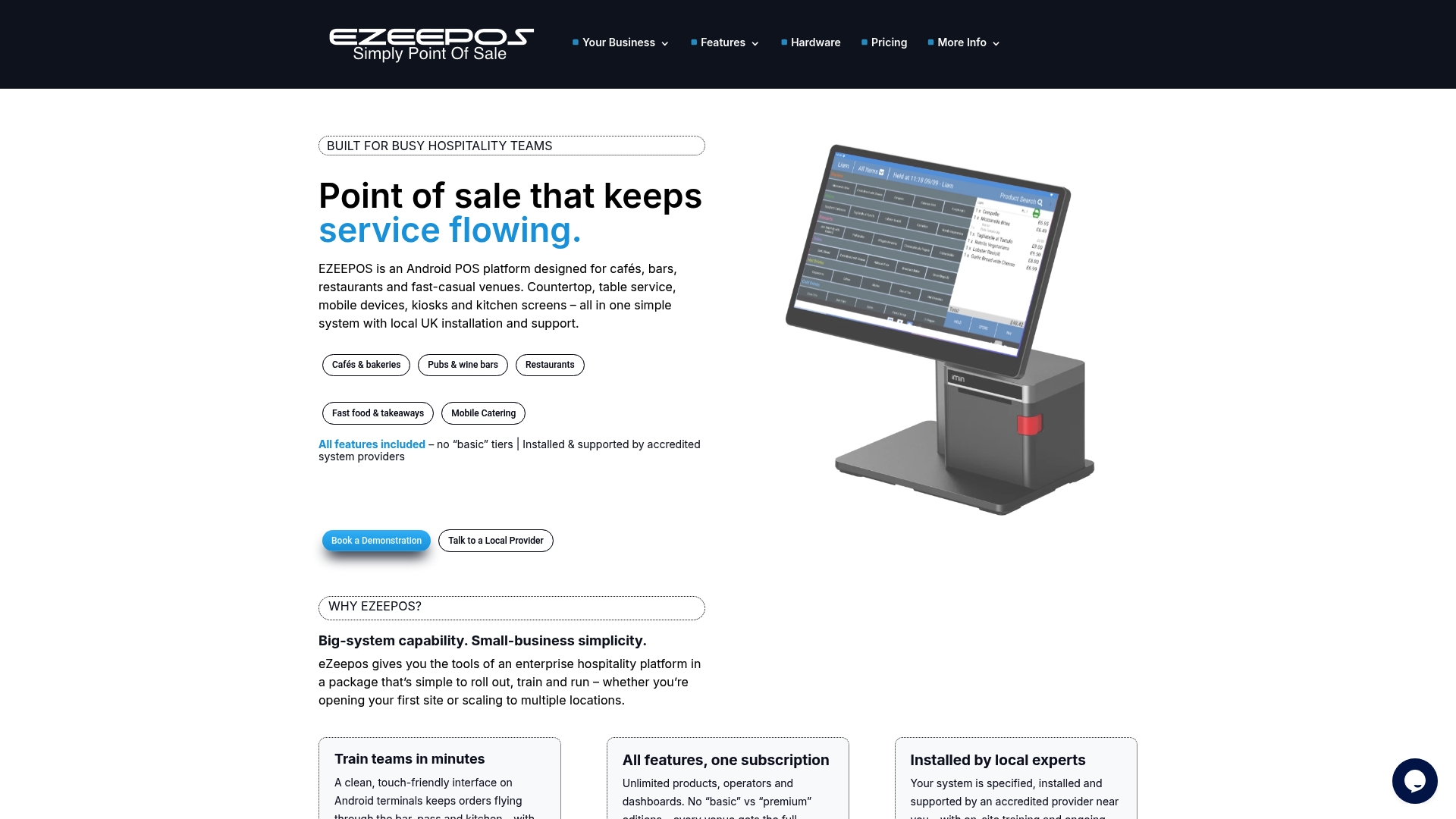
Take the next step to future-proof your venue’s service with the trusted EZEEPos platform. Visit https://ezeepos.co.uk today and see how your hospitality business can benefit from reliable, scalable POS technology bespoke to UK venues.
Frequently Asked Questions
What is a countertop POS system, and how does it benefit traditional hospitality venues?
A countertop POS system is a fixed terminal that centralises transaction management and operational workflows in hospitality settings. It improves transaction processing speed and reduces errors, making it ideal for busy venues such as pubs and cafés. To maximise performance, ensure to select a system with durable hardware and reliable software integration.
How can tablet POS systems enhance service in modern restaurants?
Tablet POS systems enable staff to take orders and process payments anywhere within a venue, thus improving service speed and customer satisfaction. By using these portable systems, restaurants can reduce queue times and offer a more personalised experience. Train your team within a few hours to effectively use the system and observe a noticeable increase in operational efficiency.
What advantages do self-service kiosks offer for quick-service restaurants?
Self-service kiosks allow customers to place orders independently, reducing wait times and improving order accuracy. These systems can lead to decreased labour costs and enhance the overall customer experience. Implementing kiosks can streamline your ordering process, so consider introducing them to observe a reduction in customer wait times by up to 30%.
How do mobile POS solutions fit into catering and event environments?
Mobile POS solutions allow catering businesses to process transactions seamlessly in various environments, such as food festivals and outdoor events. Their flexibility and offline transaction capabilities ensure that service remains uninterrupted, even in less reliable conditions. To optimise service, consider deploying mobile systems at events, potentially increasing transaction speed by 25%.
What role do kitchen display systems play in order management?
Kitchen display systems enhance order accuracy and streamline communication between servers and kitchen staff. They replace traditional paper tickets, allowing for real-time tracking of orders, which significantly reduces preparation errors. Integrate a kitchen display system to improve your kitchen’s efficiency and see a reduction in order turnaround times.
Why should I consider a cloud-based POS system for my hospitality venue?
Cloud-based POS systems enable easy access to real-time data from anywhere, providing insights into sales and inventory management. They also offer scalability and automatic software updates, making management much more convenient. Transition to a cloud-based system to enhance your operational oversight, and expect to enhance your data accessibility within days.
Recent Comments