
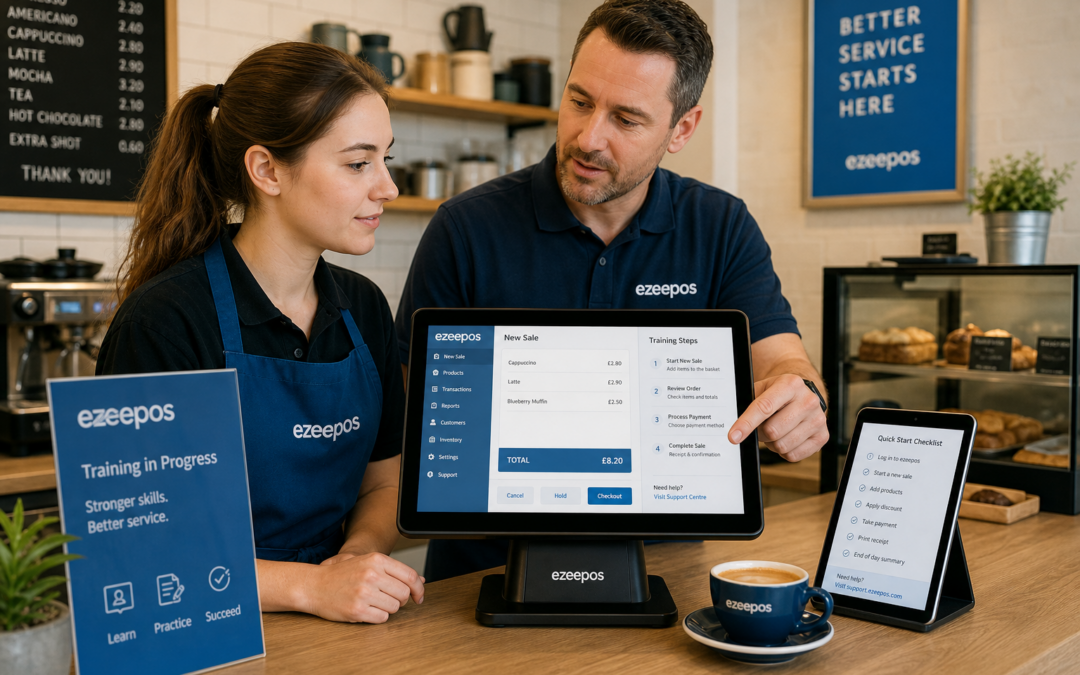
Why training matters just as much as the software
When a business chooses a new EPOS system, it is easy to focus on features, screens and reporting. Those things matter, but so does the people side of the rollout. If staff do not feel confident using the till, even a strong system can lose some of its value.
That is why training should be part of the plan from the start. A clear rollout helps teams understand the system, learn the daily routines and avoid the frustration that can come from trying to figure things out during a busy shift. For independent retailers, cafés, restaurants, bars and takeaways, that can make a real difference to service speed and accuracy.
At eZeePOS, the aim is to support UK businesses with practical EPOS software that is straightforward to use in real trading conditions. You can learn more at www.ezeepos.co.uk.
What good EPOS training should cover
Training does not need to be complicated, but it should be relevant to the way the business actually works. A useful session should cover the tasks staff will use every day, not just a broad overview of the system.
Core till functions
Staff should know how to take orders, process sales, apply discounts where appropriate and handle common customer requests. In retail, that might mean scanning items, looking up products and managing returns. In hospitality, it could include splitting checks, sending orders to the kitchen and handling table service.
Basic troubleshooting
Even a well-planned system will occasionally need a quick fix. Staff should understand what to do if a receipt does not print, if a screen freezes or if an order needs to be corrected. Clear guidance reduces panic and keeps service moving.
House rules and permissions
Not every team member needs access to every function. Training should explain who can do what, why certain permissions exist and how managers can keep control of key actions. This is especially useful in businesses with mixed shifts or seasonal staff.
How training supports faster service
A confident team works faster. That does not mean rushing customers, but it does mean reducing pauses at the till, cutting down on repeated questions and helping staff move through routine tasks naturally.
When people know where things are on the screen, they spend less time searching and more time serving. In a café or takeaway, that can help keep queues under control. In a shop, it can help reduce delays at the checkout. In a restaurant or bar, it can make it easier to keep orders flowing smoothly between the front of house and the kitchen.
Training also helps new starters settle in more quickly. Instead of relying on guesswork or copying someone else, they can learn a clear process from the beginning. That usually means fewer mistakes and less pressure on more experienced staff.
Keeping mistakes down during busy shifts
Busy periods are where good training pays off most. When the counter is full or a dining room is turning tables quickly, there is less time to stop and fix errors. A team that understands the EPOS workflow is better placed to stay calm and accurate under pressure.
Common issues that training can reduce include:
- Incorrect items being added to an order
- Discounts being applied in the wrong way
- Orders being sent to the wrong area
- Slower handovers between staff members
- Unclear notes or missed customer requests
These may seem like small issues individually, but together they can affect service quality, waste time and create avoidable friction for staff and customers alike.
Making onboarding easier for new starters
Seasonal work, staff turnover and part-time shifts are common across UK retail and hospitality. That means business owners often need a training approach that works repeatedly, not just once at launch.
A clear EPOS setup makes onboarding easier because the system can be taught in small steps. Staff do not need to learn everything at once. They can start with the basics, then build confidence with more advanced functions as they gain experience.
It also helps if training materials are simple and easy to revisit. A short written guide, a quick walkthrough or an internal checklist can be more useful than a long manual that nobody opens during service.
Training managers and supervisors as well as front-line staff
Managers often need a deeper understanding of the system so they can support the team, check performance and deal with exceptions. They may need to know how to review sales, monitor staff activity, change settings or handle end-of-day tasks.
Supervisors with a solid grasp of the EPOS system can solve problems faster and reduce disruption for everyone else. That support is especially helpful during peak trading times, when managers need to keep the floor moving rather than spend time troubleshooting basic issues.
A good rollout is about confidence, not just setup
The best EPOS projects are not only about installing software. They are about making sure the team can use the system easily and consistently. That is why training should be treated as part of the rollout, not as an optional extra afterwards.
For independent businesses, this approach can help protect service standards, reduce stress and make the new system feel like a genuine improvement rather than another change to manage. Whether the business is a shop, café, restaurant, bar or takeaway, a well-trained team will usually get far more value from the EPOS investment.
If you are planning a new till setup or reviewing your current system, eZeePOS offers a practical option for UK businesses that want straightforward EPOS software and sensible support. Visit www.ezeepos.co.uk to learn more.
Contact YCR Distribution at sales@ezeepos.co.uk or call 01924 438238.
For a helpful starting point, explore eZeePOS and see how a well-planned rollout can fit your business.
Recent Comments