
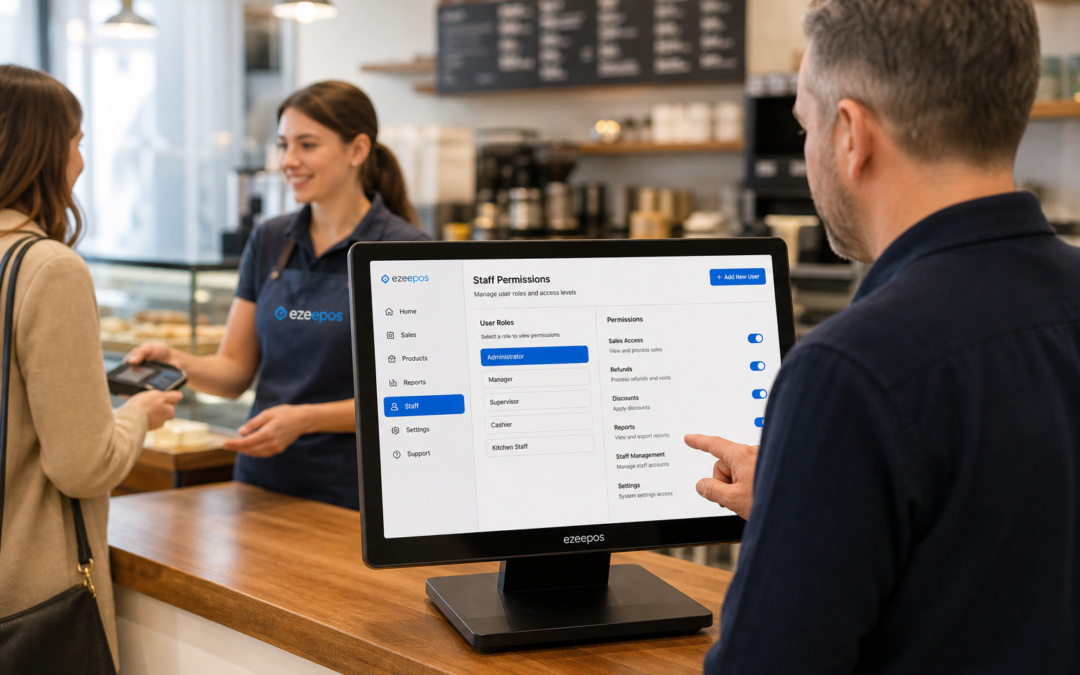
For many UK independent businesses, the till is used by more than one person every day. That might be a café team on a lunch rush, a retail shop with part-time staff, or a takeaway where shifts change throughout the week. In those situations, staff permissions can make a real difference.
If you are looking at a practical EPOS setup, eZeePOS at www.ezeepos.co.uk is designed to help businesses keep operations clear and controlled without making the till harder to use. eZeePOS gives owners a structured way to decide who can do what, which is especially useful when several people share the same system.
What staff permissions do in an EPOS system
Staff permissions let you set different levels of access for different users. Instead of giving every team member full control, you can decide which actions should be available to supervisors, managers, and day-to-day staff.
That can include things like:
- processing sales
- applying discounts
- issuing refunds
- voiding items
- viewing reports
- editing product details
- opening the cash drawer
This does not just help with control. It also supports smoother working because staff only see the options they actually need. In a busy environment, that can make training simpler and reduce hesitation at the till.
Why it matters for independent retailers
In retail, staff permissions can be particularly useful when you have seasonal staff, weekend teams or a mix of experienced and new colleagues. A shop assistant may need to serve customers quickly, but they may not need access to every setting on the system.
By limiting sensitive actions, you can help reduce accidental errors. For example, you might want only supervisors to approve larger discounts or only managers to access detailed reporting. That keeps trading more consistent and gives you a clearer picture of what is happening throughout the day.
Helpful for shops with changing teams
Many retailers do not run with the same team every shift. Staff permissions can help make handovers easier because each user has a role that matches their responsibilities. That is often more practical than relying on everyone to remember which actions are allowed on the till.
It can also support better accountability. If multiple people use the same system, it is easier to understand who carried out certain actions when permissions are set properly.
Why hospitality businesses benefit too
Cafés, restaurants, bars and takeaways often deal with far more pressure at peak times. Orders move quickly, staff swap stations, and managers may need to step in when queries arise. In that environment, permissions can keep the operation calmer and more organised.
For hospitality businesses, it can be helpful to let front-line staff take orders and process standard sales, while more sensitive tasks stay with supervisors. That might include refunds, bill adjustments or access to end-of-day figures.
Reducing mistakes during busy service
When a shift is busy, people tend to make quicker decisions. Permissions can help prevent mistakes by making sure only the right person can make certain changes. This is especially valuable where margins are tight and service speed matters.
For example, a café might allow baristas to take orders and apply simple modifiers, but keep discount approval with a manager. A takeaway might let counter staff enter orders while limiting cash-up changes to senior team members. These small controls can make a noticeable difference over time.
Common permission settings to think about
Every business is different, but there are some permissions that are worth reviewing early when setting up a new EPOS system.
- Discount control: decide who can offer reductions and at what level
- Refund access: limit refunds to trusted staff or managers
- Report visibility: choose who can view sales and performance data
- Product editing: keep item changes away from general users if needed
- Cash drawer access: control who can open the drawer outside a sale
These settings are usually simple to manage, but they should reflect how your business actually works. A small shop may only need two permission levels, while a larger hospitality site may need several.
How permissions support better day-to-day control
One of the most useful things about staff permissions is that they help owners trust the system without having to hover over every transaction. That can be valuable if you are not always on site, or if your business runs across several shifts.
They can also make it easier to keep your procedures consistent. If one team member can grant discounts but another cannot, you are more likely to apply the same rules every day. Over time, that creates better discipline around pricing, refunds and reporting.
Useful for training new staff
New starters often need time to learn the till properly. Permissions make this easier by giving them access to the core actions they need first, without exposing them to every menu and setting. That can help them feel more confident and reduce avoidable errors while they learn.
For business owners, it also means new staff can start serving customers sooner, with less risk of accidental changes to important settings.
Staff permissions and reporting
Permissions are not only about control at the till. They also affect reporting, because different people may need different levels of access to sales information. A manager may want full reporting, while a server or shop assistant may only need their own shift functions.
Having the right access structure makes it easier to keep sensitive information in the right hands. It also helps you use reports more confidently, especially if you want to review sales trends, staff performance or end-of-day figures without confusion.
For businesses that want a more organised setup, this is one of the areas where a modern EPOS system can really help compared with a basic till or manual process.
A practical EPOS feature that supports real businesses
Staff permissions are not a flashy feature, but they are one of the most practical parts of a good EPOS setup. They help protect margins, reduce mistakes and keep service running smoothly in retail and hospitality environments.
If you are reviewing your current till setup, it is worth asking whether everyone should have the same access. In many cases, the answer is no. A sensible permission structure can save time, reduce stress and give you more confidence in how your system is being used.
If you would like to explore how eZeePOS could support your business, visit www.ezeepos.co.uk for more information.
Contact YCR Distribution at sales@ezeepos.co.uk or call 01924 438238.
Recent Comments