
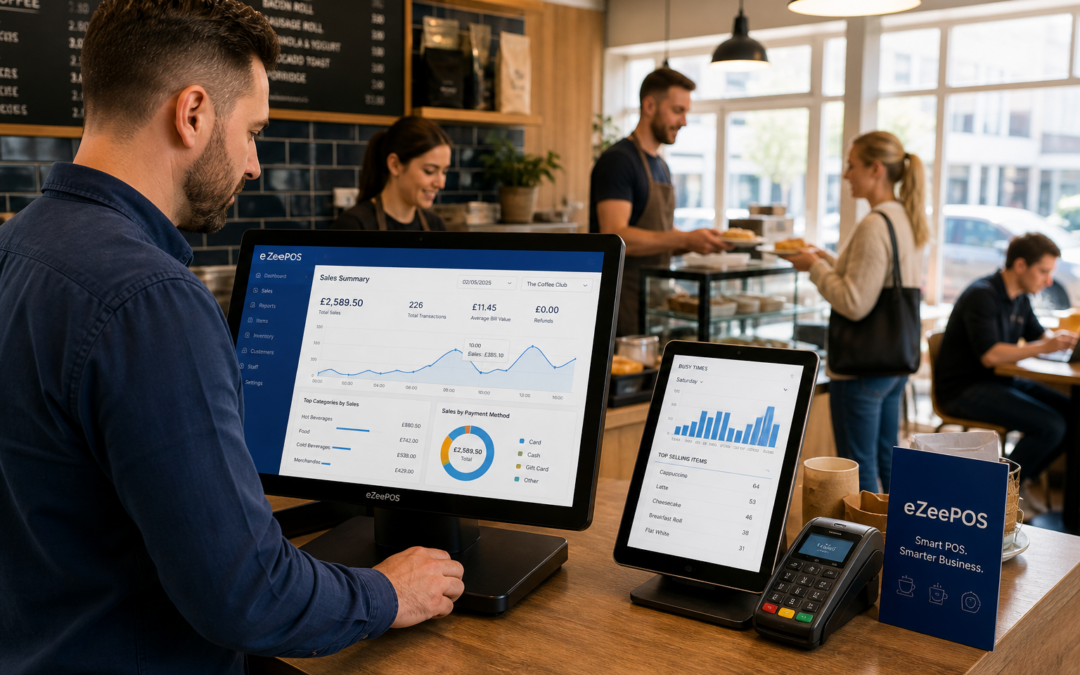
Many cafés and restaurants collect plenty of information during the day, but not every business turns that data into action. A good reporting setup in your EPOS can make it much easier to understand what is happening on the till, when the busiest periods fall, and where small changes could improve service.
For UK hospitality businesses, that matters because every day can look different. A wet Tuesday, a sunny weekend, a local event or a change in staffing can all affect trade. With the right reports, owners and managers can respond with more confidence rather than relying on guesswork. If you are looking for a practical EPOS solution, eZeePOS is designed to help retail and hospitality businesses keep day-to-day information clear and easy to use.
Why reporting matters in hospitality
In a café or restaurant, reporting is not just about counting sales at the end of the day. Useful reports can show patterns that help you manage the business more effectively. That might include peak service times, average spend, top-selling menu items or quieter periods when staffing can be adjusted.
Instead of looking back and asking what happened, you can start making informed decisions while the business is still trading. That can help with everything from rotas and menu planning to staff training and service flow.
See what sells, and when
Sales reports can show which meals, drinks or add-ons are most popular at different times of day. A breakfast café might see strong coffee and pastry sales early in the morning, then more lunch items later on. A restaurant may find that certain starters or desserts perform especially well on weekends.
That kind of information helps you plan stock, set menu focus and make better decisions about what to promote. It also helps highlight items that are not performing as expected, so you can review pricing, placement or preparation times.
Understand your busiest periods
Knowing when trade peaks is useful for both service and staffing. If your EPOS reports show a regular rush between 12:00 and 1:30 pm, you can prepare the team more effectively. That might mean opening extra till points, scheduling more front-of-house cover or making sure popular dishes are ready at the right time.
For hospitality businesses, this can reduce pressure on staff and improve the customer experience. Shorter waits, fewer mistakes and smoother handovers all start with understanding when the business is under the most strain.
Which reports are most useful?
Different businesses need different levels of detail, but a few reporting areas are especially useful for cafés and restaurants.
- Daily sales summaries to see total takings, order volume and trading patterns.
- Item performance reports to identify your best and weakest sellers.
- Time-based reports to show when business is busiest.
- Staff performance reports to help managers review service activity.
- Category reports to compare drinks, mains, desserts or takeaway sales.
These reports do not need to be complicated. In fact, the best systems make them easy to read at a glance, so managers can use the information quickly without spending unnecessary time on admin.
How reports support better staffing decisions
Staffing is one of the biggest day-to-day challenges in hospitality. Too few people on shift can lead to delays and stressed teams. Too many people can increase costs when trade is quieter than expected. Reporting helps find a better balance.
If your EPOS data shows that evenings are consistently slower on certain weekdays, you can adjust hours more accurately. If lunch service is growing, you may decide to bring in extra cover earlier, or train more staff to handle both the counter and the floor during busy periods.
This is especially useful for smaller independent venues where each team member has several responsibilities. Strong reporting supports better rota planning, more efficient shifts and better use of time across the business.
Using reports to improve service, not just sales
Good reporting is not only about revenue. It can also help with customer service. For example, if certain menu items regularly slow down service, that may point to kitchen pressure, unclear menu layout or a need to simplify ordering at peak times.
In a busy café, a report showing high demand for a small number of products could lead to better prep planning. In a restaurant, it might show which dishes are popular enough to deserve more prominence on the menu. If a particular period is always busy, the team can be prepared in advance with the right equipment, staffing and workflow.
When reports are used properly, they support a smoother experience for both staff and customers.
Making reports part of your routine
The real value of reporting comes from using it regularly. Checking figures once in a while can be useful, but the biggest gains often come from looking at trends over time. A weekly review can help you spot patterns before they become problems.
You do not need to spend hours analysing data. A few minutes each day or week can be enough to identify what is working and where to make changes. Over time, those small adjustments can improve efficiency, reduce wasted effort and support stronger trading decisions.
Keep it simple for managers and owners
The best EPOS reports are straightforward to access and simple to understand. Managers should be able to see key figures without needing specialist training. That makes it easier for independent businesses to stay in control, even when the team is busy serving customers.
If you are already using a touchscreen till or are thinking about improving your current setup, it is worth choosing software that puts reporting front and centre. The aim is not more data for its own sake, but clearer information that helps you run the business better.
Choosing EPOS reporting that works for your business
A café, restaurant, bar or takeaway does not need overly complex reporting to benefit from better decision-making. What it needs is clear, reliable information that matches the way the business operates. That might mean quick sales summaries, simple item reports or staff-level visibility during busy trading hours.
With eZeePOS, UK hospitality businesses can explore practical EPOS reporting that supports everyday management rather than adding unnecessary complexity. It is a sensible way to move beyond guesswork and make decisions based on what is actually happening in the business.
If you want to see how a modern EPOS setup can support better reporting and day-to-day control, visit www.ezeepos.co.uk.
Contact YCR Distribution at sales@ezeepos.co.uk or call 01924 438238.
Recent Comments