
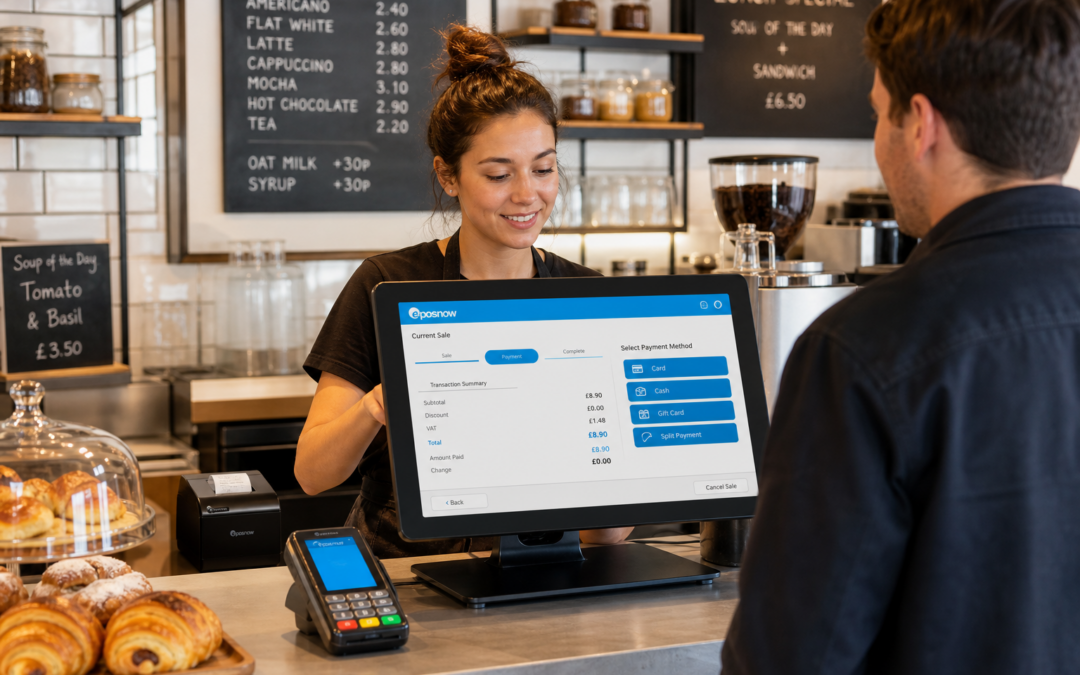
For many UK retailers, cafés, restaurants and takeaways, the till is busiest when staff are under pressure. If payments need to be keyed in manually, every transaction takes a little longer and the chance of mistakes increases. That can affect service speed, create extra admin and make it harder to keep a clear record of the day.
Modern EPOS software can help reduce that friction. With the right setup, businesses can keep sales moving more smoothly, cut down on repeated data entry and make life easier for front-of-house staff. At eZeePOS, the focus is on practical EPOS tools that support day-to-day trading for UK businesses without adding unnecessary complexity.
Why manual payment entry causes avoidable problems
Manual payment entry usually happens when card payments, cash handling and till records are managed separately. Staff may need to type amounts into a separate terminal, check the figure twice, then return to the EPOS screen to finish the sale. That is manageable on a quiet day, but it becomes far more difficult when queues build up.
The main issue is not just speed. Manual entry can also lead to:
- typing errors when entering amounts
- missed or duplicated transactions
- slower service at busy times
- extra work when balancing the till at the end of the day
- more pressure on new or temporary staff
Even small delays add up across a full shift. For businesses that handle lots of smaller transactions, reducing manual entry can make a noticeable difference to the flow of service.
How EPOS can reduce typing at the till
A good EPOS system helps staff move from sale to payment with fewer steps. Instead of re-entering details across different devices, the sale can be recorded once and processed in a way that keeps the till and payment record aligned.
Fewer steps for each transaction
When the EPOS and payment process work together more closely, staff do not need to switch between systems as often. That can save time during each transaction and reduce the chance of typing the wrong amount.
Clearer till records
Keeping the payment record tied to the sale can make it easier to review trading later. This is especially helpful for managers who need to check takings, investigate discrepancies or review busy periods without digging through handwritten notes or separate logs.
Better support for busy teams
In cafés, restaurants and retail shops, staff training time is often limited. A straightforward till process makes it easier for new starters to learn quickly and helps reduce mistakes during peak service.
Where this matters most in retail and hospitality
Reducing manual payment entry is valuable across many business types, but it is especially helpful where speed and accuracy are essential.
Retail counters
Independent shops, convenience stores and gift shops often deal with a steady stream of smaller purchases. A smooth till process helps keep the queue moving and gives customers a better checkout experience.
Cafés and restaurants
In hospitality, staff may need to split attention between taking orders, clearing tables and serving payments. If the payment process is simple, teams can stay focused on service rather than spending time repeating details across different screens or devices.
Takeaways and quick-service food businesses
Fast service matters in takeaways and quick-service venues. A slower payment step can build pressure during the busiest periods. Reducing manual entry helps keep the counter moving and supports a more efficient workflow.
What to look for in a practical EPOS setup
If your business is trying to cut down on manual payment entry, it is worth looking at the whole checkout process rather than just one device. The aim is to make the path from order to payment as short and reliable as possible.
- A clear touchscreen till interface that is quick to use during busy periods
- Simple transaction entry so staff do not have to repeat information unnecessarily
- Good visibility of totals to reduce input mistakes
- Support for card payment workflows that match the way your business trades
- Easy end-of-day reconciliation so managers can review takings with confidence
If you are reviewing your current setup, it can also be useful to think about whether your payment process still relies on too many manual steps. Even when a business is using a card terminal already, there may still be room to streamline the way sales are recorded and checked.
Payment integration options and how they fit in
Some businesses choose to explore payment integration options to reduce the amount of manual work at the till. That can include discussing possibilities with providers such as Teya and Dojo Payments, depending on the overall payment setup and the needs of the business.
The important point is to keep the process practical. The right arrangement should help staff enter fewer figures by hand, reduce the risk of mismatch between sale and payment, and make it easier to keep records tidy at the end of the day. If you are considering payment integration options, it is sensible to discuss them with YCR Distribution as part of a wider EPOS review.
Why this matters for daily operations
Reducing manual entry is not just about saving a few seconds on each sale. It can improve the overall feel of service, lower pressure on staff and create a more dependable checkout process. In a busy environment, that adds up to a smoother day for both customers and the team.
For business owners, it can also mean less time resolving avoidable till issues and more time focusing on service, sales and team management. That is one of the reasons many UK businesses are looking for EPOS software that supports cleaner, faster payment workflows instead of relying on older, more fragmented processes.
Choosing a system that fits your business
Every business works differently. A compact café counter will have different needs from a busy retail till or a takeaway that serves a constant stream of orders. The best EPOS setup is the one that fits your everyday workflow and reduces unnecessary repetition.
If you want a system that helps cut down manual payment entry and supports smoother trading, eZeePOS is designed to be a practical option for UK retail and hospitality businesses. It is built to support clear, efficient operations without overcomplicating the checkout process.
Contact YCR Distribution at sales@ezeepos.co.uk or call 01924 438238.
Recent Comments