
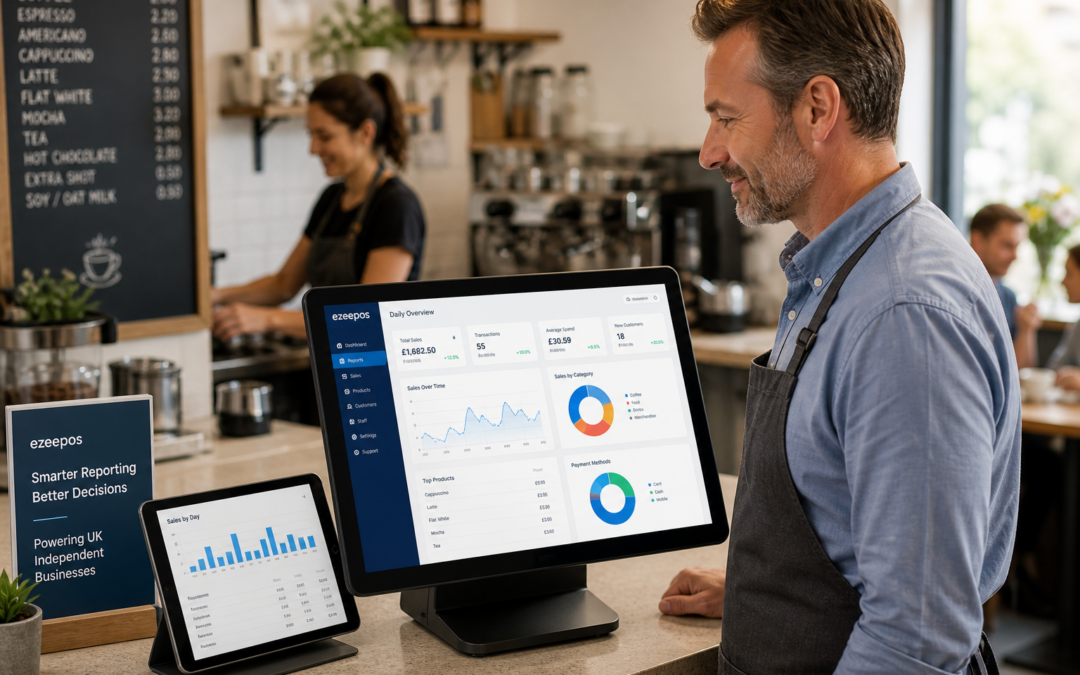
Good reporting is one of the most useful parts of a modern EPOS system, but it is often overlooked. While many business owners focus on the till screen, the real value can come from what the system tells you after each sale, shift or trading day. For independent retailers, cafes, restaurants and takeaways, that information can make day-to-day decisions much easier to manage.
At eZeePOS, reporting is not treated as an afterthought. It is part of a practical EPOS setup that helps UK businesses understand what is selling, when customers are busiest and where trading patterns may be changing. If you want a clearer picture of your business without adding more admin, better reporting is a sensible place to start.
Why EPOS reporting matters in everyday trading
Many small businesses still rely on a quick glance at the till total, a spreadsheet or end-of-day notes to judge how trading went. That can work for a while, but it rarely gives the full picture. A good EPOS reporting setup turns sales data into something useful and easy to review.
Instead of guessing, owners can see patterns in the numbers. That might mean spotting a strong Friday lunch service, identifying which product lines are moving well, or noticing that certain shifts are quieter than expected. The point is not to generate more data for the sake of it. The point is to make the business easier to run.
Useful questions reporting can help answer
- Which days and times are busiest?
- What items or categories are selling best?
- Are sales improving compared with previous periods?
- Which staff shifts are handling the greatest volume?
- Are there patterns that suggest service, pricing or staffing changes?
What independent retailers can learn from reporting
For shops, reporting can highlight product performance, trading peaks and customer buying habits. That is especially useful for businesses that need to make steady decisions without large teams or dedicated analysts. A convenience store, gift shop, farm shop or clothing retailer can all benefit from seeing which parts of the business are contributing most to sales.
Reporting may also help retailers review promotions more carefully. Instead of assuming a discount worked because it created more activity at the till, owners can check whether the promotion actually shifted the right products and whether it improved overall performance. This makes future decisions more practical and less reliant on instinct alone.
Retail examples where reporting helps
- Identifying your strongest-selling categories
- Reviewing seasonal changes in demand
- Comparing weekday and weekend trade
- Seeing which items perform best during promotions
- Helping managers respond to quieter periods more quickly
Why hospitality businesses need clearer reporting
In hospitality, reporting is just as valuable, but the questions are often different. Cafes, restaurants, bars and takeaways need to understand service patterns as much as sales totals. Busy periods, average transaction values and best-performing menu items can all influence staffing, prep and menu planning.
A restaurant owner may use reporting to see when covers peak during the week. A takeaway operator may want to understand which hours create the most pressure. A cafe might review which menu items consistently perform well at weekends. These are all simple examples, but they can have a direct effect on how smoothly the business runs.
For hospitality teams, this kind of information can also support better rosters and more realistic prep levels. That means less waste, less stress and fewer surprises during the busiest parts of service.
Hospitality reporting can support decisions such as
- Planning staff levels around trading peaks
- Checking if certain menu items are worth prioritising
- Reviewing daily and weekly revenue trends
- Understanding average spend per order
- Seeing how different service periods compare
Turning reports into practical action
Reporting only becomes useful when it leads to action. The best EPOS systems make it easy to review information quickly, without needing to dig through complex menus or cross-check multiple sources. That matters for busy owners who need answers fast.
For example, if reporting shows that Tuesday afternoons are consistently quieter, you may decide to change staffing, adjust opening hours, or run a simple promotion. If a product line is consistently underperforming, you can review whether it needs better placement, clearer pricing or to be removed altogether. If a cafe sees a steady rise in breakfast sales, it may be worth adjusting prep and ordering routines to match demand.
The value here is not in having more numbers. It is in being able to use the numbers you already have in a way that actually helps the business.
Reporting and multi-site consistency
For businesses with more than one location, reporting becomes even more important. Multi-site operators need a consistent way to compare performance between branches, identify strong locations and notice where support is needed. Without that visibility, managers can end up relying on separate spreadsheets and mixed processes that take too long to reconcile.
Central reporting can help owners and managers view the business more clearly. It becomes easier to compare sales trends, understand differences between sites and make better decisions on staffing, stock ordering and trading hours. For growing retailers and hospitality groups, that can be a major advantage.
What to look for in a reporting-friendly EPOS setup
Not every EPOS system presents information in the same way. If reporting is important to your business, look for software that makes the data easy to access and understand. It should help, not complicate, the way you work.
- Clear sales summaries that are easy to read
- Reports that can be reviewed quickly at the end of a shift or day
- Useful breakdowns by item, category, staff member or time period
- A layout that suits both single-site and multi-site businesses
- Simple access to the reports you use most often
If you are already using a till system, it may be worth checking whether your current setup gives you the level of reporting you actually need. Sometimes the difference between basic figures and useful insight is far greater than people expect.
A practical tool for better decisions
EPOS reporting is not about adding complexity. It is about making life easier for the people running the business. Whether you manage a shop, cafe, restaurant or takeaway, the right reports can help you understand what is really happening day to day and support decisions with more confidence.
If you want a UK EPOS solution that helps turn everyday sales into practical insight, eZeePOS is worth exploring. It is designed to help retail and hospitality businesses keep trading information clear, accessible and useful.
Contact YCR Distribution at sales@ezeepos.co.uk or call 01924 438238.
To learn more, visit www.ezeepos.co.uk.
Recent Comments